Steve Smith prepares for return to South Africa after Sandpapergate scandal
Read more
IOL
iol.co.za

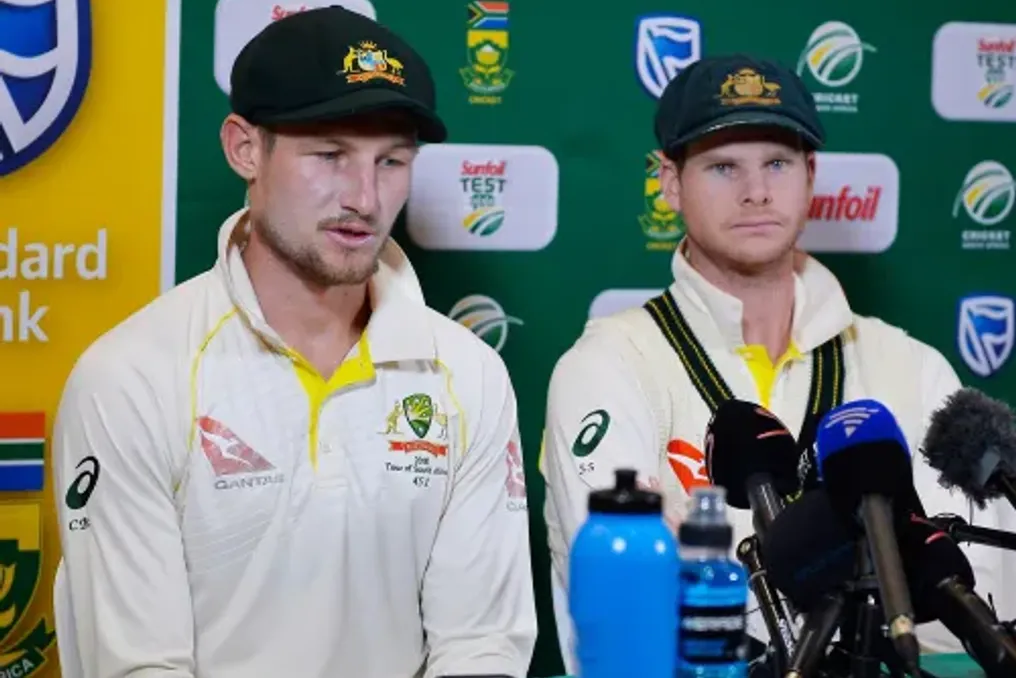
Steve Smith prepares for return to South Africa after Sandpapergate scandal

Steve Smith admitted that he still experiences the traumatic impact of the infamous ball-tampering scandal known as 'Sandpapergate,' which occurred in 2018. Nevertheless, the former Australian captain is determined ahead of his return to South Africa to participate in a series of Test matches.

The celebrated batsman was sent home in disgrace, received a year-long ban, and was removed from the captaincy after being involved in a conspiracy to tamper with the ball using sandpaper during the third match in Cape Town eight years ago.

David Warner, who was considered the organizer, was suspended for 12 months and stripped of all leadership positions, while Cameron Bancroft received a nine-month ban.

Smith is preparing for the first match in Durban, scheduled for October 9, after which the series will move to Gqeberha and Cape Town. He stated that he continues to suffer from flashbacks related to this traumatic period of his life.

He is haunted by memories of leaving Johannesburg airport, where cameras flashed wildly around him, as well as the difficult press conference in Sydney upon his return, during which he cried.

In an interview published on Thursday, Smith said: 'I am not a big fan of cameras... honestly, I get nervous around cameras. It was a traumatic experience in my life, and when I hear a camera flash, it makes me relive it.' He specified that he remembers the 24–48 hours when James Sutherland, then CEO of Cricket Australia, informed him of the year-long ban, as well as the process of going through Johannesburg airport surrounded by crowds, and the subsequent flight and press conference.

Smith took the brunt of this scandal, which is considered one of the darkest moments in Australian sport, but he managed to recover confidently. After his return, he scored a magnificent century against England and continues to improve his figures, having accumulated 10,920 Test runs with an average of 56.

He noted: 'It was certainly a difficult period, especially the initial period a few days later. My mental state was not very good. That is something I would not want to experience again, but I have certainly learned a lesson from it and been able to move on with my life. I tried to erase much of 2018 and what happened; I can't remember much about the series. I tried to block most of it in my memory.'

Although Smith returned to South Africa for white-ball matches since 2018, he has not played Test cricket, and now he is preparing for hostile crowds. However, the 37-year-old athlete remains composed, as since 2018 he has repeatedly participated in tours to England as part of the Ashes series, where he was mercilessly criticized by the Barmy Army fans.

He added: 'This is something I have somewhat gotten used to. At different times away from home, at different venues in my career, I have received a lot of criticism, and I accept it calmly. I use it as motivation to try to perform well and take something positive from it.'

Similar stories

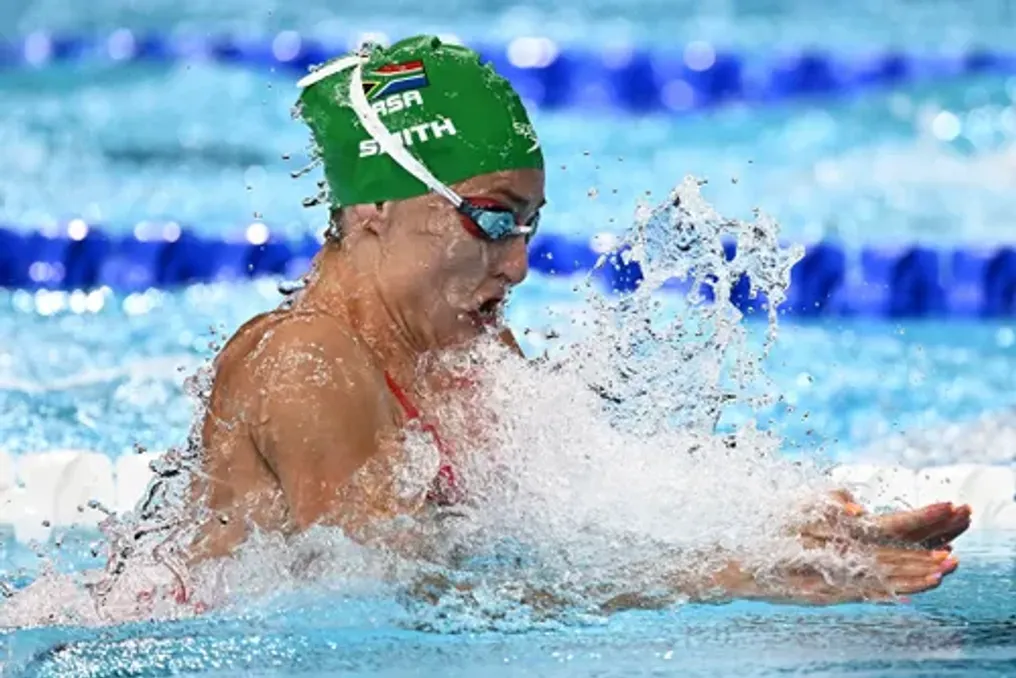
Tatyana Smith Returns to Competition Amid Crisis at Swimming SA Short Course Championships
Read more
iol.co.za

Tatyana Smith Returns to Competition Amid Crisis at Swimming SA Short Course Championships

Tatyana Smith is making an unexpected return to competition at the Short Course Championships in Pietermaritzburg, against the backdrop of a serious crisis within the Swimming SA organization.

Four-time Olympic medalist Tatyana Smith has decided to step out of retirement to participate in the South African Short Course Championships. Her return comes at a difficult time, coinciding with her legal dispute against Swimming South Africa (SSA) and a full-scale leadership crisis within the federation.

Smith, who ended her athletic career after winning gold and silver medals at the Paris 2024 Olympics, will once again be in the water from September 24th to 27th at the GC Jolliffe pool. Representing her new team, Lane Leader, based in Stellenbosch, the 29-year-old athlete is registered for the 50m, 100m, and 200m breaststroke events, as well as several relays.

Her return highlights a sharp contrast between on-water performance and administrative issues. Just weeks after she forced SSA to settle outstanding prize money percentages amounting to $35,000 (approximately 570,000 rand at the current exchange rate), which had been withheld for over a year, and filed a complaint with the Information Regulator regarding SSA's exclusive contract with Arena, Smith will compete under the auspices of a federation experiencing a management collapse.

The backdrop to her return is an unprecedented situation: the World Aquatics Integrity Unit recently imposed temporary suspensions on SSA President Alan Fritz and CEO Sean Adrianse due to alleged abuse of power and falsification of official documentation.

Tatyana Smith's return was positively received by some of her former teammates. After senior management was sidelined, Dean Price became the head of SSA's high-performance department and welcomed her return, calling her an 'enormous addition' bringing proven reliability to major events.

Nevertheless, while SSA welcomes her star status, Smith returns on entirely different terms. Having established her own Lighthouse Foundation to promote athletes' rights, mental health, and administrative reform, the Olympic champion enters the water unburdened by the institutional pressure that long constrained national athletes.

This newfound freedom was widely acknowledged by her peers. Commonwealth silver medalist Michael Houli, who will compete in men's breaststroke events in Pietermaritzburg, noted that the liberated Tatyana Smith presents a formidable prospect. Houli stated: 'She has absolutely nothing more to prove, which means she has the opportunity to compete completely freely and just enjoy swimming again.' He added: 'She looks like a happy swimmer now. And that can be dangerous for everyone else, so the world better watch.'

Her compatriot, Olympic champion Dine Kotze, supported this view, remarking: 'I think it's amazing that she's coming back. She is the best of all, and such a huge inspiration to me. I am very interested to see her in the race again and learn from her.'

This tournament serves as important qualification for the Beijing Short Course World Championships in December, attracting prominent national athletes such as Hanna Pierce, Georgia Nell, Guy Brooks, Chris Smith, and Paralympic champion Christian Seidy.

As Smith prepares to take the blocks in Pietermaritzburg, her dual role as an elite athlete and a reformer signals a seismic shift in South African sport. By competing on her own terms and advocating for her legal demands for transparency, Smith demonstrates that the pursuit of athletes' rights and sporting excellence can go hand in hand.

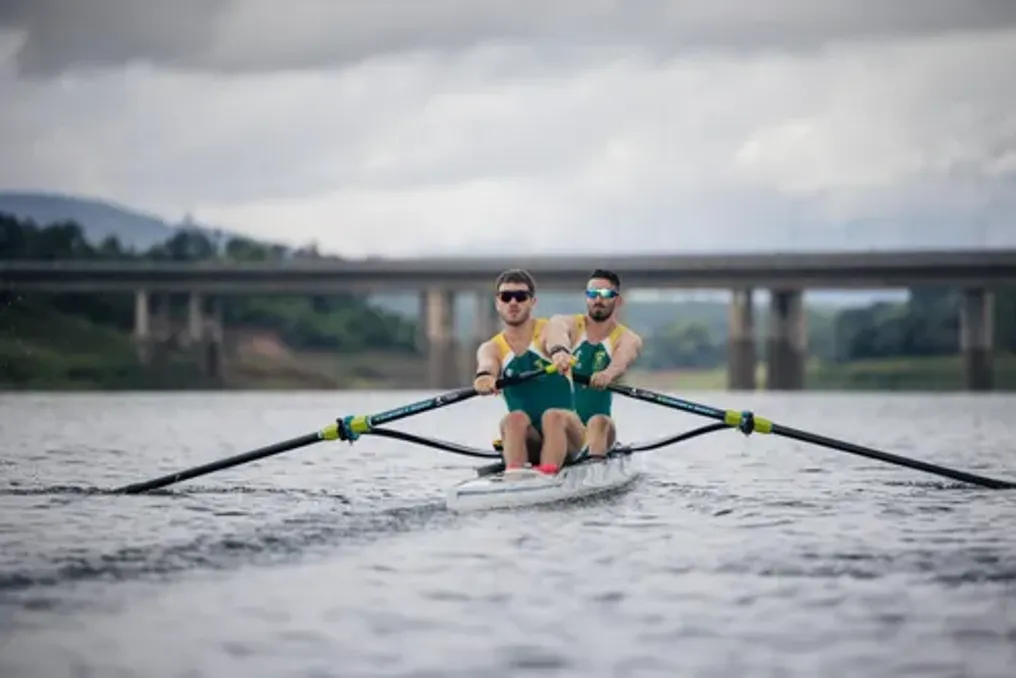
Olympic Games Legend John Smith Returns to the Passion of University Rowing
Read more
iol.co.za

Olympic Games Legend John Smith Returns to the Passion of University Rowing

For John Smith, an Olympic champion, the University Boat Race is a unique event capable of making him feel like a student again. Despite reaching the pinnacle of rowing by winning Olympic gold and competing with the world's best, mentioning this race erases memories of medals and international regattas.

Instead, the focus shifts to university colors, long-standing rivalries, and the thrilling prospect of beating the team in the adjacent lane. Smith emphasizes that sport is not always defined by hierarchy, and sometimes the most important race is the one that belongs to you.

As the RMB University Boat Race returns to Port Alfred, starting on September 10th and concluding on Sunday, Smith intends to be there not as an Olympian, but as a proud representative of Tuks.

His connection to this event dates back to his student years when Pretoria University was still seeking its first success in men's competition. John Smith's path to Tuks was almost accidental; he started as a middle-distance runner and briefly tried water polo at St Alban's College before discovering rowing, which quickly captivated him with its stark simplicity.

When it came time to choose a university, Johannesburg University, known for its strong rowing traditions, was among the options, and Smith was offered scholarships. This was followed by an invitation to join the Tuks eight training squad while he was still in school. He came and found himself alongside a group of young rowers who were already achieving success, including Matthew Britton, James Thompson, and Sean Killing. Smith immediately knew he had found his place, recalling: 'I thought I should surround myself with these guys.'

This decision helped shape his career and the future of Tuks rowing. In 2009, Smith and his teammates brought Tuks its first University Boat Race victory, initiating a culture of success that allowed Tuks men to dominate competitions for a long time.

However, looking back, Smith is satisfied not only with the victories but also with the transformation. He recalls that initially, they had only one or two boats, and they were located in half a barn. This was followed by the development of a program capable of attracting ambitious athletes and competing at the highest level of South African rowing. For Smith, this might be the real legacy.

He believes that the success of sports programs depends not only on having talented athletes but also on infrastructure, equipment, coaching staff, competitions, and, increasingly, financial support. Smith notes that the RMB's long involvement in the University Boat Race played a decisive role in this, stating: 'There is no doubt they made dreams come true.'

Rowing is an expensive sport; one boat can cost hundreds of thousands of rand, creating a barrier for programs and athletes without the necessary resources. But Smith believes that sponsorship should not only be measured by purchased boats or branded events. He saw how the influence of sponsorship extended to schools and development programs, including his own participation at Germiston High, where he assisted rowers and mentored coaches, leading to receiving the 'Head of Schools' medal.

For a sport historically associated with privilege, such developmental steps are significant. Smith notes the increase in participation and, importantly, its diversification. He is also pleased with the changing competitive landscape at the university level. While Tuks long set the standard in the men's event, Smith is glad to see other universities challenging this dominance, pointing to the resurgence of UCT as evidence of the sport's strengthening. For him, this is how it should be: healthy university competition cannot depend on the endless victory of one organization.

Despite increased competition at Tuks, Smith's loyalty to his alma mater has not weakened; on the contrary, a new reason for pride has emerged. The Tuks women's team has become one of the strongest teams in the university in recent years. Smith remembers a time when the women's program did not receive as much attention as the men's and notes the radical changes. He speaks with particular admiration about the achievements of the current generation.

When Smith studied at Tuks, many of the university's leading athletes were national team rowers, competing at the elite international level while still students. The current Tuks women demonstrate a different kind of success, confirming the strength of the university program itself. This progress has an international dimension, as Courtney Westley and Katherine Williams participated in the Boat Race after South Africa competed at the World Championships in Amsterdam.

Smith views this as evidence that the baton has been passed, and the women have taken it and run with it. The Boat Race itself has also advanced significantly. Smith recalls that previously it was a modest event with little television coverage, and cameras were often operated by parents or university representatives. Today, the atmosphere is completely different: there is television, online coverage, and spectators. Teams, after months of preparation, finally get a stage that reflects their hard work.

In a sport that has never received as much attention as football, rugby, or cricket, this is huge. The University Boat Race helps change this situation. However, Smith firmly believes that the increased profile has not changed what makes this event special: the rivalry, the nervousness, and the thirst for victory remain.

Smith knows this better than most because he stood on the starting lines of the Olympics and competed for his country under immense pressure. Nevertheless, the University Boat Race never seemed like a second-rate competition to him. He recalls that even after returning from the Olympics, he was still eager to compete for Tuks. 'We were still students,' he says. This distinction is critically important: an athlete can be an Olympian in the morning, but afterward, they still have to attend classes.

And when the university uniform is put on, old affections take over. Smith compares this to football: you know which team you support, what your colors are, and, most importantly, which team you want to beat. That is the magic of university sport—it creates an attachment that can last even after graduation and the athlete moves to higher arenas.

Thus, for Smith, Port Alfred will mean more than just another rowing competition. It will be a celebration of how far the University Boat Race has come, how the sport continues to attract new participants, and how investment has helped raise the visibility and resources of university rowing. But beneath all that is something much simpler: Smith will watch Tuks, watching the women who have taken the tradition of university rowing to a new level. And when the boats take their places, when the teams wait for the start and the tension builds before the first stroke, the Olympic champion becomes someone else again—a spectator, a student, a Tuks person. Olympic gold can wait; for these few minutes, there is only the race. 'Dis Tuks of Niks,' he chants.

3.

Six Australian players to return to South Africa for series after Sandpapergate scandal
Read more
iol.co.za

Six Australian players to return to South Africa for series after Sandpapergate scandal

When Australia takes the field against Proteas in Kingsmead on October 9, it will be the first time their touring squad steps onto South African soil since the tense 2017–2018 tour, which ended with three players sent home in disgrace.

Eight years after the Sandpapergate incident, only six members of the squad that participated in the darkest period of Australian cricket history will return for the upcoming series.

The Proteas team won that series 3–1: Australia won the first match in Durban by 118 runs before the hosts responded at St George's Park, then in Cape Town at Newlands, and finally secured a rout in Johannesburg.

How the Sandpapergate scandal occurred

During the third match, against the backdrop of the picturesque Table Mountain, the series and a significant part of Australian cricket's reputation collapsed. Cameron Bancroft was caught on camera handling the ball with sandpaper on the third day; captain Steve Smith admitted to knowing about the plan, and vice-captain David Warner was implicated in devising the scheme.

Smith and Warner received 12-month bans, Bancroft nine, and coach Darren Lehmann resigned within days. Weakened and shaken, Australia lost the fourth match at Wanderers by 492 runs.

Five of the players who started that tour are in the squad returning in October: Pat Cummins, Josh Hazlewood, Nathan Lyon, Steve Smith, and Mitchell Starc. The sixth player, Matthew Renshaw, was not initially selected—he was brought in from his performance in the Dukes League in England to open the batting in that final Wanderers match, throwing him into the heart of a crisis he was not involved in.

Steve Smith carries the greatest historical burden

Steve Smith bears the heaviest historical weight among these six players. He was the captain of Australia when the plan was devised in Cape Town, and his admission to officials changed the course of history.

Smith's post-match press conference at the Newlands Media Centre remains one of the best sights, witnessed by the old stadium. The tears he shed upon returning to Australia after being sent home demonstrated a broken man.

However, now 37-year-old Smith has served his ban, returned to the Australian team in 2019, and since then has become one of the best batsmen in this format. He had returned to South Africa with Australian baseball teams, but this test series will be a full circle moment for the former Australian captain.

Pat Cummins returns as captain

Pat Cummins participated in that 2018 tour as a young fast bowler, not yet at the level of the leader he became. He returns as captain of Australia, leading the team to the country where both his career and the culture of Australian cricket were damaged.

He will strive desperately for redemption so that the new generation of Australian players can finally leave Sandpapergate behind.

Josh Hazlewood and Mitchell Starc

Josh Hazlewood and Mitchell Starc were part of the same attacking unit that participated in the 2018 tour, and both remain first-choice players eight years later. This pair distanced themselves from the ball-tampering scandal, with Starc admitting: 'It was such a tense time in our lives. There was tension in relationships both as individuals and as a team.'

Nathan Lyon and the incident

Nathan Lyon, a constant element of Australian Test cricket for over a decade, was actually the catalyst for much of the drama that unfolded after spinners dropped the ball on AB de Villiers while the Proteas batsman lay on the ground after getting out.

Lyon was fined 15% of his match fee for this incident, but it triggered a chain of events that ultimately led to David Warner attempting to attack Quinton de Kock in the dressing room stairs at Kingsmead.

Nevertheless, 38-year-old Lyon remains Australia's leading spinner in red-ball format and intends to impress again during the upcoming series.

Matthew Renshaw's story

Matthew Renshaw's story is the most unusual. He was not part of the squad when the scandal broke—he was called up later, essentially to clean up the mess, and returned to Test cricket in the middle of the fourth match.

He will be grateful to be entering a much calmer environment after eight years.

Australia's 2018 bowling attack, consisting of Josh Hazlewood (L), Nathan Lyon (2/L), Mitchell Starc (2/R), and Pat Cummins (R), will all return to South Africa for the upcoming Test series against Proteas.

The full Australian squad includes Pat Cummins (c), Scott Boland, Alex Carey, Cooper Connolly, Cameron Green, Josh Hazlewood, Travis Head, Josh Inglis, Matthew Kuhnemann, Marnus Labuschagne, Nathan Lyon, Michael Neser, Matthew Renshaw, Steve Smith, and Mitchell Starc.

Popular