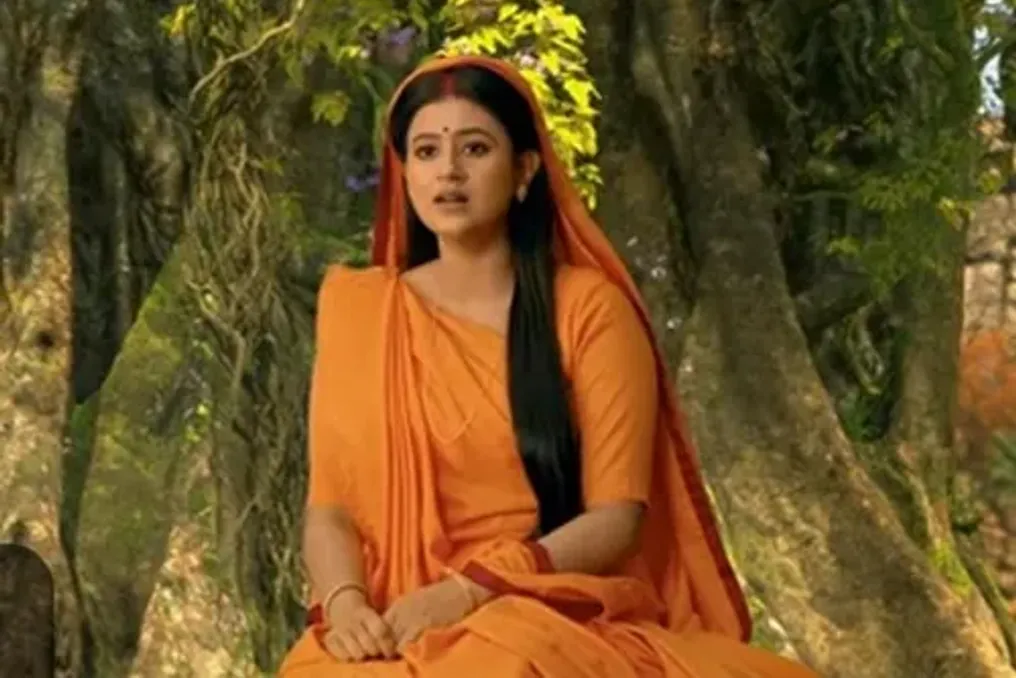
Film 'Mahakavya Shri Ramayana Katha' presents the story of Shri Rama and Mata Sita on the big screen
Read more
IOL
iol.co.za

Film 'Mahakavya Shri Ramayana Katha' presents the story of Shri Rama and Mata Sita on the big screen

The creators of the film 'Mahakavya Shri Ramayana Katha' have unveiled the long-awaited trailer for the upcoming mythological picture, which is releasing in theaters this week. The trailer provides an insight into the divine journey of Shri Rama and Mata Sita.

The film features Dev Sharma in the role of Shri Rama, Anjali Arora as Mata Sita, and Rajnish Duggal as Ravana. The trailer showcases key moments from the Ramayana, including the bond between Shri Rama and Mata Sita, their wanderings during vanavasa, Sita's abduction, Hanuman's devotion, and the final battle between dharma and adharma.

The main message of the film is emphasized by the phrase: 'Adharma Ke Samne Dharma Ka Naam, Shri Ram,' with the central themes of the story being dharma and maryada.

Director Abhishek Singh noted that every filmmaker has their own approach to the Ramayana. For them, the primary question was what feeling the audience should take away. They constantly returned to 'Katha Bhav,' meaning the love between Shri Rama and Mata Sita, Hanuman's devotion, Lakshmana's duty, and the maryada that Shri Rama faces in all circumstances. This sentiment must remain at the core of the narrative.

Dev Sharma, who plays Shri Rama, shared that Shri Rama's strength lies not only in his abilities but also in the self-control, compassion, duty, and maryada he exhibits when making every decision. This became his starting point. He added that there is a special responsibility in portraying not just a character, but someone who is revered. Even uttering 'Jai Shri Ram' creates an aura around a person that itself reminds one to stay on the right path.

Anjali Arora spoke about her character, saying that what touched her most was Mata Sita's unwavering resolve. Despite immense grace and meekness, she harbors exceptional inner strength. Even in the toughest circumstances and periods of separation, she never gave up her dignity, faith, or values. The most important aspect of embodying this character was bringing this inner strength and dignity into her performance with complete sensitivity.

Rajnish Duggal, playing Ravana, observed that Ravana possessed vast knowledge, power, and status, yet ultimately his ego proved stronger than his wisdom. Although Ravana had ten heads, it was the one called 'I' that destroyed him. He concluded that each of us has our own Ravana, and we simply need to ensure we do not feed it. For him, this also makes the conflict between Dharma and Adharma deeply relevant even today.

The film's musical score includes voices of several renowned singers such as Kailash Kher, Javed Ali, Farhad Bhinvandivala, Anurag Sharma, and Sunil Soni, who recorded songs in Hindi and Chittagonghi. Before the film's release, the creators have already published a teaser and three songs: 'Siya Ram,' 'Ram Ji Ki Sena,' and 'Hey Hanuman.' More compositions from the film are expected to be released soon.

Shil Verma is also starring in the film as Lakshmana, and Nirbhay Wadhwa as Hanuman. The film's premiere is scheduled for September 25th in theaters across India in Hindi and Chittagonghi languages.
Similar stories

The song 'Jai Jai Ram' depicts the image of Bharat from the Ramayana; the story of this character is revealed
Read more
www.aajtak.in

The song 'Jai Jai Ram' depicts the image of Bharat from the Ramayana; the story of this character is revealed

The first track from the film 'Ramayana,' directed by Nitish Tiwari, titled 'Jai Jai Ram,' has recently been released. This composition, written by A.R. Rahman, with lyrics by Kumar Vishwas and melodious vocals by Arijit Singh and Shreya Ghoshal, is gaining great popularity among viewers. The song features majestic scenes of the wedding of Shri Rama (Ranbir Kapoor) and Mata Sita (Sai Palvi), as well as the welcome of the residents of Ayodhya with a shower of flowers and emotional moments with King Dasharatha (Arun Govil).

However, the most touching scene in this song is the moment when Shri Rama embraces his younger brother Bharat. Through this song, the filmmakers presented the first opportunity to see actor Adinant Kotare, who plays the role of Bharat. Subsequently, the narrative explores the importance of the character Bharat in the Ramayana and the true essence of the role he portrays on screen.

According to the Ramayana and Ramcharitmanas, Bharat was not merely the younger brother of Shri Rama, but also the supreme embodiment of selfless love, dharma, and sacrifice. He was the son of King Dasharatha of the Suryavanshi dynasty and his beloved queen Kaikeyi. From childhood, Bharat felt deep affection and respect for his elder brother Shri Rama. Bharat married Mandavi, the daughter of Kushadhwaja, the brother of King Janaka.

According to the narration of the Ramayana, when Bharat returned to Ayodhya from his native home (Kaikei Desh) and learned that his mother Kaikeyi had secured two boons from King Dasharatha—to send Shri Rama into fourteen years of exile and to gain the royal throne for herself—he experienced extreme sorrow and shame. Bharat unequivocally opposed this wrongful act by his mother. He clearly stated that the throne of Ayodhya belonged exclusively to his elder brother Shri Rama, and he would not accept any dishonest happiness. He also sharply criticized his mother Kaikeyi's actions.

Following this, Bharat did not remain merely sad; he, along with all of Ayodhya, the mothers, and the teacher Vashishta, went to the forests of Chitrakoot to bring Shri Rama back. The meeting between Shri Rama and Bharat in Chitrakoot was so emotional that the eyes of all present became moist. Bharat fell at Shri Rama's feet and pleaded with him to return to Ayodhya. However, Shri Rama refused to return, upholding his father's promise.

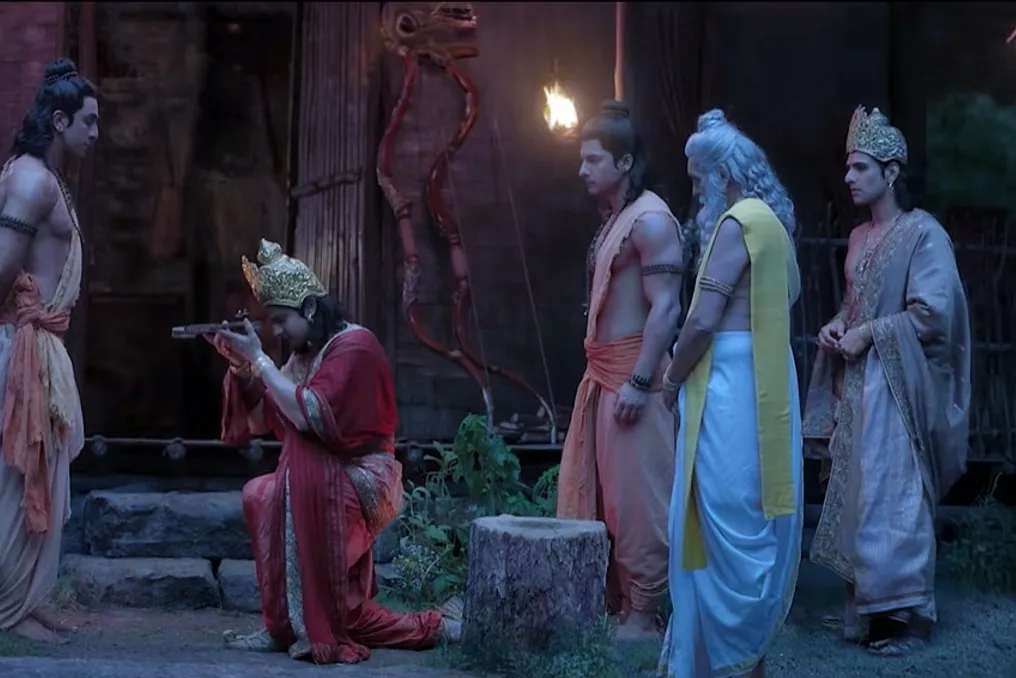
When Shri Rama refused to return, Bharat requested Shri Rama's 'Paduka' (sandals). He vowed never to sit on the royal throne of Ayodhya. Bharat placed Shri Rama's paduka on the throne and governed the state, considering himself only his 'representative' (servant).

Bharat was not just a title of renunciation; he proved it through his lifestyle. He gave up all the wealth and luxury of the palace. Leaving behind the grandeur and comforts of the palace, Bharat built a simple hut outside Ayodhya in Nandigram. There, he spent 14 years leading an ascetic life similar to his brother Shri Rama: keeping his hair long, wearing coarse cloth, eating wild roots, and sleeping on the ground. He believed that if his brother Shri Rama suffered in the forests, he had no right to enjoy the comfort of the palace.

Bharat's message to modern society is that relationships, values, and fraternal love are worth more than any material possessions or positions. He proved that true right is based on dharma and justice, not on violent appropriation.

Popular