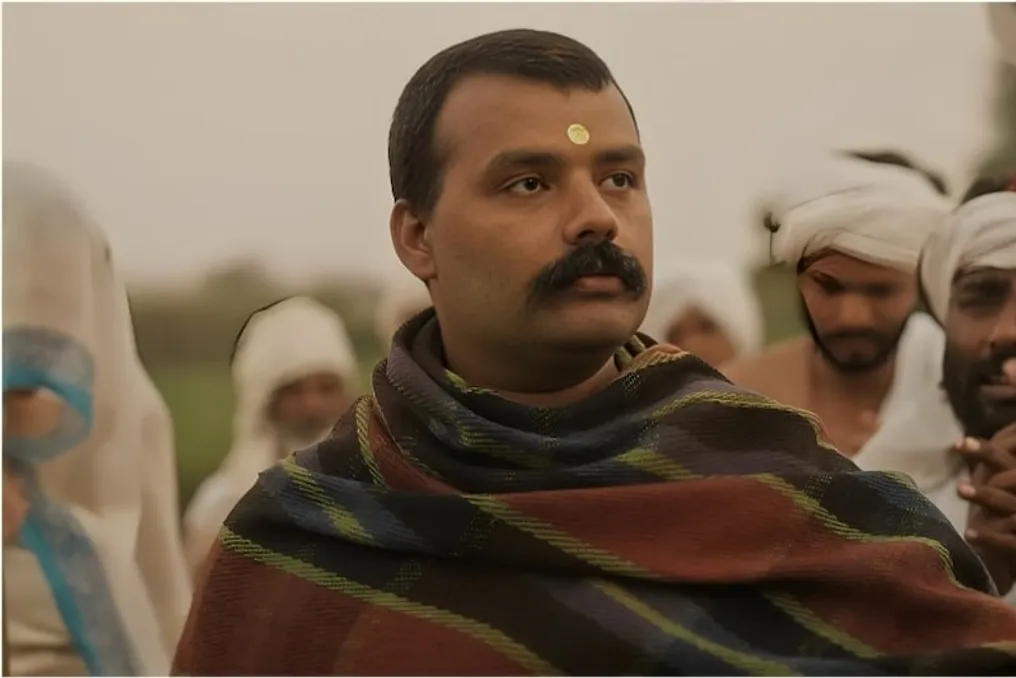
Film 'The Van: Force of the Forest' is based on the legends of the Van Devi temple in Patna
Read more
Aaj Tak
www.aajtak.in

Film 'The Van: Force of the Forest' is based on the legends of the Van Devi temple in Patna

The release of the trailer for the film 'The Van: Force of the Forest,' featuring Siddharth Malhotra and Tamanna Bhatia, caused a great stir among viewers. The trailer presented scenes of dense forests, mysterious forces, and a temple where entry is forbidden after sunset, which raised many questions about the movie's plot.

The filmmakers clarified that the temple shown in the film is inspired by the famous Van Devi temple located near Bihata in the Patna district, Bihar state. This temple, situated in the Anandpur Bihata area, is estimated to be between 350 and 400 years old and is located amidst dense forests and rural areas.

Local residents hold numerous legends and beliefs associated with this sanctuary. Some believe that the entire area was covered with dense forest in ancient times, which is why the goddess came to be called 'Van Devi' (Goddess of the Forest).

According to one local legend, an ascetic had a vision of the goddess in his sleep. At the goddess's instruction, when excavations began at this site, it was said that a statue of the goddess or a sacred symbol was discovered. Following this, the villagers jointly built the temple. Although these stories lack official historical confirmation, they hold a special place in local belief.

The most enigmatic belief associated with the 'Van Devi' temple concerns the prohibition of entering the temple complex after dusk. It is said that as evening approaches, the temple gates close, and the priests leave. No one is allowed to remain in the temple or the surrounding forest at night. Local residents believe that after sunset, Van Devi roams through the forest. This folk belief became the key foundation for the story of the film 'The Van.'

In the film, Siddharth Malhotra plays a character who enters this forbidden zone, after which a series of mysteries, fear, and confrontations with supernatural forces begins. Despite being based on folklore, the plot has been adapted for cinematic presentation.

The film's producer, Arunab Kumar, stated that the idea for this story came to him after visiting the Van Devi temple near Patna. He spoke with local residents, priests, and farmers about the temple's traditions and the old stories associated with it. Director Dipak Mishra used special effects and modern technology to transform this folk belief into a large-scale cinematic experience.

It is also reported that following the release of the 'The Van' trailer, discussions about the Van Devi temple have intensified, and more pilgrims are now visiting the temple for prayers. Thus, 'The Van' aims to present not just a horror or fantasy film on the big screen, but a story of Indian folklore, faith, and the mysteries connected to the forests. The film will be released on September 25th, and viewers will see not only the story of the Van Devi temple but also the grand Chhath festival on screen for the first time.
Similar stories

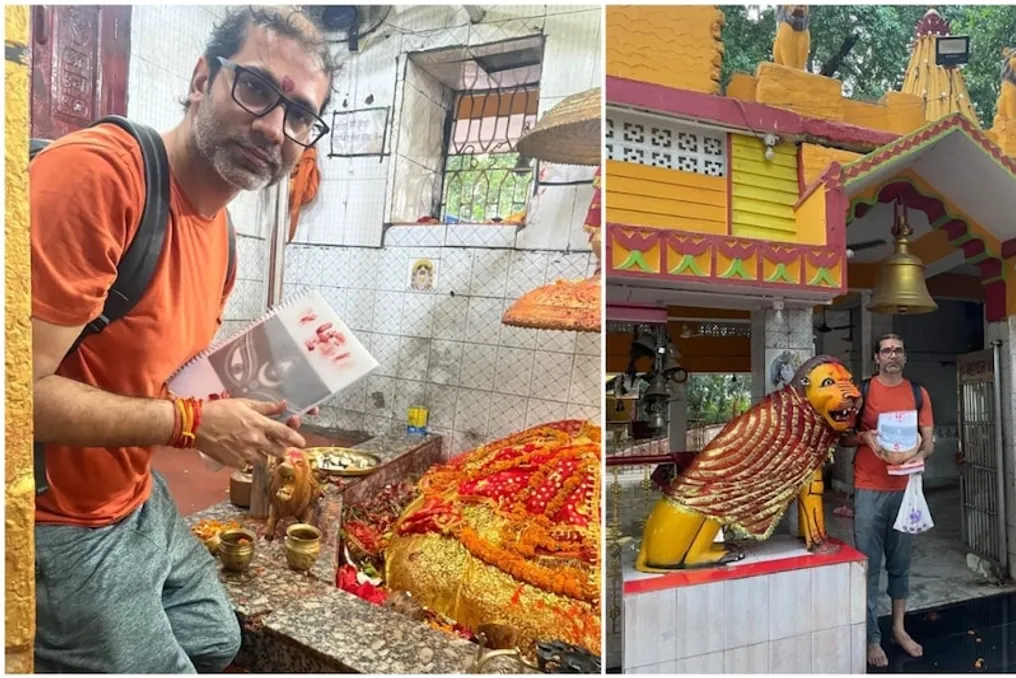
400-year-old temple in Bihar linked to the ban on entering the forest after sunset inspired film featuring Siddharth and Tamanna
Read more
www.aajtak.in

400-year-old temple in Bihar linked to the ban on entering the forest after sunset inspired film featuring Siddharth and Tamanna

India has numerous temples whose stories are passed down through generations. Some are known for their grandeur, while others have gained fame through mysterious folk legends. In Bihar, there is a similar temple, estimated to be around 400 years old. This sanctuary, located in the middle of a dense forest, is revered as the abode of Maa Van Devi.

Interestingly, the history of this temple has reached Hollywood. The plot of the upcoming film starring Siddharth Malhotra and Tamannaah Bhatia, titled 'The Vvaan: Force of the Forrest,' is based on legends associated with this very Van Devi temple. The filmmakers stated that local legends and the temple itself played a significant role in shaping the narrative.

Location of Maa Van Devi Temple in Bihar

The Maa Van Devi temple is presumed to be near Bihata in Bihar. It is situated approximately 35 kilometers west of Patna, close to the borders of the villages of Amhara, Ragopur, and Kanchapur. This religious site, being small and lacking high spires, attracts attention due to its traditions and surrounding rural landscape rather than its monumentality.

Worship Features: Worshiping the Stone, Not the Statue

The most distinctive feature of the Maa Van Devi temple is its method of worship. Here, the deity is revered not in the form of a traditional sculpture, but as a sacred stone lingam. According to local beliefs, Van Devi is considered the protector of the forests. This belief, passed down through generations among local residents, states that the goddess protects the forest and the people living nearby, which distinguishes this temple from others.

Reason for the Ban on Entering the Forest After Sunset

One of the most intriguing aspects associated with Maa Van Devi is an ancient tradition concerning the forest. According to local tales, mysterious events used to occur in this forest, causing concern among the surrounding residents. Because of this, the tradition was formed to prohibit people from approaching the forest after dusk. Today, this information is preserved in folklore, although scientific confirmation of these events has not been provided.

History of the Temple's Founding and the Figure of Vidyanand Mishra

There is also an interesting folk legend about the founding of the temple. It is narrated that Vidyanand Mishra, who lived in Ragopur, was a devout follower of Maa Vindhyavasini. He regularly made pilgrimages to Vindhyachal to worship the goddess. However, as he aged, it became increasingly difficult for him to undertake such long journeys, but his devotion remained unwavering.

According to the legend, one day the goddess appeared to him in a dream and instructed him to take a part of her sacred lingam and install it in the local forest. After this, he placed this sacred stone near the border of Amhara, Ragopur, and Kanchapur. At that time, the entire area was surrounded by a dense forest, and it is here that the Van Devi temple subsequently developed.

How the Temple's History Relates to the Siddharth-Tamanna Film

A question arises as to how the history of such an old and locally known temple in Bihar ended up in cinema. The authors and directors of the film 'The Vvaan: Force of the Forrest,' Dipak Kumar Mishra and Arunab Kumar, indicated that they drew inspiration for the plot from the local legends associated with the temple. Arunab Kumar noted that the legends of the temple and the mystical traditions related to the forest had a strong influence on him.

Thus, the film's plot will reflect not just fictional horror or mystery, but also the imprint of local Bihari faith. Folk legends and cinema have found an unexpected point of convergence. Although many stories related to the Maa Van Devi temple are based more on oral traditions passed down through generations than on historical documents, this story, claimed to be about 400 years old, has attracted wide audience attention thanks to the film 'The Vvaan,' bringing a local legend to the screen.

Mahabharata: The Curse Allegedly Affecting Women in Kali Yuga According to Legends
Read more
www.aajtak.in

Mahabharata: The Curse Allegedly Affecting Women in Kali Yuga According to Legends

You may have heard jokes about women, but there is an ancient mythological story that explains this concept. According to legend, women were once cursed so that they could not keep secrets. However, the question arises: did such a curse exist? And why was it directed specifically at women? And if it didn't exist, how did this story and perception persist for centuries?

Perhaps the roots of what we perceive today as a joke lie in a very important episode of the Mahabharata. This story is connected to a secret that was revealed after the Mahabharata war and changed the world of the five Pandavas. It was a secret that their mother, Kunti, kept to herself her entire life. When Yudhishthira learned about this secret, his anger and remorse intensified so much that he cursed women. It is said that it is because of this curse that women still cannot keep their secrets.

Imagine this situation: you find out that a person you considered your greatest enemy, with whom you waged war and whose death became your responsibility, is actually your own elder brother. What would you feel then? Something similar happened to the Pandavas. Karna, whom they considered a rival all their lives, turned out to be their elder brother. But the truth came out too late.

Who was Karna?

Karna was Duryodhana's closest friend and fought on the Kaurava side during the Mahabharata war. He was an outstanding warrior, but due to his background, he suffered humiliation his whole life, often being called the son of a charioteer. But how did Karna's story reach such a scale?

The conflict between the Kauravas and the Pandavas over the throne of Hastinapura constantly escalated. Duryodhana never intended to give up their right to the Pandavas under any circumstances. Then came the game of Chaupar, which changed everything. In this game, full of deceit and cunning, the Pandavas lost their kingdom, wealth, and even Draupadi. In a public assembly, Draupadi was humiliated, and from that moment, the enmity between the two sides grew so much that the Mahabharata war eventually began. The brutal battle continued for 18 days in Kurukshetra, and countless warriors died. In the end, the Pandavas won, but the price of this victory cost the entire Kuru clan.

The Secret Revealed After Karna's Death

On the seventeenth day of the war, Karna fell at the hands of Arjuna. Duryodhana was devastated by the news of the death of his dearest friend, Karna. Meanwhile, when Kunti learned of Karna's death, she could not restrain herself. She came to the battlefield of Kurukshetra to Karna's body, weeping. Her tears hid not only the grief over the loss of a great warrior but also a mother's pain. At that moment, all five Pandavas and Shri Krishna arrived there. Everyone was stunned. There was one question in their minds: why was Kunti's mother grieving so much over the death of Karna, whom they considered their greatest enemy?

They had no idea that in the next moment, the truth that would change their entire world would be revealed.

Karna was the Elder Brother of the Pandavas

Regarding the matter of children, Kunti informed them that Karna was none other than her own son and the elder brother of all five Pandavas. Hearing this truth, the ground fell out from under the Pandavas. They themselves were responsible for the death of the brother against whom they had waged war. Everyone present froze, and regret filled the hearts of the Pandavas. Yudhishthira asked his mother why she had hidden such a big thing from them until now. What was the reason she kept this secret her whole life? Kunti had no answer at that moment except remorse and tears.

Before the war, Kunti and Karna also met in an emotional setting. Kunti did not want her sons to fight each other. Therefore, she approached Karna and told him that he was her son. This shocked Karna. The mother he had searched for his whole life suddenly stood before him. Kunti asked Karna to support the Pandavas. However, Karna replied to his mother that although she gave birth to him, Radha and Adhiratha raised him. Since the whole world humiliated him, Duryodhana gave him respect. Therefore, he could not refuse to support the war. Karna did not change his decision to fight against the Pandavas.

Why Did Yudhishthira Curse Women?

This is why Kunti's grief after Karna's death intensified. When this truth became known to the Pandavas, Yudhishthira's anger and remorse reached a peak. He was upset that if he had known about Karna's birth secret earlier, circumstances might have turned out differently. According to the story, in this anger, Yudhishthira cursed the entire female race along with his mother Kunti. It is said that Yudhishthira declared that women would no longer be able to completely hide any thoughts in their hearts.

Film 'Hanuman ANSH' earned over 80 crore; director gathered crowds in villages
Read more
www.aajtak.in

Film 'Hanuman ANSH' earned over 80 crore; director gathered crowds in villages

The low-budget film 'Hanuman ANSH' surprised everyone with its phenomenal box office collection. The film, dedicated to the life of spiritual teacher Nima Karaulee Baba, is setting new records at the box office.

However, the filmmakers faced the need to gather the audience themselves. Behind-the-scenes (BTS) footage went viral on social media, showing how director Vishal Chaturvedi traveled through villages to gather people for filming.

The video shows Vishal addressing residents in the villages using a microphone. He asked people to come to the set, explaining that for one of the scenes they needed elderly people in traditional clothing, such as kurtas and pajamas, as well as women in saris. He invited those willing to come in a white kurta-pajama for the shoot.

Patrons also visited residents' homes to gather the necessary crowd to create such a beautiful film, which resonates strongly with viewers. This modesty in work contributed to the film's success.

'Hanuman ANSH' showed impressive earnings results. According to the Sacnilk report, the film brought in 82.88 crore on its 29th day. The film's total gross revenue approached 97.77 crore, meaning the film is very close to entering the club of films with a revenue of 100 crore.

Popular