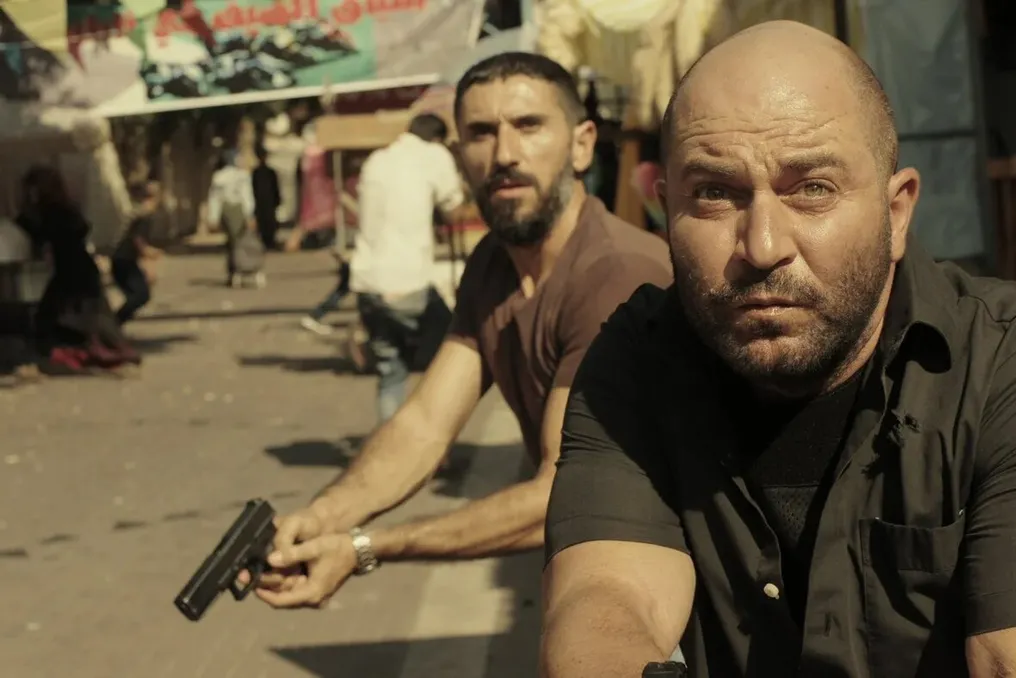
At the beginning of this month, the fifth season of the Israeli TV series Fauda was released on Netflix, receiving positive reviews. The series once again attracted attention from viewers around the world due to its high-quality production and storylines about Israeli secret units hunting Palestinians.
Unlike previous seasons, which were set in occupied West Bank or the besieged Gaza Strip, the plot of the new season is focused in Marseille. The main character, Doron Kavillio, goes to convince his best friend and former Mistarvim colleague, Eli, to drop the illegal killing of a Hamas operative, whom his wife and stepdaughter allegedly killed on October 7, 2023.
However, Doron is too late. A series of killings has begun, and soon both men start pursuing a Hamas cell led by a man named Saad Al-Khatib, known as the 'Sinwar of Europe.' It turns out that this diverse Hamas cell in Marseille, composed of Palestinians and white Europeans, was preparing for another attack on Israel in the style of October 7.
Naturally, Israeli infiltrator agents fall right into this situation. This triggers the familiar Fauda formula: two-faced, battle-hardened Palestinians, reluctant Israeli killers, and overburdened Shin Bet leaders who are 'constrained' by cumbersome Israeli 'democracy.' Although caricatures of Hamas and Palestinians remain unchanged, the series refuses to claim to reflect Israeli imagination; it is essentially a fantasy of revenge.
The series constructs a world where Hamas seems omnipresent, Europe is compromised by Muslims, and Israelis are constantly under siege. The author shares five defining themes of the fifth season.
Europe Conquered by Muslims
Despite the season focusing on the October 7, 2023 attacks, the decision to make Marseille the source of a new threat to Israel may seem unexpected. However, among the myths actively promoted by the Israeli lobby and right-wing forces in Europe in recent years, there is a notion that the continent has been taken over by vast hordes of barbaric Muslims seeking to destroy its liberal, secular order and replace it with Sharia laws concerning mutilation, face covering, and the prohibition of gays on rooftops.
According to this view, European cities are divided into Muslim and non-Muslim enclaves, with so-called 'forbidden' zones where a certain medieval Islamic mentality is entrenched. Fauda easily fits into this environment of right-wing delusion by setting the story in Marseille. The southern French city is home to a large Arab population, with Muslim grocery stores, streets adorned with graffiti supporting Palestine, and sympathy for the Palestinian cause. Fauda hints that if this can happen in Marseille, it can happen anywhere in Europe, suggesting that the continent has abandoned its cultural identity and (even more absurdly) its political sovereignty in favor of Muslims. Simply put: Europe is gone.
Solidarity with Palestine is the Gateway to Terrorism
When Doron and Eli discover a thriving Hamas cell in a Marseille refugee center, they also encounter white European activists preparing to wear explosive vests for Hamas. It seems the reason these white Europeans felt the need to blow themselves up for the Palestinian cause goes beyond the scope of the series, so their recruitment is told through Anne Ober (Melanie Laurent), a wealthy blonde from high society in France, who joins Hamas to take revenge on Israel after her husband, Maher, is killed by a roving Israeli punitive squad.
Anne is portrayed as being driven solely by the motive of revenge for her husband's murder. Her decision to take up arms against Israel and sacrifice her life is depicted as lacking any understanding of history, politics, or context; here Fauda presents her as uninformed. Later, she learns that her beloved, sweet, gentle husband was actually a barbaric Hamas commander who raped Eli's wife and killed innocent Israelis on October 7. When she learns the 'truth,' she becomes distraught and provides the Israelis with details of the plan. In exchange for cooperation, she is freed. But the message is clear: Anne embodies every white liberal fooled by Palestinian duplicity and savagery masquerading as decolonization struggle. Fauda seems to be saying: 'You don't know these Arabs like we do.'
Hamas Everywhere
As bodies of Palestinians begin to accumulate in Marseille, French police and intelligence services quickly suspect that Israeli agencies might be behind the killings. They begin an investigation, as police usually do. However, the French attempts to achieve justice prove short-lived. Shin Bet uses a Pegasus-style hacking tool to discover that the lead investigator was corrupt and in Hamas's pocket. The hint is once again unambiguous: those trying to restrict Israel's actions are not motivated by law or justice, but are usually funded by Hamas.
The ICC, ICJ, UN agencies, and states like South Africa have repeatedly been dismissed as biased, linked to Hamas, or bribed by Hamas enthusiasts from Iran. Even Francesca Albanese, the UN Special Rapporteur on the Occupied Palestinian Territories, has been accused of being a mouthpiece for Hamas due to her in-depth reports on the occupation and genocide of Israel. In Fauda's narrative, no institution or body could legally demand accountability from Israel unless it was connected to Hamas.
Erasing Genocide in Gaza
Before a new terrorist plot is ultimately crushed by Israeli heroic deeds, the story turns to the events of October 7 as a memory. Here, the writing, acting, and reconstruction of events gain momentum on their own. Episodes freely switch between truth and fiction, giving viewers a chance to see the events firsthand in the kibbutzim of southern Israel. Hamas fighters are depicted as a menacing, ruthless force arriving like a tornado, consuming everything in its path. The kibbutzim, conversely, are portrayed as completely innocent communities subjected to mass slaughter due to an outbreak that occurred behind a fence. What mattered was not why there was a fence or who these people coming from the other side were.
This is visually directed propaganda designed to cement the October 7 events as the primary memory of unique Israeli trauma. The story begins on that day. The series also relies on a broader sense that Israeli soldiers, police, and intelligence services failed to protect Israelis—a failure that continues to haunt the country's defense establishment and forms the central pillar of the fifth season. Eli's decision to take matters into his own hands and pursue the Hamas operative in Marseille stems from this loss of faith in the system and its ability to uphold the social contract. He cannot rest until his family—and, through them, the innocent, abandoned, and unjudged Israeli people—is avenged.
However, this portrait of Israeli helplessness requires erasing everything that happened afterward. The fifth season was filmed and produced during a period when Israel had destroyed almost the entire Gaza Strip, killing or injuring at least 250,000 Palestinians. There is no mention of the bombing in Gaza in the parallel fictional storyline. Genocide is entirely absent. This allows Israel to remain a victim. The reconstruction of October 7 in Fauda is a model of genocidal apology.