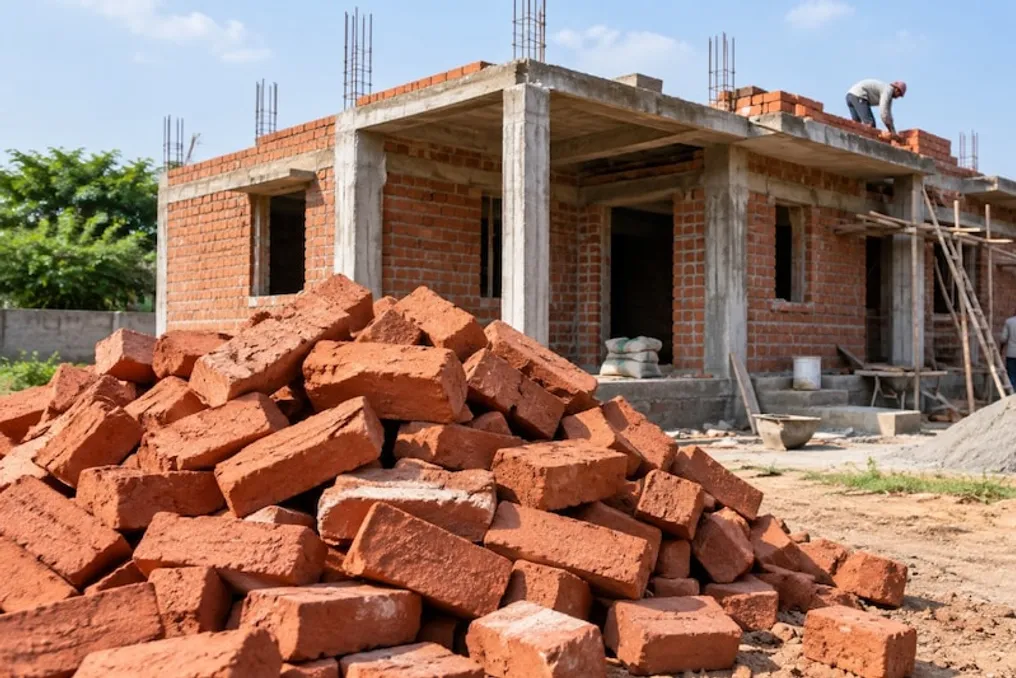
Brick cost reaches 9 rupees: Calculating the expense of bricks when building a 3BHK house
Read more
Aaj Tak
www.aajtak.in

Brick cost reaches 9 rupees: Calculating the expense of bricks when building a 3BHK house

The needs for food, clothing, and housing are basic for a person. Building a house nowadays has become quite an expensive undertaking, yet people continue to strive to have their own dwelling. In this regard, we examine how much the most essential building material—brick—costs.

Currently, the price of one brick is 9 rupees. The question arises: what expenses will only bricks cover when constructing a standard 3BHK house? Knowing this budget will help clarify the costs of one of the main construction materials.

Typically, a three-bedroom house covers an area of about 1000–1200 square feet. A significant number of bricks is required to build a single-story building of this size. Rinku Kumar, who builds houses on commission in villages and cities, states that approximately 20–25 thousand bricks are needed to create the frame of a 1000–1200 square foot house.

At a price of 9 rupees per brick, 20,000 bricks will cost 180,000 rupees. If 25 thousand bricks are used, this cost can reach 225,000 rupees. However, since walls are built with varying thicknesses during construction, it is impossible to determine the exact number of bricks; people work based on approximate estimates.

When building, it is always necessary to consider wall thickness, as this is a significant factor affecting overall costs. If exterior walls are made 9 inches thick and interior walls 4 inches thick, the number of bricks may increase or decrease.

Furthermore, during transportation and laying, about 5% to 10% of bricks may be damaged, so an additional 1000–2000 bricks should be budgeted for. For this reason, people have recently been trying cheaper alternatives to red bricks, including fly ash bricks and other concrete blocks such as Vikulf.
Similar stories

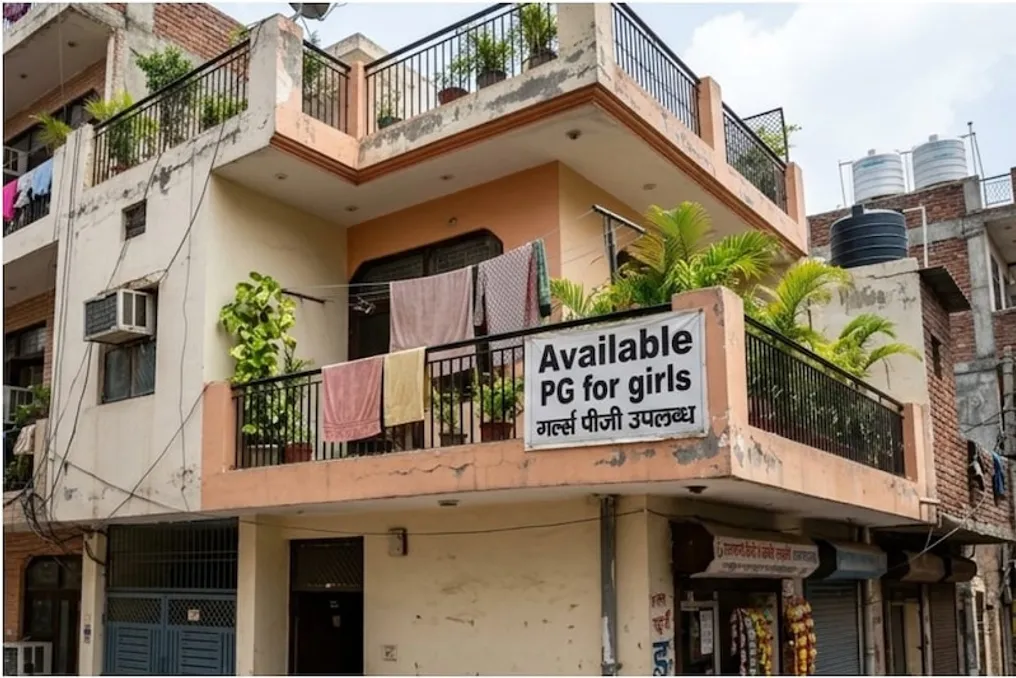
Legality of Running a PG Accommodation Business in Houses: New Rules Come into Effect
Read more
www.aajtak.in

Legality of Running a PG Accommodation Business in Houses: New Rules Come into Effect

In cities such as Delhi and Noida, as well as in many other settlements across the country, the PG (Paying Guest) model is gaining popularity. Residents rent out part of their living space to several people in exchange for income. However, an incident involving Satya Niketan has once again highlighted the dark side of this PG model, leading to building inspections in Delhi and the development of new legislative acts to regulate the sector.

The question arises whether a PG can be set up in a private house. Currently, there is no single regulation or clear guidelines for establishing a PG. If you provide accommodation in your home to residents in a residential area, it does not cause problems. The situation changes when the owner provides housing to a large number of people and runs it as a full-fledged business, which requires registration and permits.

Despite the lack of clear rules defining when an activity is considered commercial versus ordinary residence, large-scale PG operation requires mandatory registration. According to an advocate from the Delhi High Court, obtaining permission from the administration and government is necessary to start a PG operation.

When a PG functions for a large number of people, norms regarding the condition of the building, ventilation, fire safety systems, presence of security and a warden, as well as room width, apply. However, if a small number of people are accommodated, the requirements are significantly less stringent.

Regarding PG income, an accountant noted contradictions. If you host several people in your home and receive payment for it, you only need to file a tax return, similar to regular housing rentals. Furthermore, you must undergo a police check and notify the police about the people residing in your home. Standard tax rules apply to the income.

However, if you run a PG on a large scale, you must integrate into the GST system. Usually, if you rent out residential premises in a residential area, you simply file taxes according to the common scheme.

The Delhi government is preparing to bring PG housing units under established norms. Under the proposed 'Paying Guest Accommodation Regulation and Welfare Bill,' new rules are planned to cover PG registration, rent, safety, and complaint resolution mechanisms. Following this, PG operators will have to go through a registration process.

PG operators must obtain an operating license from the local authority within 90 days. This requires obtaining necessary No Objection Certificates (NOCs) from the police, municipal council, and local administration. After registration, each PG will be assigned a unique PG Registration Number (PGRN), which will simplify the identification and verification of any PG's legality for both authorities and students. Additionally, in a PG where more than 15 people reside, the installation of CCTV cameras, provision of security, and appointment of a warden will be required.

Popular