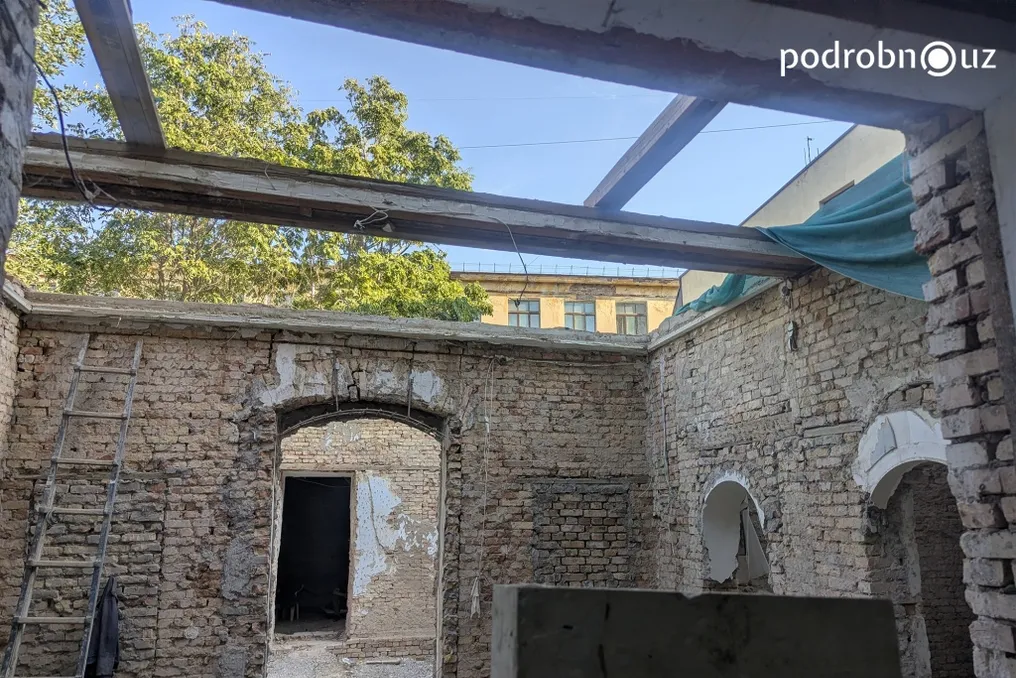
Representatives of the Agency for Cultural Heritage and the Scientific Research Institute (SRI) of Cultural Heritage reported that the renovation of Sergei Yesenin's museum in Tashkent will extend until the end of 2026. The work includes strengthening load-bearing structures, restoring the facade, and installing an autonomous climate control system to ensure the preservation of exhibits.
This timeline was announced during a meeting with the public and journalists. The dialogue between officials and Tashkent residents began after citizens collectively appealed to Saida Mirziyoyeva, the head of the Presidential Administration, requesting her personal oversight of the restoration of the historic building before the autumn rains.
Reasons for Renovation Delay
The house-museum was closed for major repairs in the autumn of 2025, and initially, all work was expected to be completed by December 31, 2025. However, the facility could not open before the end of this year. In September 2026, residents expressed concern upon noticing the halt in active work, the removal of the roof, and the appearance of mold on exposed walls.
At the meeting, representatives of the Agency for Cultural Heritage explained that the construction pause was unavoidable and required an independent expert assessment from the Scientific Expert Council. Sanjar Aripov, Director of the SRI of Cultural Heritage, clarified that the initial inspection of the late 19th-century building showed it to be in satisfactory condition, but hidden defects were discovered after the dismantling of the roof and old coverings.
Sanjar Aripov emphasized that they have the resources and the desire to continue the work, stating that the goal is not to speed up the process through superficial repairs, but to bring the building to a state where it can last another hundred years, thereby preserving the structure rather than masking problems.
Specialists received the experts' conclusions with technical solutions for structural reinforcement last week, and the active phase of reconstruction will begin at the site next week.
Preserving Authenticity and Using 'Nikolaevsky' Brick
Aripov also noted that during the Soviet era, the building's superstructure was executed using a folk method known as 'khashar,' which negatively affected the quality of some structural elements. When developing the restoration project, restorers consulted with Boris Golender, a Tashkent local historian who served for a long time as a senior research fellow at the State Literary Museum of Sergei Yesenin in Tashkent.
The building's facade will be restored based on historical photographs, while retaining the original masonry made of pre-revolutionary 'Nikolaevsky' brick. Specialists assured that the old bricks are in excellent condition and will be treated and preserved because this is a rare pre-revolutionary material estimated to last a very long time.
To improve the museum's visibility from the main road, a special thematic route will be created to draw pedestrians' attention to the object's historical significance, as not all passersby are aware of this importance.
Autonomous Climate Control and New Operating Conditions
During the meeting, community members raised the long-standing issue of the lack of suitable microclimate for storing valuable exhibits and for staff members who feel cold in winter. Sanjar Aripov reported that the project will involve installing a modern autonomous chiller system with fan coils in the museum, which will automatically maintain normal air temperature and humidity.
He specified that the system for creating the necessary climatic conditions for the exhibits will be installed first, comparing it to the system already installed in the Tansykbayev Museum. It is planned that the layout of the memorial exhibition will remain unchanged, while administrative offices and staff restrooms will be moved to a separate block not connected to the museum halls.
Transparency and Weekly Monitoring
The lack of timely information regarding the prolonged reconstruction caused public outcry. Citizens criticized the Agency for Cultural Heritage for insufficient disclosure. The agency admitted its mistake. Starting next week, the construction fence around the museum will be replaced with special panels, and the Agency has committed to publishing detailed weekly reports on the progress of the work.
Cultural Heritage and New Projects
Present activists reminded attendees of the importance of the Yesenin Museum for the cultural memory of Tashkent, noting that the poet's works have been translated into 250 languages worldwide, and Uzbek readers gained access to them thanks to the translations of Erkin Vakhidov. Community members proposed reissuing Erkin Vakhidov's poetic translations, as well as the popular science book 'The Magic of Yesenin in Tashkent' by Tashkent researcher Sergey Nikolenko, which describes the poet's stay in Uzbekistan, including his visits to Tashkent and Samarkand.
Aripov supported this idea and confirmed the institute's readiness to undertake the reprinting of these works.