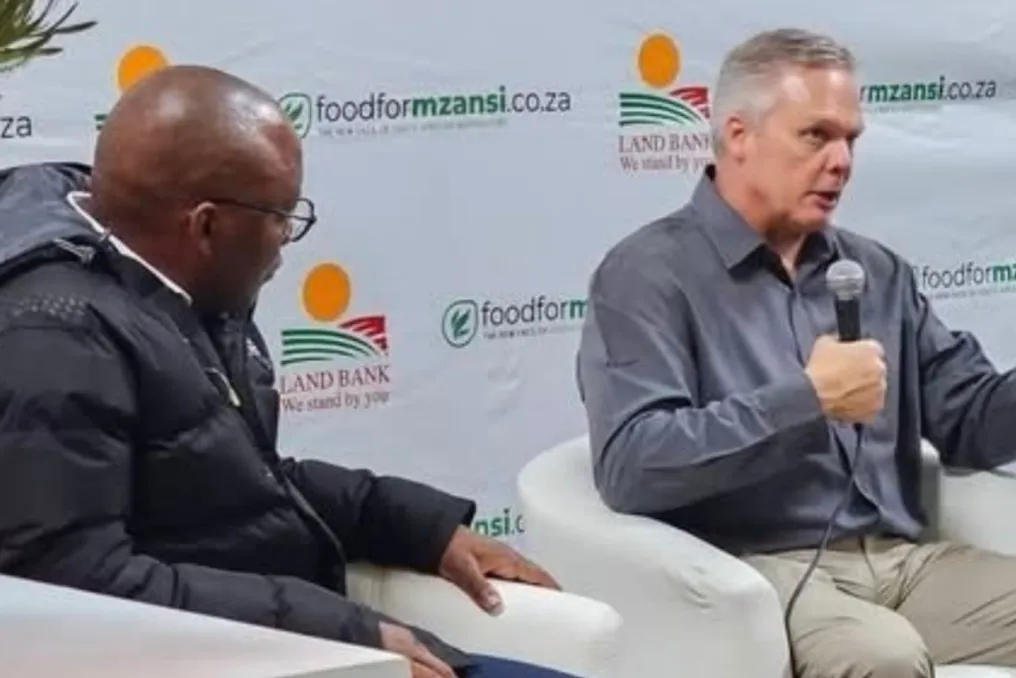
During the closing session of the Nampo Cape 2026 conference, Agriculture Minister Willie Aucamp and the current CEO of Land Bank, Jabu Mfanbo, held a fireside chat. The event was organized by Food For Mzansi and Land Bank in Bredasdorp.
Aucamp and Mfanbo engaged in a direct and constructive dialogue regarding farmers' debt issues, structural financial difficulties, biosecurity crises, and the urgent need to reform the agricultural financing system in South Africa.
While touring the country between the harvest of winter crops and the planting of summer crops, Aucamp noted that attending regional congresses allowed him to gain valuable insight into the specific and general challenges faced by South African producers. He stated that over the past two months, he attended numerous agricultural congresses where he spoke with farmers across the country and understood the various difficulties they encounter, noting that individualizing problems by region was a revelation for him.
Despite operational hurdles, Aucamp emphasized that he observes significant optimism within farming communities, citing recent successes in animal health management as evidence of progress. He mentioned that he has not heard complaints about foot-and-mouth disease for a long time because people can receive vaccines and solutions, and the overall mood is decidedly positive.
Highlighting the need for individualized debt assistance, Aucamp appealed to Land Bank management to help farmers who are financially sound but have been affected by unforeseen biosecurity outbreaks. He requested that they restructure and modify loan terms for these diligent payers, stating his desire to hold an official discussion on the matter.
This request came against the backdrop of a broader assessment of the lender's past performance, during which Aucamp did not hesitate to criticize previous lending practices that undermined the bank's reputation and reduced market confidence. He suggested that Land Bank had previously issued loans without proper vetting, negatively impacting the bank, much like any investment. This led short-term financial institutions to withdraw their funding due to a loss of trust in Land Bank.
Nevertheless, Aucamp made it clear that he fully supports the current management and the institution's transformation strategy. He stated that life is defined not by mistakes, but by how they are corrected, and expressed his willingness to provide full support for the changes at Land Bank.
Fostering a spirit of cooperation, Aucamp also stressed the mixed financing scheme as a vital tool for stimulating growth, insisting on the importance of transferring state-leased land and issuing title deeds in close partnership with the Department of Land Reform and Rural Development.
In response to the minister, Mfanbo confirmed that the demand for sustained financial support remains high across the country, especially among producers recovering from livestock losses. He also highlighted the progress made in stabilizing operations and restoring market confidence, despite past instances of the bank defaulting on obligations.
Mfanbo reported that they have made significant strides since the default in terms of re-entering the market to support the sector. He acknowledged that they previously struggled with distributing funds under the mixed financing scheme, but this issue has been resolved through grassroots work.
However, Mfanbo noted that providing widespread debt relief is constrained by how the bank itself secures funding. He explained that the old Land Bank received stable government support, which allowed the bank to offer cheap financing and conduct restructuring. Now, since they borrow money from other financial institutions to lend to farmers, they cannot grant a payment deferral to a farmer if they themselves do not receive one.