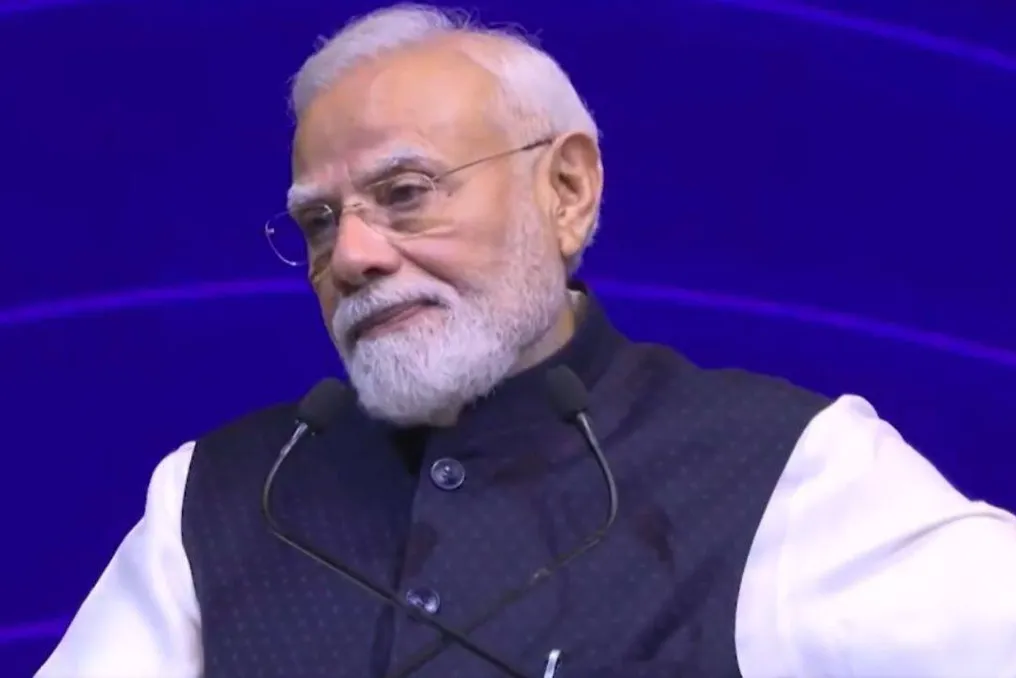
Prime Minister Narendra Modi stated on Thursday that India has entered the second stage of its journey in the field of semiconductors. He emphasized that the country has achieved in four years what the world typically requires over a decade.
Similar stories
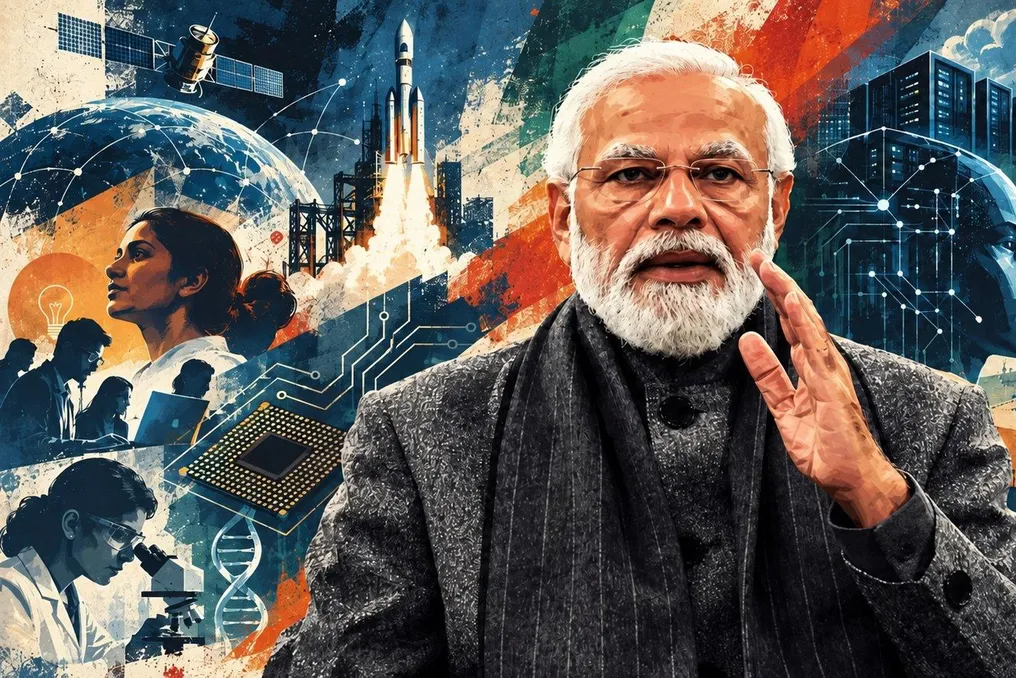
On Modi's 76th Birthday: 17 Initiatives Defining India's Shift from Startup India to Build India
For most of the last decade, the focus has been on startups: entrepreneurship, venture capital, unicorns, and digital business. However, today the discussion has taken on a deeper character. Questions are arising about who will develop India's artificial intelligence models, who will design its chips, who will fund laboratories, rocket programs, biotechnology platforms, and quantum computers, and whether future entrepreneurs can emerge from every district, not just Bengaluru, Delhi, and Mumbai.
Over the past twelve years, and especially intensely in the last year, the government under Prime Minister Narendra Modi has been answering these questions through capital, computing power, and national missions. In celebration of his 76th birthday, 17 key steps significant for India's engineers have been presented, outlining what they lay down for the coming decade.
Funding Research and Innovation
The Research, Development, and Innovation Fund may prove to be the most significant intervention this year. It is designed to attract long-term, low-cost capital into complex areas such as biotechnology, space, robotics, quantum technologies, energy, and AI. The Cabinet approved this fund on July 1, 2025, and the Prime Minister launched it on November 3, 2025, at ESTIC, allocating ₹20,000 crore for the 2026 fiscal year. Funds have already started flowing: the Technology Council signed the first agreements with five deep technology companies and made the first payment on May 13, 2026. It is important to note that India has never lacked entrepreneurial ambition, but deep technology requires something more complex—patient capital.
Startup Support and Access to Capital
Furthermore, in February, the Cabinet approved the Startup India Fund of Funds 2.0 with a capital of ₹10,000 crore, prioritizing deep technology, technology-driven manufacturing, early founders, and investments outside major metropolitan areas. The next startup cycle is planned to be distinct from the consumer internet cycle that spawned India's first unicorns.
Access to seed capital has become easier thanks to the startup credit guarantee scheme, which doubled the maximum coverage per borrower from ₹10 crore to ₹20 crore in the 2026 fiscal year. By the end of the year, over 410 loans worth more than ₹1,250 crore were guaranteed. For founders, this means access to working capital that does not always require giving up equity in the company.
Public capital has stimulated private investment. The initial Fund of Funds demonstrates how the government can support startups without selecting them directly. By the end of the 2026 fiscal year, over ₹7,000 crore was directed to more than 135 Alternative Investment Funds (AIFs), which in turn invested over ₹26,900 crore in more than 1,420 startups. This ratio is nearly four rupees of private money for every one rupee of public money. The goal of FoF 2.0 is to replicate this multiplier effect for deep technologies.
AI Infrastructure and National Missions
The biggest hurdle for serious AI companies is no longer talent, but computational power. Under the IndiaAI Mission, over 38,000 Graphics Processing Units (GPUs) are available to startups and researchers at a subsidized rate of about ₹65 per hour, and another 20,000 were announced in February, with a target of 100,000 by December 2026. The necessary foundations are being built so that entrepreneurs can build upon them.
India is moving from using AI to creating its own indigenous AI, supporting domestic foundational models instead of assuming that the base level of AI must come from outside. Twelve startups have been selected to create multimodal foundational models on India-specific data, and Sarvam presented two open-source models—30B and 105B—at the AI Impact summit in February. There is a shift in focus from adopting AI to owning it.
Semiconductors as an Industrial Mission
This is one of the biggest bets of the current year. On July 15, 2026, the Cabinet approved Semicon 2.0 with allocations of ₹1,27,500 crore. This program aims to address the shortcomings of the first phase, namely the excessive dependence on imported equipment and specialty chemicals. Twelve enterprises were approved under the first phase, three of which are already supplying chips, and the first front-end factory in Dholera is expected to begin commercial production in 2028. The question for founders is no longer whether India can produce chips, but what share of the design, equipment, and intellectual property around them Indian companies can own.
Expansion of Scope
Deep technology fields such as quantum computing, robotics, space, biotechnology, and advanced materials were previously secondary to the Indian venture market. The RDI Fund defines them as strategic. This is important because India's most valuable companies in the 2030s may take ten years to create, not ten months.
The private space sector continues to evolve. India's deeper history of space reforms is related less to rockets and more to creating an ecosystem that allows private companies access to what was previously inaccessible. A ₹1,000 crore venture fund, a ₹500 crore technology adoption fund, and access to ISRO's infrastructure, experience, and mentorship now coexist with validation in orbit on the ISRO POEM platform. Space is transforming into an industry, not just a program.
Biotechnology has bridged the gap from lab to market. India possesses enormous scientific potential, but the problem lay in translating this knowledge into finished products. The Bio-RIDE scheme, amounting to ₹9,197 crore, which includes a new component for bioproduction and biofactories, aims to solve this problem, alongside promoting bioproduction under the BioE3 policy.
Quantum computing has moved from a dream to a full-fledged ecosystem. The National Quantum Mission provides allocations of ₹6,003.65 crore over eight years and covers four thematic centers: computation, communication, sensing, and metrology, as well as materials and devices. The task now is to transform the research conducted in these centers into independent companies.
Scaling and Democratization
The 2026 fiscal year was the largest for Startup India: over 55,200 startups were recognized, the highest figure in a single year. The total number of recognized startups exceeded 223 thousand by March 31, 2026, providing over 2.33 million direct jobs. The next critical metric is not the number of registered companies, but their ability to scale.
Entrepreneurship is extending beyond major cities: over 45 percent of startups recognized by DPIIT are now based in second and third-tier cities. This could be the most important story of democratization. India cannot build its entrepreneurial future by limiting itself to only five postal codes.
The increase in women in the formal startup economy is also noticeable: over 48 percent of more than 107 thousand recognized startups have at least one female director or partner. The next stage of development is capital: what volume of funds will reach women who founded and manage companies?
Innovation is becoming infrastructure. Fiber-optic communication lines, 5G, computing power, and capital markets are not separate stories but interconnected elements. Over 218 thousand Gram Panchayats are ready to be served thanks to BharatNet, and 5G covers 99.9 percent of districts. These are the 'rails' on which the next founder can build, regardless of where they live.
India's innovation ranking continues to rise: the country climbed from 81st place in the Global Innovation Index to 38th, and also became the sixth global leader in patent applications, filing over 63,000 applications in 2024. Rankings themselves are not the final goal, but they indicate the direction of movement.
New Vector of Development
For many years, the main question was: can India create successful startups? Today the question is different: can India own the technologies that will define the next 25 years? This concerns AI models, chips, rockets, quantum computing, biotechnology, robotics, energy, and advanced manufacturing. This unites most of the decisions made—the transition from Startup India to Build India, from adoption to invention, from entrepreneurship to technological sovereignty.
A birthday is a moment for summing up. However, for Indian entrepreneurs, a more interesting question is what comes next. The government has laid the foundation: accessible capital, viable computing power, and missions defining the boundaries of possibility. Now the task for founders becomes more complex: turning registrations into sustainable companies, participation of women into women's capital, research in centers into finished products, and Indian chips into Indian intellectual property.
The government can build the rails, but capital can provide the fuel, and institutions can open the doors. But entrepreneurs must do the building.
In honor of Prime Minister Narendra Modi's 76th birthday, the most significant indicator of the path forward will not be the number of registered startups, but the number of sustainable companies, technologies, and jobs that India creates. The next chapter of Startup India must be Build India.
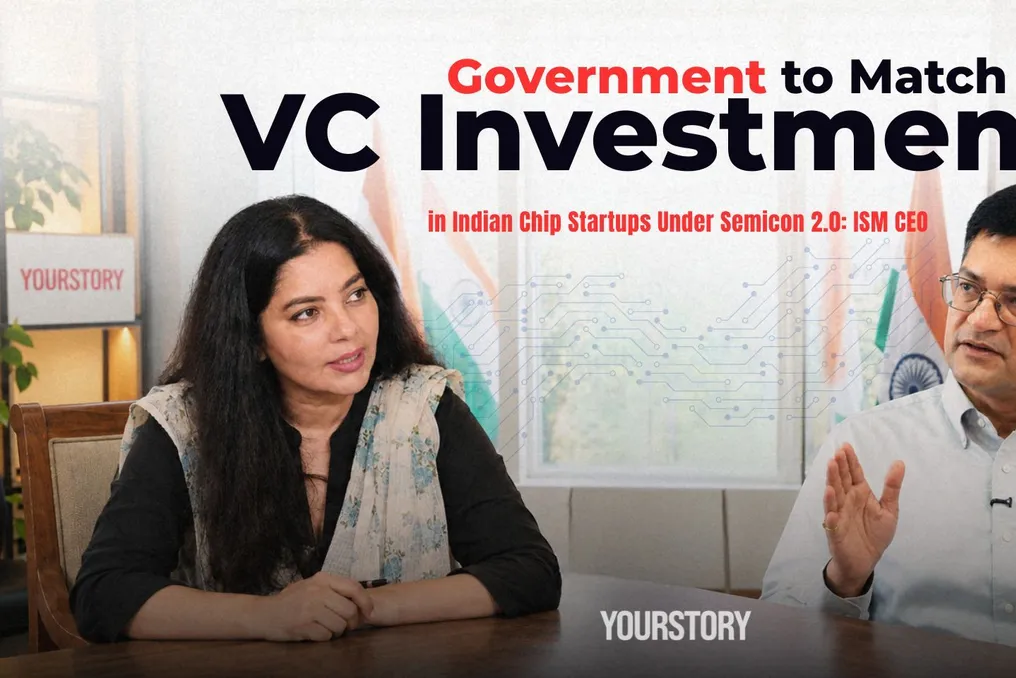
Government intends to co-finance venture investments in Indian chip startups under the Semicon 2.0 program
Amitesh Kumar Sinha, Additional Secretary of the Ministry of Electronics and Information Technology and CEO of the Indian Semiconductor Mission, stated that acquiring a government-backed startup is not necessarily a failure but can be a return on investment. This distinction is becoming increasingly significant as India transitions to the next stage of its semiconductor industry development.
According to Tracxn data, Indian semiconductor companies have attracted cumulative equity funding of $1.4 billion, with about half of this amount, $701 million, raised since 2025. Now, the government plans to attract more private capital into chip development through joint investments with venture funds.
Speaking to Shraddha Sharma, founder and CEO of YourStory and The Bharat Project, just before the opening of Semicon India 2026 in New Delhi, Sinha outlined the concept of Semicon 2.0—the second phase of the mission, which transforms the government's role from a mere grant provider to a co-investor. Under this model, the government will co-finance venture capitalists' investments in approved chip startups at a one-to-one ratio on the same terms.
He noted that 'initial funds for startups are grants; the rest is our investment, so the government shares both successes and failures.' When YourStory previously interviewed Sinha before Semicon India 2025, the Indian Semiconductor Mission had 10 approved projects and provided electronic design tools to 280 colleges. A year later, the number increased to 12 manufacturing units with cumulative investment commitments exceeding 1.64 lakh crore rupees: this includes one silicon foundry, one silicon carbide-based factory, one gallium nitride micro-LED display integrated factory, and nine packaging units. Three of these 12, namely Micron, Kaynes, and CG Semi, have started commercial production, and all are located in Sanand, Gujarat.
In the design domain, support was approved for 24 startups, and Sinha reported that 15 of them attracted venture funding. The first phase, which began in 2022 with an allocation of 76,000 crore rupees, is called Semicon 1.0. The Union Cabinet approved Semicon 2.0 on July 15, 2026, with an allocation of 127,500 crore rupees, and MeitY notified the scheme on August 31, 2026. This program is built on six pillars: design, equipment and materials, fabs, advanced packaging, research and development, and talent.
Sinha emphasized that the timely arrival of Semicon 2.0 demonstrates the long-term commitment shown by Prime Minister and Union Minister Ashwini Vaishnaw. According to Sinha, the first phase aimed to establish demand. The 12 approved projects showed the government what it needed in the supply chain and identified gaps. He explained that 'when your industry is still small, supply chain partners prefer to export to India rather than relocate here.' As a result, only basic goods are established near the plant.
Semicon 2.0 aims to bridge this gap. He explained that equipment accounts for about 65% of the cost of a manufacturing facility, while chemicals, gases, and materials account for approximately half of operating expenses. Attracting such suppliers to India reduces production costs and increases the competitiveness of Indian companies.
Sinha also noted that the time is right for India. Since the global semiconductor industry is expected to expand sharply in the coming years, manufacturers and suppliers will have to scale up capacity somewhere. India's bet is that the growing domestic market, government incentives, and forming manufacturing base can convince more suppliers to move here.
However, the most significant change is happening in the design sector. Under the first phase, the scheme provided startups and MSMEs with initial funding and access to automated electronic design tools, which are prohibitively expensive for a small team. The problem arose after concept validation. Sinha clarified that chip design takes another one and a half to two and a half years depending on complexity, and this requires funds not covered by the scheme. The cost of designing a single chip can range from 25 crore to 35 crore rupees for a simpler version to 1,000 crore to 2,000 crore rupees for complex components.
Semicon 2.0 adds a layer of co-investment. After receiving initial funding, if a venture fund invests in an approved startup, the government invests an equal amount as an investor on the same terms. Large Indian companies that may not want to give up a stake can opt for royalty-based financing, which is also co-financed at a one-to-one ratio. Exit routes align with industry practice, and any company can exit when it decides to do so.
The goal is to attract venture funds to a sector they have largely avoided. Sinha stated that 'in Silicon Valley, Israel, wherever design companies thrive, venture funds invest, understand the business, mentor startups, and help with market access.' He is ready to address the political question that arises when a government-backed startup is acquired by a foreign company. 'If we try to control it, the ecosystem will not form,' he said. The founder being acquired returns with capital and experience, tries again, and after one or two attempts, creates a company that the mission truly wants—an Indian fabless firm with its own intellectual property. If the startup is acquired, the government receives its share according to its stake, just like any other investor, and uses this money to fund the next. In other words, Semicon 2.0 is not designed to prevent exits. Its goal is to create a cycle where successful exits return capital and experience to the ecosystem.
Shraddha asked what share of domestic chip demand the domestic capacity can meet and by when. Sinha answered by segments rather than a single date. In packaging, he expects India to cover domestic demand and export in large volumes within five to six years, taking a leading position in advanced packaging. Even then, 10% to 25% of unique, advanced chips will still be imported because their factories are not here.
In fabrication, the Tata plant in Dholera covers nodes from 28 nanometers to 110 nanometers, and he expects full capability above 28 nanometers to follow with the emergence of more compound semiconductor fabs under Semicon 2.0. In the long term, over 10 years, he said India will achieve self-sufficiency in legacy chips and begin exporting them after meeting its own needs. The most advanced chips at the 2nm level and below may continue to be imported. 'This could take 10 to 12 years,' he noted.
Shraddha's concluding question set a 10-year horizon: what must happen by 2035 for him to call the mission game-changing? His criterion was a specific goal: self-sufficiency in legacy fabs and all types of packaging with large export volumes—that is the baseline. If India closes the gap in advanced technology by then, 'I will call it a success.' If it operates parallel to the advanced level, 'I will call it a super success.'
According to PIB, the Indian semiconductor market was valued at $45 billion to $50 billion in 2024-25 and is projected to reach $100 billion to $110 billion by 2030.
Shraddha asked a question that a student from Patna, Indore, Bhubaneswar, Coimbatore, or Kochi might ask: is this industry only for Tata and IIT startups? Sinha began his answer with design, which he said constitutes about 50% of the semiconductor value chain, with 20% of global design engineers already being Indian. The Chips to Startup program provides free expensive design tools to over 300 colleges, according to PIB, and student projects are manufactured in the Semiconductor Laboratory in Mohali, packaged, and sent back. 'A student who sees the full cycle leaves college as a confident design engineer,' he said.
He added that the Design Linked Incentive scheme attracts Indians with 25-30 years of design experience abroad who now want to start businesses at home. A chip design company hires from 50 to 200 people, and if it scales, 'it becomes Qualcomm, which hires 20,000 engineers in India.' Besides design, he listed chemical, materials science, civil, and mechanical engineering as fields upon which the fab depends, mentioning an industry multiplier of about 5.7 for jobs created outside the plant.
The most striking example for him was Shraddha's comment that deep technological discussions often exclude women. At the CG Power plant in Sanand, operators working with semiconductor equipment and packaging chips are all women recruited from Jharkhand, Madhya Pradesh, Bihar, Odisha, and Northeast, with ordinary education and no prior industry experience. They were sent for training to Malaysia, many of them leaving their hometowns for the first time. 'Meet them today, and they will explain chip packaging to you as confident engineers,' he said. He noted that women already constitute more than half of the electronics workforce, and at some plants, the entire workforce, and he expects this to happen in the semiconductor industry too. Semicon India 2026 will hold a special session on women in the industry, where senior Indian women leaders of global chip companies will speak to students.
Semicon India 2026 will take place from September 17 to 19, 2026, at Yashoboomi in Dwarka, New Delhi, opening with Prime Minister Narendra Modi on September 17, and he will hold his annual Country Roundtable with global CEOs on September 16. Sinha reported that more than 575 companies are participating, compared to 350 last year, of which about 300 are international, and 86 are headquartered in India. Participation has grown to over 50 countries and seven national pavilions, and he noted that 12 states are participating. SEMI, which refrained from holding the conference in India in 2022 and 2023 due to lack of industry, has been collaborating with ISM and IESA since 2024.
This year's novelty is the workforce development pavilion within the exhibition, including student mentorship, training on the full fab process, a one-day session conducted by experts from Singapore on September 18, and company-sponsored hackathons. The Semicon India 2026 mobile app offers navigation of the venue, session schedules, and coordinated AI matching with the ability to book meeting rooms. Main sessions will be broadcast for those who cannot travel to Delhi.
By the metric used by the mission, a design startup becomes a unicorn with revenue of $1 billion. 'Many unicorns are what we want to see in semiconductor design,' Sinha said. Alongside export volumes from legacy fabs and packaging units, he wants the mission to be evaluated in 2035 in this way.
A closer test is quieter. He reported that order negotiations with large global companies for fabs that are now starting commercial production are at an advanced stage; some are ready to book entire facilities and are already discussing expansion at yet-to-be-built plants. If these orders come in over the next year, they will provide an early indication of whether the Indian semiconductor surge is moving from government-supported capacity creation to a commercially sustainable industry. And by Semicon India 2027, the mission may be measured against a completely different baseline than the one it sets this September.

TechSparks 2026 to be held in Bangalore with participation from technology and policy leaders
Technology is rapidly changing the landscape of power, access, and opportunity. Artificial intelligence lowers barriers, shortens timelines, and expands the scope of application; therefore, the key question is not just access to technology, but the ability to move faster, create better, and solve real problems.
This context sets the tone for TechSparks 2026—YourStory's flagship summit on startups and technology, which will take place in Bangalore from October 13 to 15. The event's theme is 'The New Tech Order.'
The summit is built on the idea that the future is not just discussed, but created in real time. TechSparks gathers the people shaping this future so they can exchange ideas, forge partnerships, test hypotheses, and turn discussions into practical actions.
Discussions at TechSparks 2026 will bring together leaders from government bodies, the technology sector, startups, venture capital, the corporate sector, and deep tech, offering diverse perspectives on shaping the next phase of innovation in India.
A Political View
Priyank Hardge, Minister of Home Affairs, IT, BT, and e-Governance of the Government of Karnataka, will present the political perspective on technology, innovation, and the role of the state in supporting the new generation of enterprises and digital infrastructure. Karnataka has established itself as a major center for emerging technologies, and the state intends to further strengthen its ecosystem in deep tech and AI.
The Future of Bangalore
Krishna Bayre Gowda, Minister for Urban Development of the Government of Karnataka, will deliver a report on the future of Bangalore and the role of cities in supporting innovation, growth, and the ecosystems that enable it. He also addressed the use of technology and citizen participation in solving certain urban problems in Bangalore.
Christina Strimaithe, Marketing Director at Hostinger, represents global technology companies that develop tools and platforms to help businesses and individuals build and develop their online presence. Her viewpoint will enrich the discussion on how technology expands digital access and changes business interaction with customers and markets.
Pramod Varma, co-founder and chief architect of Networks for Humanity, will bring expertise in creating technologies and digital public infrastructure at a population scale. He will discuss how large technological systems can be designed to ensure broader access and solve real-world challenges.
Samir Nigam, founder and CEO of PhonePe, joins the list of participants from India's digital economy hub. PhonePe's growth alongside the country's digital payments ecosystem gives him a unique insight into building consumer technologies at scale, as well as the opportunities and challenges of serving millions of users.
Ravi Garg, Director of Enterprise Sales, AI, and Business Messaging in APAC at Meta, will provide a corporate perspective on the growing adoption of AI and business messaging. As companies explore new ways to use AI in customer engagement and business operations, enterprise adoption will be an important part of the discussion.
The Investment Side
Anjali Bansal, founder of Avaana Capital, presents the investment side of India's innovation ecosystem. Her opinion is timely as capital increasingly focuses on sectors beyond traditional tech companies—those where technology intersects with climate, sustainability, and large-scale economic shifts.
Ashutosh Sharma, Head of Investments and M&A at Prosus, will share insights covering investments, acquisitions, and the evolving technological landscape. His participation comes as Indian startups navigate a changing funding environment while striving to build more scalable, sustainable, and long-term valuable enterprises.
Michael Cronin, Vice President of Sales for APAC, Japan, and India at Couchbase, will add a corporate technology lens to TechSparks 2026, as companies increasingly consider how to build, deploy, and scale applications in AI-driven environments.
The program also includes Professor Ashok Jundzhunwala from IIT Madras, who is a professor at the institute and chairman of IIIT Hyderabad and ITEL Foundation; Mukund Jha, founder and CEO of Emergent; Dr. Nagendra Nagaraja, founder, CEO, and chairman of QpiAI; Srinath Ravichandran, co-founder and CEO of AgniKul; Anand Jain, co-founder and CMO of CleverTap; Rahul Chari, founder and CPTO of PhonePe; Priyanka Agarwal Chopra, Managing Partner and CEO of IIMA Ventures; and Nicolas Sauvage, President of TDK Ventures.
With such a diverse lineup, including politicians, founders, investors, technologists, and builders, TechSparks 2026 will bring together the people defining India's technological future to discuss the next steps—and, more importantly, to help build them.
The new tech order is being shaped right now. Be part of the conversations that define it.