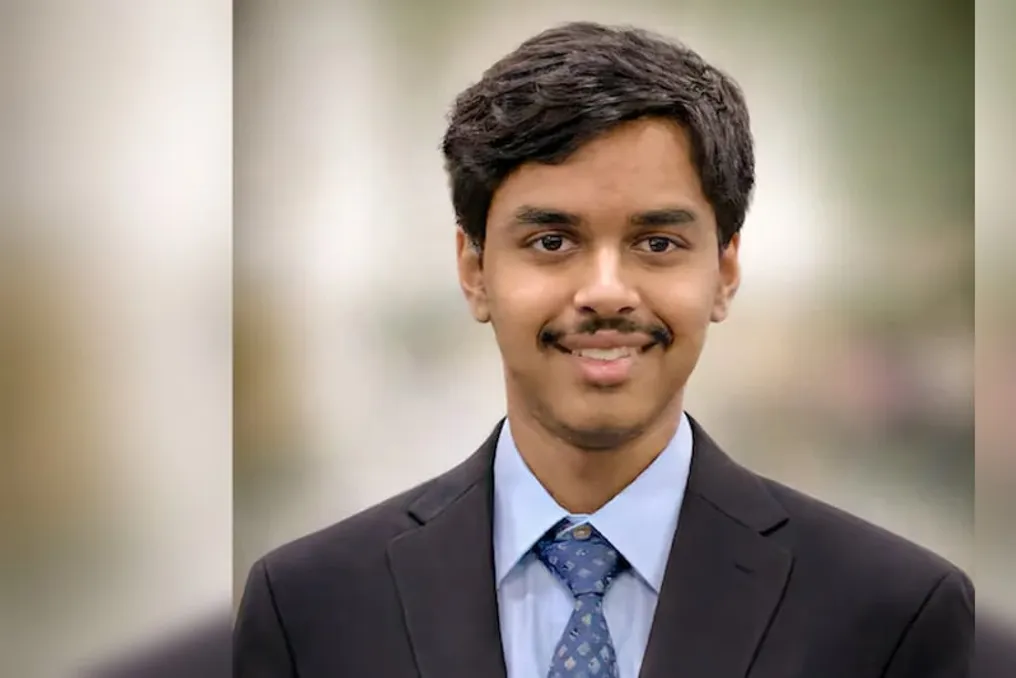
During a flight, when sudden gusts of wind (Air Turbulence) can cause severe discomfort to any passenger, 18-year-old Indian student Aditya Sengupta experienced something similar. Instead of being frightened, Aditya turned this frightening incident into the basis for a revolutionary scientific study.
He created an advanced system called 'ForeCAT', based on artificial intelligence (AI), which is capable of accurately predicting invisible atmospheric disturbances. For his invention, he was awarded the prestigious 'Davidson Fellow Laureate' from America and also received a scholarship of $100,000 (equivalent to approximately 83 lakh rupees).
Most often, the cause of aviation incidents or turbulence is cloud visibility, which allows pilots to change course. However, so-called Clear-Air Turbulence (CAT) poses a hidden threat because it occurs suddenly, without any weather or cloud warnings.
The ForeCAT system integrates laws of atmospheric physics into a neural network, allowing it to recognize hidden air waves and assess their intensity. According to the research data, this AI-based system achieved a 95% classification accuracy compared to existing standards. Furthermore, the system demonstrated 87% accuracy in retroactively testing the prediction of severe turbulence that occurred during a Singapore Airlines flight in May 2024.
Aditya explains that after feeling sudden and strong jolts during the flight, he asked himself: why is it so difficult to predict something so dangerous in advance? This very question motivated Aditya to undertake the research. Even while still a high school student, he independently studied atmospheric sciences, turbulence physics, and machine learning without access to large laboratory facilities.
Aditya believes that scientific discoveries rarely happen according to a direct plan. After initial models proved unsuccessful, he managed to develop the successful 'ForeCAT' algorithm. Given the increasing atmospheric instability due to global warming and climate change, there is a possibility of increased turbulence risk in the future. Therefore, Aditya's ForeCAT system can be integrated into Air Traffic Control (ATC) systems and used as part of planning software. This would give pilots enough time to change routes or altitudes before entering a dangerous zone.
Having received a scholarship of 83 lakh rupees, Aditya previously placed second globally with a team in the 'VEX Robotics World Championship'. He was also selected as a 'Regeneron Science Talent Search Scholar'. In the future, Aditya intends to continue studying computer science and natural sciences to find even more large-scale solutions that simplify and make human life safer by combining physics and AI.