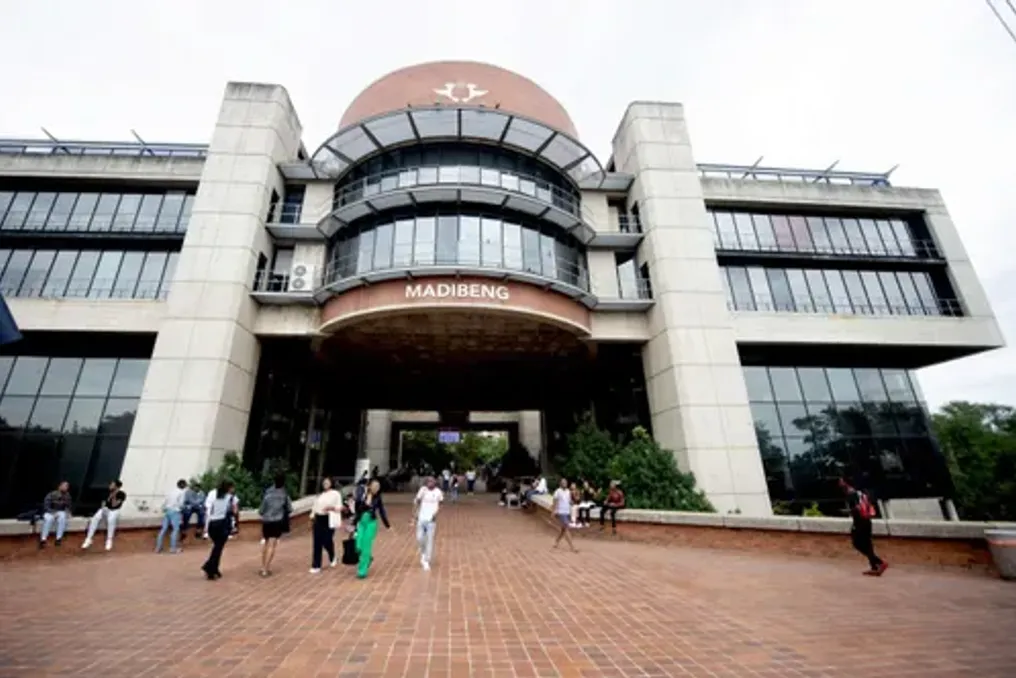
The University of Johannesburg (UJ) has strengthened its status as a leading university in Africa by securing the number one spot in 10 subjects in the latest Global Ranking of Academic Subjects (GRAS) published by ShanghaiRanking. These results were released on September 15, 2026.
The ranking places UJ among the world's top institutions across 15 different fields, which include engineering, sciences, education, business, and social sciences. Notably, eight of these subjects also hold the top position within Africa.
UJ's national number-one positions
UJ achieved national first places in several areas: Hospitality and Tourism Management (ranked No. 19 globally), Earth Sciences (ranked 101–150 globally), Political Sciences (ranked 201–300 globally), Education (ranked 201–300 globally), Business Administration (ranked 201–300 globally), Management (ranked 201–300 globally), Electrical and Electronic Engineering (ranked 301–400 globally), and Telecommunication Engineering (ranked 301–400 globally).
Additionally, Food Science and Technology and Biotechnology were placed in the 301–400 global bracket. Political Sciences re-entered the global rankings at 201–300, while Biotechnology made its debut in the 301–400 category. UJ also secured national second places in Geography, Sociology, and Chemical Engineering, alongside a third place in Economics.
GRAS assesses 57 subjects utilizing indicators such as research output, quality, impact, and collaboration, based on data collected between 2021 and 2025.
Insights from University Leadership and Partners
Professor Letlhokwa Mpedi, the Vice-Chancellor of UJ, commented that these rankings underscore the institution's depth in research. Mpedi stated that being ranked first in South Africa across ten subjects, with eight leading in Africa, showcases the strength of their academic endeavors across a wide array of disciplines. He added that the sustained top 20 position in Hospitality and Tourism Management, coupled with the return of Political Sciences and the introduction of Biotechnology, reflects both consistent quality and developing research strengths.
Xolani Hadebe from Thamsanqa Career Pathways (TCP) discussed how these accomplishments can translate into socio-economic advantages. Hadebe pointed out that the success reflects the accumulation of institutional capacities, including deep research, academic proficiency, high-quality publications, and international cooperation, all of which align with the GRAS methodology.
Hadebe emphasized that UJ's performance signifies more than just individual subject victories; it demonstrates ongoing research capacity across various fields. He further noted that UJ's broader international standing, which includes a top global sustainability-impact position, adds another layer, indicating that academic excellence is matched by measurable involvement with the Sustainable Development Goals (SDGs).
Regarding TCP's function in supporting these rankings, Hadebe clarified that TCP does not influence academic metrics. He asserted that the responsibility for academics and research remains with UJ. TCP's role, conversely, is supplementary: assisting in building stronger connections between UJ's academic abilities and the economy. This involves linking disciplines to labor-market needs, workplace training, employers, and entrepreneurship to boost the practical use of knowledge generated at the university.
To guarantee that graduates possess skills relevant to the industry, Hadebe highlighted a proactive, demand-driven method for curriculum design. He explained that the process does not involve retroactively searching for jobs based on existing qualifications; instead, it begins by identifying emerging occupations and scarce capabilities, subsequently designing pathways that meet those requirements. This approach integrates academic study, professional competence, and on-the-job experience to establish multiple avenues for entry and exit.
Considering UJ's global standing in Hospitality and Tourism Management, Hadebe identified this area as a key opportunity for developing a complete ecosystem. He mentioned that TCP would aim for structured collaborations throughout the tourism value chain, involving municipal bodies, operators, and hospitality groups. The scope of this effort goes beyond mere internships to cover graduate employment, entrepreneurship, market access, and workplace learning, a principle applicable to other high-performing UJ disciplines.
In conclusion, Hadebe detailed a structured framework for converting ranking achievements into tangible career outcomes. He specified that for employment, candidates are connected to employers; for entrepreneurship, graduates are linked to markets and enterprise development; and for governmental roles, pathways are designed to meet public-sector capability demands. He concluded that UJ's global academic distinction must integrate into a larger South African ecosystem where universities, government, and employers collaborate, and TCP's function is to facilitate this connection.