Springboks defeat All Blacks, demonstrating potential yet to be fully realized
Read more
IOL
iol.co.za

Springboks defeat All Blacks, demonstrating potential yet to be fully realized

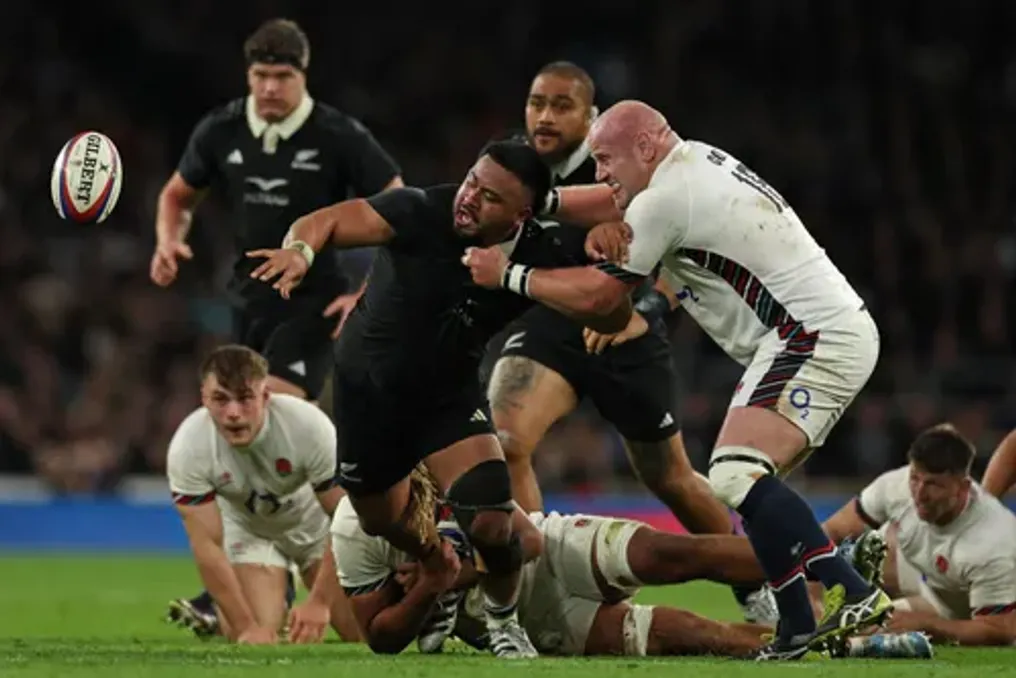
After winning the Webb Ellis Cup in France in 2023, the Springboks have undergone a significant evolution that should worry their global rivals. The team, under the leadership of Rassie Erasmus, has not been satisfied with past successes, actively expanding its rugby repertoire. They have transformed from a pragmatic, strike-oriented team into one of the most versatile teams observed in over a century of test rugby.

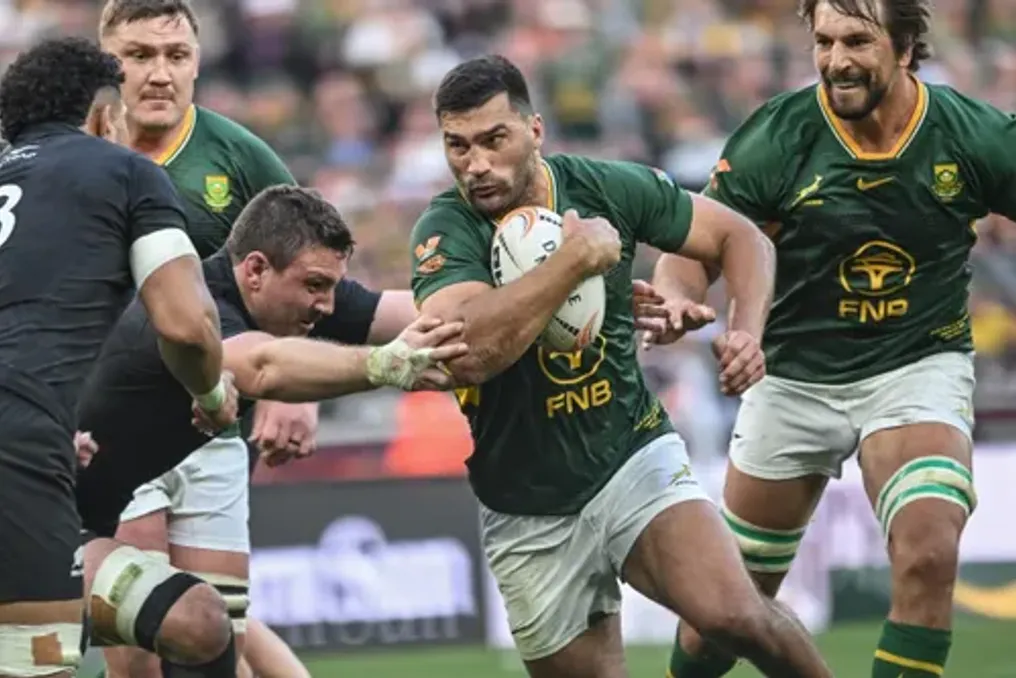
However, the most alarming aspect for opponents ahead of the 2027 Rugby World Cup in Australia is the realization that the team has not yet reached its absolute peak. A recent series of matches, culminating in the Springboks' 3–1 victory over the All Blacks, exposed this reality. In the first three matches played in Johannesburg, Cape Town, and Soweto, the Springboks were essentially operating at third gear, winning two of them by reverting to the qualities that make them strong.

In these games, they appeared clumsy in possession, rushed in decision-making, and made uncharacteristic errors. Nevertheless, even when not playing at full capacity, South Africa's fundamental pillars—unbreakable commitment, relentless defensive pressure, dominance in collisions, and unparalleled ruck play—proved robust enough to pull the team out of difficult situations and secure crucial wins.

When the team switched to full power

It is rare in test rugby for a loss to the All Blacks to occur when playing significantly below one's potential. When Erasmus's team finally switched to a higher level in the final match of the series in Baltimore, their full potential was unleashed. Demonstrating 'Tony-ball'—the fluid, multi-faceted attacking structure promoted by attack coach Tony Brown—at the M&T Bank Stadium, the Springboks displayed a wide and creative running pattern.

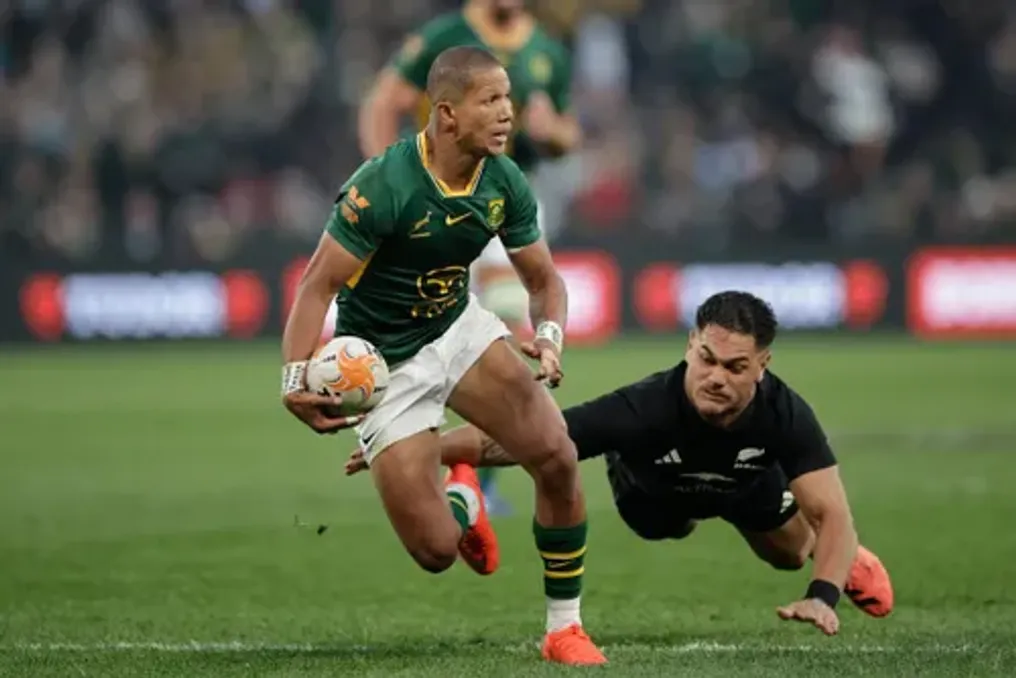
Under the clear ball distribution and running abilities of Sacha Feinberg-Musengomozulu and Mani Libbok, combined with the lethal outside running of Kurt-Lee Arendse, South Africa bypassed the All Blacks with speed, blending ruthless power with effortless grace.

What makes the Boks' trajectory toward 2027 so daunting is the seamless integration of next-generation talent with battle-hardened two-time World Cup winners who seem to only improve with age. Players such as captain Siya Kolisi, Eben Etzebeth, Malcolm Marx, Pieter-Steph du Toit, and the central pairing of Damian de Allende and Jesse Kriel continue to perform excellently in their mid-thirties.

Thanks to unprecedented squad depth at all positions and an evolving tactical plan that merges the brutality of the forwards with the finesse of the backline, the Springboks are no longer just winning—they are redefining the way the game is played. If this is what the Springboks look like while still building, seeing them at full power will be a truly frightening spectacle.
Similar stories

Springboks defeated All Blacks in Baltimore and won the series of the greatest rivalry in rugby
Read more
iol.co.za

Springboks defeated All Blacks in Baltimore and won the series of the greatest rivalry in rugby

The Springboks secured a convincing victory over the All Blacks with a score of 43–28 in the final match of the greatest rugby rivalry series, held in Baltimore. This win allowed South Africa to claim a historic 3–1 series victory.

The second half of the match proved decisive, as the Springboks managed to pull away from the New Zealand team in Maryland state. The victory was ensured by dominance in the forwards and precise execution of attacks in the backline.

The game took place at M&T Bank Stadium in front of an enthusiastic crowd. The South African team overcame the resistance of the competitive New Zealand squad by utilizing a destructive combination of forward power and backline skill. This triumph concluded an unforgettable multi-match tour in the United States.

The Greatest Rugby Rivalry

The Springboks demonstrated both power and style to defeat the All Blacks in the final match of the series. This secured them a historic 3–1 victory, allowing head coach Rassie Erasmus to mark his significant one hundred and first Test match in the series.

More to Come...

Springboks prepare for match against All Blacks, viewing it as a World Cup playoff
Read more
iol.co.za

Springboks prepare for match against All Blacks, viewing it as a World Cup playoff

Ahead of the upcoming match against the All Blacks at FNB Stadium on Saturday, Springboks players have shown confidence similar to that before a World Cup playoff. The team approaches this confrontation, dubbed the 'Clash in the Calabash,' with a mentality that helped them win major trophies.

Assistant coach Mzwandile Stik noted that the team is employing the same tactics that helped them win in the most significant tournaments. In their recent history, there has often been a decisive response following an early defeat.

The Springboks lost their first match against the All Blacks at Ellis Park but managed to balance the series by playing in Cape Town last week. Now that the series score is 1–1, they head to Soccer City, knowing that a victory will bring them closer to winning the series.

Approach to the Series

Stik stated: 'From the beginning, we said we would treat this series like a World Cup playoff campaign.' This mindset explains the stability of the Springboks squad this week, as only changes due to injuries were made to the team that defeated New Zealand in Cape Town.

The All Blacks, in turn, draw confidence from their past success at Highveld in the professional era. Stik understands that the team will not be intimidated by the altitude, and he is also aware of what is at stake for New Zealand. He added: 'If they win tomorrow, they will claim they beat us 2–1 on our ground, so we know exactly what drives them. We also want to defend what we represent as South Africans.'

He emphasized that regardless of the outcome, the winner will gain a real chance to win the broader series during the fourth match in Baltimore, while the losing team will only be able to level the score. Both teams will desperately need a result.

Tactical Aspects of the Match

Stik expects the battle to be very tough, especially in the contest for the ball after contact. 'We were weak in the ball contest in the first match, but we didn't concede any in the second. We still want to improve our play in this area because we know they will target it again with selected players. If we want to create opportunities, we must be clinical in this regard.'

The Springboks also plan to utilize their traditional strengths to limit the attacking potential of the All Blacks. Stik noted: 'Set-piece play is one of our biggest attacking platforms; we want to move forward, we have never been a team that bypasses contact, so if we get opportunities in the scrum or lineout, we will try to dominate.'

He continued that New Zealand will want to keep the ball in play and avoid contesting the ball and set pieces, which aligns with their game plan, but the Springboks know what suits them better.

The South Africans previously followed a similar path to success: they lost matches in the 2019 and 2023 World Cups, as well as the 2021 British & Irish Lions series, but then responded with an unbeaten run and ultimately lifted the trophy.

Stik explained that the changes made after the first match were mainly forced, and some were due to injuries. He added that the players understand the series plan, as in such situations at the World Cup, you always want to field the strongest available squad. Although some young players who got a chance to shine were unlucky, several veterans returned from injury and immediately took their positions.

The All Blacks have made adjustments to their squad, although Stik believes the core of their team remains unchanged. 'New Zealand has made a few changes, but you probably know their best 23-man squad, and the core of their team hasn't changed much. They have combinations that work.'

Since the series is tense, Stik believes it lives up to all expectations. 'This rivalry justifies its name, perhaps the best in the world historically, and people get value for their tickets because you never know who will win.'

All Blacks prepare for match against Springboks, betting on fast and dynamic style of play
Read more
iol.co.za

All Blacks prepare for match against Springboks, betting on fast and dynamic style of play

The All Blacks intend to use a high tempo and expansive running style to defeat the Springboks at FNB Stadium in the third test. The squad selection made by Dave Rennie clearly demonstrates the team's desire for greater dynamism and mobility in the attacking line.

Key Rugby Rivalry

The inclusion of explosive hooker Asaph Aumua instead of experienced Cody Taylor is a telling move. While Taylor provides traditional stability in goal-line play, Aumua brings a rare and destructive threat of carrying the ball in open space.

Aumua, who is a forward from the Hurricanes, possesses a powerful physique and is capable of being an explosive ball carrier, while also demonstrating outstanding work rate in gaining ground. His presence indicates that the Kiwis aim to shift the ball away from the large Boks forwards by increasing the number of passes and offloads from deep in the field.

In the backline, the tactical shift is highlighted by the selection of 23-year-old Peter Lakai at the blindside flanker position. Unlike a traditional player in this position, who spends most of his time contesting rucks, Lakai has excellent ball-handling skills, allowing him to act as an additional link player. His speed, work rate, and ability to pass under contact allow him to maintain breakthroughs in wide areas of the field.

Together with the open-side Luke Jacobson and ever-present Ardie Savea, the All Blacks have formed an exceptionally mobile trio. The team looked very dangerous when possessing the ball in counterattacks and in moments when the game became more chaotic. Flyhalf Ruben Law and fullback Damian McKenzie operate effectively as space playmakers, and they now also possess the tools to break down defensive lines and distribute the ball.

By utilizing Lakai, Aumua, and Savea as mobile ball distributors in the central channels, the All Blacks hope to stretch the South African defense, which has struggled to cope with the Kiwis when they moved the ball into the wide zones. Furthermore, the inclusion of 2.03m tall Loa Sam Darii gives New Zealand an athletic and agile jumper capable of covering distance quickly, creating a different scenario for the Springboks during the lineout after three crucial turnovers by the South Africans in Cape Town.

However, by choosing a lighter and faster forward pack to unsettle the Springboks at the altitude of Highveld, New Zealand risks losing brute strength in the scrum battle against players like Ox Nche and Vilko Lowe. To execute their plan, the All Blacks need quick ball upon initial contact, which is not an easy task against an aggressively set-up Springboks side. Nevertheless, if the Kiwis can generate quick ball in collisions and outmaneuver the speed of the South African defense, they believe they possess enough firepower to replicate their attacking play from the first test in Ellis Park.

Popular