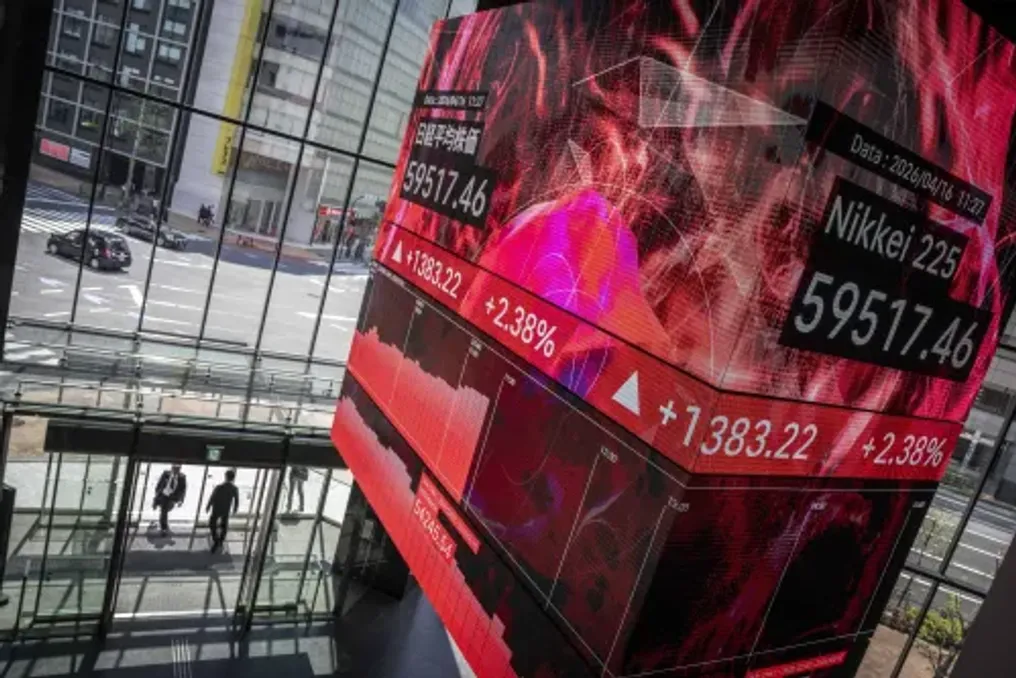
Asian markets showed growth after the Federal Reserve raised interest rates, while falling oil prices brought some relief amid the Middle East crisis.
Most stocks rose on Thursday after the Federal Reserve hiked interest rates for the first time in three years. Fed Chair Kevin Warsh adopted a hawkish stance, reinforcing expectations of further rate hikes as officials battle rising inflation.
Investor sentiment also improved due to hopes of resumed oil supplies from Saudi Arabia after the country began restoring part of the capacity of a pipeline that was shut down over the weekend following drone attacks. The price of Brent crude fell by 0.2 percent to $105.66 on Thursday morning.
Confrontation with Trump
The Fed unanimously decided to raise borrowing costs for the first time since 2023, thereby ignoring President Donald Trump's demand for lower rates. Warsh emphasized the necessity of combating inflation, which has been 'too high' for 'too long.'
Following the announcement, Warsh stated: 'We removed a dose of easing so that financial and credit conditions align with our ultimate goals.' He continued: 'Today's action shows that we are serious about this task, and we will achieve the goal of price stability.'
This decision was announced alongside a chart indicating that the vast majority of Fed policymakers believe another hike is likely before the end of the year. Traders are now assessing the probability of an October hike at 50/50.
While the three major Wall Street indices closed Wednesday in the red, Asian traders reacted more positively to the 25 basis point increase. Analysts noted that this strengthened confidence in the central bank and provided assurance in the officials' determination to beat inflation.
Long-term government bond yields, which reached twenty-year highs this week, declined as investors lowered their inflation expectations, currently at 3.4 percent, significantly above the bank's target of two percent.
Steven Innes of Quintex Intel noted: 'Removing a dose of easing is not the language of a central bank that believes it has done its job.' He added that this 'implies that policy was still supportive until Wednesday and may not be restrictive after it.'
Innes also observed: 'The hike eliminated the immediate question of confidence. The explanation created a new argument about how strong the tightening must remain.'
Christian Herrmann of DWS added: 'Overall, we believe the main motivation this time was confidence, given bond market pricing and recent events in the oil market.'
However, he also noted: 'Despite his hawkish stance, Fed Chair Warsh's optimistic view of the economy may be pleasing to many.'
Early trading across Asian stock markets was predominantly higher. Tokyo, Seoul, Singapore, Taipei, Wellington, and Jakarta showed gains, although Hong Kong and Shanghai declined.
Nevertheless, Tai Hui from JP Morgan Asset Management warned: 'We believe the probability of US interest rates returning above five percent remains limited.' He concluded: 'However, the catalyst for extending the stock bull market (interest rate cuts) is unlikely in the foreseeable future.'
This news drew displeasure from Trump, who called Warsh a 'good person' with a 'hostile council.'
He complained: 'They are raising rates to make Trump do everything bad they can... So they are raising it only for political reasons, and this hike is against Trump.'
Oil Price Decline
Although the Middle East crisis continues to heavily influence sentiment and oil prices above $100 per barrel, investors were pleased with reports that Saudi Arabia intends to restore about half the capacity of its transcontinental pipeline within days.
The East-West pipeline had been halted last week after Houthi rebels supported by Iran from Yemen struck it. The state company Saudi Aramco reported that it plans to return to full capacity in about six weeks, according to data cited by Bloomberg from sources.
This news led to a drop in crude oil prices by approximately three percent on Wednesday, and the decline continued on Thursday.
The Fed rate hike and Warsh's remarks also contributed to the strengthening of the dollar against other currencies and maintained gains in early trading. Attention is now focused on the decisions of the central banks of the UK and Japan, with expectations that the latter will also raise rates to prevent inflation growth and yen depreciation.
Key Figures Around 4:30 AM (Saudi Arabia Time)
This section provides a summary of financial indicators, including the indices of Tokyo, Hong Kong, Shanghai, as well as the prices of West Texas Intermediate and Brent North Sea Crude, and currency exchange rates.