As Africa prepares for the powerful El Niño weather phenomenon, an international group of researchers, led by the University of Sydney and Imperial College London, discovered that access to improved forecasts alone is insufficient to protect many of the region's poorest pastoralists from the impacts of climate change.
According to the study, published this week in the journal Nature Sustainability, meteorological information must be combined with practical 'risk mitigation' measures such as supplementary livestock feed, drought insurance, targeted financial support, or improved market access. This will allow farmers at risk of losing livestock to take action before the drought sets in.
Combining better access to climate information with risk reduction support allows pastoralists to avoid ecological trade-offs that arise from using either element in isolation.
The lead author, Dr. Matt Clark, a research fellow on sustainable development at the University of Sydney's School of Earth Sciences Research Centre for Thriving Oceans, noted that climate variability is becoming a 'multiplier of inequality'. He stated: 'If the forecasts prove correct and we see the development of an almost record El Niño, we expect it to exacerbate inequality across Southern African rangelands.'
Clark emphasized that the problem is not that poor farmers lack climate information, but that they often cannot afford to act on it. More affluent producers are able to reduce herd sizes before a drought and rebuild them when conditions improve, whereas many small-scale herders simply do not have such a financial buffer.
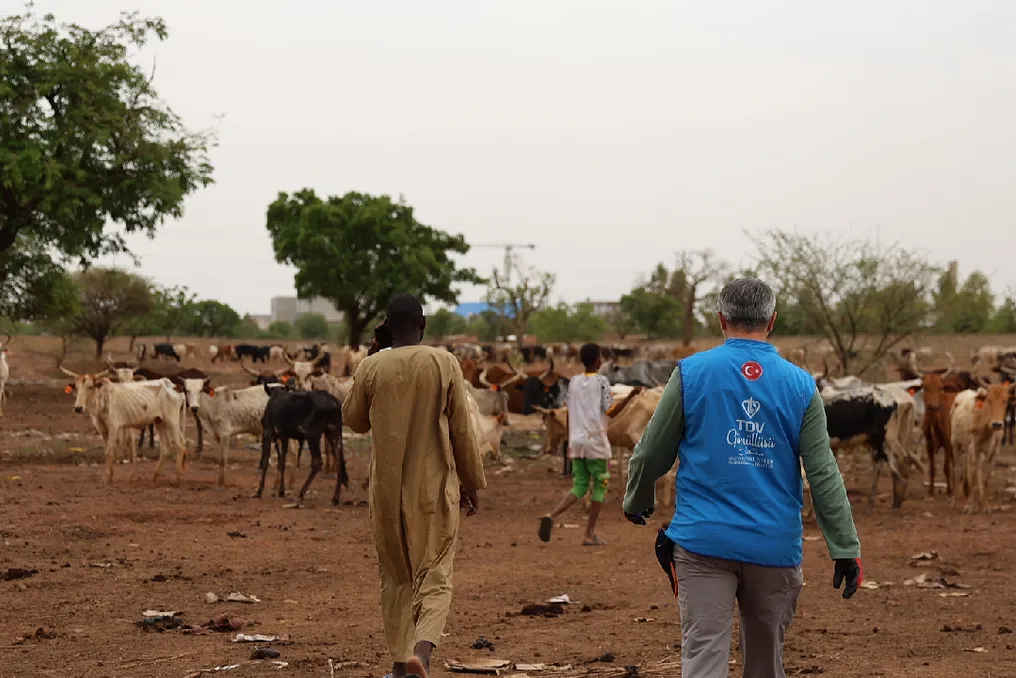
Across Southern Africa, millions of pastoralists depend on cattle, sheep, and goats grazing on vast rangelands stretching across Botswana, Eswatini, Lesotho, Mozambique, Namibia, South Africa, and Zimbabwe. Livestock is not only a source of income; it represents family savings, food security, and cultural identity, which are often passed down through generations.
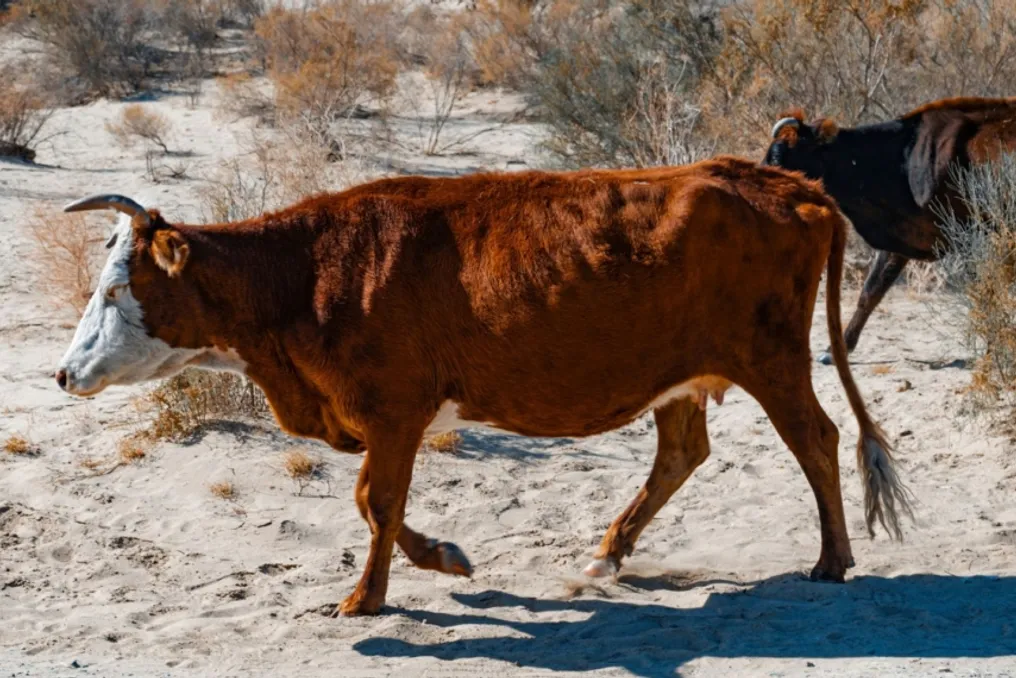
As climate change leads to greater variability between good seasons and severe droughts, these communities face increasingly complex decisions. Wealthier livestock owners can often sell animals before the drought hits, preserving their savings and rebuilding herds when conditions improve. Poor pastoralists are forced to keep their animals on increasingly stressed landscapes, risking catastrophic livestock losses that can condemn families to poverty.
Dr. Gina Arena, Head of Science at Herding for Health at Conservation International, observed: 'It's not that the people we work with don't think about adapting to climate change.' She continued: 'The problem is that greater uncertainty in the climate brings greater risk. We need to help people determine the best solutions and reduce the risk of implementation. Studies like this help us with that.'
By applying detailed modeling alongside fieldwork with non-governmental organizations, researchers found that climate forecasts become significantly more effective when supplemented by support that enables households to react before the drought begins.
Clark highlighted the encouraging finding: 'The good news is that it's not about creating new technologies. It's about applying existing knowledge in new ways.' He added: 'Weather forecasting is becoming increasingly accurate. The opportunity now is to ensure that these forecasts are accompanied by practical support so that the people who need it most can actually benefit from it.'
The study suggests that this combination of climate information and risk mitigation can simultaneously improve livelihoods, reduce inequality, and protect rangelands, overcoming the trade-offs that have long called into question climate change adaptation programs.
Although the methodology was developed for Southern African pastoral systems, Clark believes it could also be useful for livestock producers in other climatically vulnerable rangeland areas, including Australia.
The researchers created a model representing pastoral communities in seven Southern African countries, using projected precipitation regimes from European climate models alongside empirical data on livestock, vegetation, and community well-being. The first modeling scenario represented a future without changes, showing that increased precipitation variability reduces household well-being, increases livestock losses, degrades grass, and widens inequality.
The second scenario tested adaptation strategies. Access to forecasts alone yielded only modest benefits, as many households lacked the financial capacity to respond, while risk mitigation measures alone could create ecological trade-offs. The third scenario examined how adaptation can spread between neighboring communities. Based on conservation programs such as Conservation International's Herding for Health initiative, it was shown that when practical support is coupled with climate information, communities learn from each other, and action becomes self-reinforcing, providing a pathway for large-scale climate change adaptation.
Kosima Fröner, a former Mary Lister McCammon scholar at Imperial College London, commented: 'It is easy to think of mathematical modeling as something abstract, but here it does something very practical.' She added: 'We model the decisions of thousands of individual pastoralists in different climatic conditions and under various adaptation interventions. When the model reaches a steady state, broader patterns and trade-offs between interventions emerge from all these individual decisions.'
_