ODI series against Australia will be a test for Proteas squad contenders for the 2027 World Cup
Read more
IOL
iol.co.za

ODI series against Australia will be a test for Proteas squad contenders for the 2027 World Cup

Ahead of the 2027 World Cup, which will be held at home, and considering the limited time to determine the squad, the Proteas national team has four specialists competing for two and a half secured spots, taking into account the status of captain Temba Bavuma and leader Aiden Markram.

Shukri Conrad openly stated his desire to give 'everyone an equal chance' to secure a spot in the World Cup squad. This means that young players, such as Lhuandree Pretoria, Connor Esterhuizen, and Jordan Herman, who impressed during the recent tour of Namibia, may participate in the subsequent series in Bangladesh.

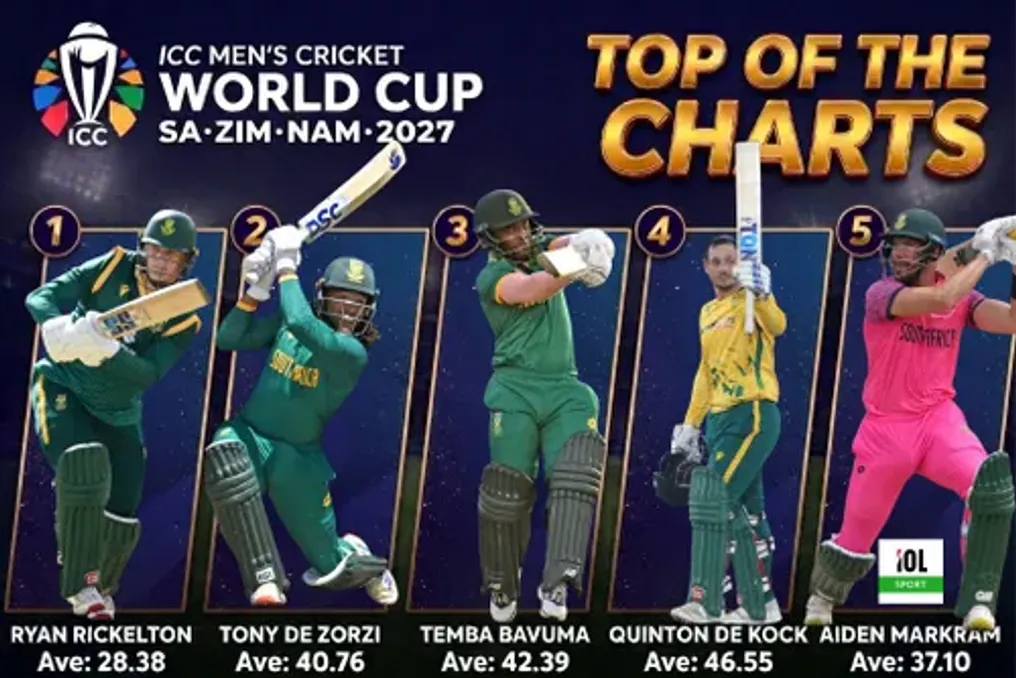
However, currently, Bavuma, Markram, Quinton de Kock, Ryan Rickelton, and Tony de Zorzi are competing for the top three spots.

Factors Influencing the Squad

A difficult issue for everyone except possibly Conrad is De Kock's decision to return to the ODI format. Conrad emphasized that he believes the 50-over format is best for De Kock, and the experience of the returning veteran, along with his recent performance, makes him close to being the number one choice, including the wicketkeeper position.

This single factor could potentially push Rickelton out, although he participated in the T20 World Cup, where he played in the third spot and became Proteas' second highest scorer in the tournament. Unfortunately, his ODI performances do not match this level. After a debut century in ODIs against Afghanistan in February, the left-hander scored two consecutive zeros against India, and his average now stands at 28 with the best score of 35 runs in the last 10 ODIs.

In contrast, De Zorzi's performances deserve serious attention despite constant questions about his inclusion in ODI squads. This left-hander with dreadlocks has scored 856 runs at an average of 40.76, including two half-centuries in the last two matches. Conrad also noted that De Zorzi's versatility, allowing him to play almost any position from 1 to 5, is very useful as a reserve player in the final 15-man squad for the World Cup.

Bavuma and Markram remain, although the latter will miss the opening match of the series in Kingsmead.

Player Performance Analysis

Bavuma achieved most of his success playing at the top order in ODIs since his century on debut against Ireland in 2016. The captain has an average of 48.64 when starting with the new ball compared to his overall career average of 42.39, and he has scored four of his five ODI centuries at the top order.

However, it is more likely that Bavuma will drop to the third position, and Conrad will allow Markram to open alongside De Kock. Markram's ODI figures—37.03 while batting at the top with only one century—do not entirely justify such a commitment. In fact, he demonstrated much greater potential at the fourth position, where he scored three centuries and has a more modest average of 42.91.

Markram was particularly consistent in the middle order during the last World Cup in India, where he scored a century—his last, 17 matches ago—and three half-centuries, achieving an average of 45.11 at a strike rate of 110.92.

Nevertheless, sometimes a coach must rely on intuition, and Markram is certainly such a choice for Conrad, especially due to his ability to perform in crucial moments, notably in last year's WTC final at Lord's, and for being South Africa's top run-scorer in the T20 World Cup this year, where he was also entrusted with opening.

The chances at the top seem closed, but big scores from players like Rickelton and De Zorzi against a high-caliber team like Australia could suddenly change the situation in their favor.
Similar stories

Proteas begin preparations for the 2027 World Cup against Australia
Read more
iol.co.za

Proteas begin preparations for the 2027 World Cup against Australia

The Proteas team is beginning to implement its preparation plan for the 2027 Cricket World Cup by facing their main rivals—Australia. A three-match ODI series starts on September 24th at the Kingsmead stadium in Durban.

Series in Australia and South Africa

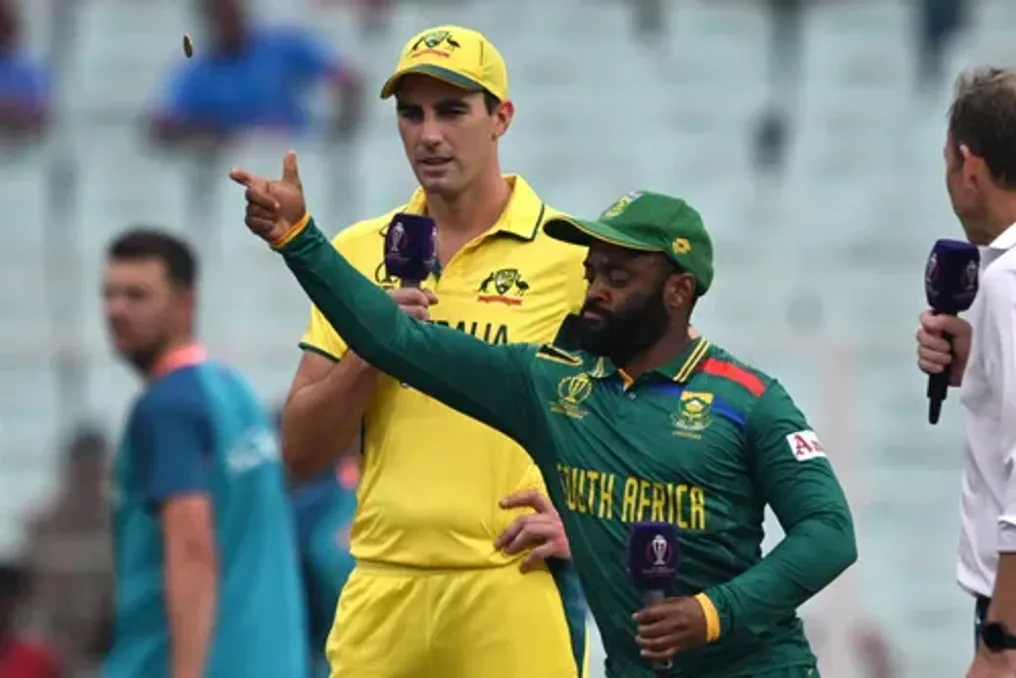
Proteas captain Temba Bavuma and his Australian counterpart Pat Cummins are preparing to resume the confrontation at Kingsmead next week. Although South African fans have long been engrossed in the greatest rugby rivalry, it is now time for a cricket showdown that does not require artificially created stakes.

The history of the Proteas versus Australia rivalry is rich, and it does not need trophies or marketing gimmicks to make their matches intense. This history began with Allan Donald's first ball in the 1992 World Cup, went through the disappointment of Lance Klusener and Donald in Edgbaston, and, of course, culminated in the epic 438-run match at the Wanderers stadium.

However, this time the rivalry has an additional context: the home World Cup is approaching in just twelve months, and the Proteas team clearly understands what is at stake in the correct construction of team blocks.

The first ODI match of the series will take place on September 24th at Kingsmead in Durban. This stadium already hosted an exciting prelude when the Australians won by one run in the last over, leading to a decisive series match at the Bullring 21 years ago. The second match will be held at the Wanderers in Johannesburg, gaining extra brightness from the annual Pink Day event, and the third match will take place in the favored city of Potchefstroom for Australia.

Previously, in Potchefstroom, in the university town of North West, the victorious team of Ricky Ponting from the 2003 class—the last time the World Cup was held in Africa—laid the foundation for its successful campaign.

A Rivalry That Recently Leaned Towards South Africa

Despite the Australians being the reigning ODI World Champions, having defeated the Proteas in the semi-finals at Eden Gardens in Kolkata on their way to a sixth title, the hosts managed to defeat their main competitors in two of the last three series.

Proteas won the home series 3-2 in 2023, managing to come back into the game after trailing 2-0. Then, last autumn on Australian soil, they confirmed this success by winning the three-match series 2-1 away. Any team would take this record with great self-respect.

Nevertheless, in this series, confidence is not as important. Shukri Conrad himself noted that since the World Cup is just over a year away, the main goal is squad formation and finding suitable combinations, not just another series victory. South Africa, Zimbabwe, and Namibia will host the 2027 ICC Men's World Cup, and all Proteas' actions in baseball cricket up to this point will be viewed through this lens.

Bavuma's Return and the Squad for the World Cup

Temba Bavuma returns to lead the ODI team after last playing in this format against India in December 2025, and his return is critically important in many areas. Every sports team in South Africa wants Siya Kolisi, and the hope is that Bavuma can create his own fairy tale with the Proteas next year.

Gerald Coetzee's recovery generates great enthusiasm—it is the first participation of a fast bowler in an ODI since South Africa participated in the 2023 World Cup in India, signaling that Conrad's coaching staff is expanding the search for suitable spearhead bowling combinations. This search is partly due to the absence of the most experienced attacking player, as Kagiso Rabada is unavailable for ODIs due to injury. His absence places the responsibility on Lungisi Ngidi, the Jansen brothers (Marco and Duane), Kwena Maphaku, Corbin Bosch, and the returning Coetzee to prove that they can lead the attack without their main weapon—this is the question of depth that the team crowned World Champion must solve in September 2026, not in the tournament group stage.

Some absences in the squad should also be noted. Dewald Brevis is not on this list, while Matthew Britzek, David Miller, and Tristan Stubbs are preferred in the middle order—although Conrad made it clear that Brevis remains in consideration and likely has a chance against Bangladesh later in the season at home. This is a reminder that the door for selection for the World Cup squad is not closed.

Conrad himself stated this plainly: since the World Cup is just over a year away, this series is an important step in squad formation and also provides an opportunity for players on the bench before visits to Bangladesh and England later in the season.

Why Australia Is Not an Easy Target

None of this focus on the World Cup should diminish the significance of what Australia brings to Durban. This is a team built on ruthless squad depth and a culture of winning major ICC tournaments. Pat Cummins' touring party arrives after its own internal discussions about the squad—Marnus Labuschagne was excluded from the ODI squad and will only return to his country of birth when red-ball matches begin.

For South Africa, a victory over Australia at home will be a significant boost to confidence, especially ahead of the long-awaited Test series.

However, the value of this series is measured not only by the number of wins. It lies in how solid Coetzee's fragile body will prove, whether the competition in the middle order between Britzek, Stubbs, and Miller will shape the World Cup picture or vice versa, and whether the attack without Rabada can withstand the world's best batting line-up.

ODI Schedule

September 24: First ODI, Kingsmead, 10 am

September 27: Second ODI, Wanderers, 10 am

September 29: Third ODI, Potchefstroom, 1:00 pm

Rivalry between Asian Games and ODI series against West Indies will test the depth of the Indian team's squad
Read more
www.aajtak.in

Rivalry between Asian Games and ODI series against West Indies will test the depth of the Indian team's squad

The true strength of a sports team is determined not only by its starting eleven; it manifests when multiple stars are available simultaneously, yet the team's level does not drop. In the coming weeks, Indian cricket will face such a test: an ODI series against the West Indies will take place while the Asian Games are being held in Japan. The question is not who replaces whom, but whether India possesses sufficient squad depth to field two strong international teams at once.

This situation presents more of an examination than a problem for Indian cricket. Many players selected for the T20 format Asian Games were previously part of India's plans for the ODI format. Consequently, some recognized names will be unavailable during the start of the ODI series against the West Indies. It is under these conditions that the true reserve power of Indian cricket can be revealed.

For instance, Ishan Kishan will be available for the Asian Games as a wicketkeeper. However, this does not mean that Rishabh Pant should be considered the only replacement for him in the ODI team. A more important question is which wicketkeeper, besides Kelleh Rahul, can be a reliable choice for use during the 2027 World Cup?

Pant's name naturally surfaces because he is a big-match player, and his ODI statistics are favorable. Nevertheless, if he is given a chance, it cannot be seen merely as a return of a star. It must become an opportunity to test what role Pant can play in the next World Cup cycle. Another figure in this picture is Dhruv Jurel. Therefore, it is more important to develop a complete backup plan than to give a chance to one player.

A similar situation is observed in the batting department. Shreyas Iyer will captain the Asian Games, which may give chances to batsmen like Rituraj Gaikwad and Yashasvi Jaiswal in the ODI series. In both cases, the question is not just about form. The question is whether Indian batsmen who can step in for the primary players are ready without lowering the quality of the team?

Yashasvi's situation is particularly interesting. Despite scoring two centuries in the last three ODI matches, if he does not secure a spot in the regular ODI lineup, it will not just be the disappointment of one player. It will call into question how Indian selectors determine their priorities for the future.

The challenge in bowling is even greater. Since Jasprit Bumrah and Arshdeep Singh will be available for the Asian Games, other fast bowlers may be tasked with responsibility in the ODI series. Mohammed Siraj, Mayank Yadav, and other options will get a chance to prove their worth.

This is where India's true depth will be shown. After all, great teams are not defined by whether they have a bowler like Bumrah. They are defined by how reliable the next bowler is if Bumrah is unavailable. In tournaments like the World Cup, injuries, workload, and form can change the equation at any moment. Therefore, having a second line is not a luxury, but a necessity.

The same test awaits all-rounders. If Axar Patel participates in the Asian Games, it could open the door for Ravindra Jadeja's return to ODIs. But it is not enough to just consider this as the return of an experienced player. Selectors also need to determine what type of all-rounder the team requires for the next major tournament.

The most intriguing thing about this story is that major names like Rohit Sharma, Virat Kohli, and Shubman Gill will also be present in the ODI series. That is, on one hand, there will be many first-tier Indian stars, and on the other, a test for those players who must replace them when necessary.

Therefore, considering this ODI series merely a three-match series against the West Indies would be a mistake. It could also become a selection series for India's second team.

India has long spoken about its reserve strength. There is talk of constantly forming a large pool of new players through the IPL, domestic cricket, and India-A. But the real test takes place in international cricket. There is not just talent required there. There is also the ability to perform under pressure, understanding the role, and taking responsibility in the absence of big players.

The clash of the Asian Games and the ODI series against the West Indies places precisely this kind of test before India. And perhaps this is the most positive aspect of the entire event.

If India uses this opportunity only to fill gaps, the benefit will be limited. But if every new player is clearly assigned a role and tested, the picture for the 2027 World Cup could become clearer in just a few matches.

Which of the eleven players will take the field is a secondary issue. True strength will be demonstrated when, in addition to these eleven, there are players ready to take responsibility as soon as the opportunity arises. The Asian Games have provided India with exactly such an opportunity.

Now the ball is in the selectors' court, not just the players'—will they view this as a forced measure or as a chance to build two strong Indian teams?

Experts advise Vaibhav Suryawanshi not to let fame influence his cricket career
Read more
www.aajtak.in

Experts advise Vaibhav Suryawanshi not to let fame influence his cricket career

Vaibhav Suryawanshi's batting has amazed the world, as he demonstrated incredible success against bowlers in T20 cricket at a very young age, leading to inflated expectations. Now that he steps onto the field, spectators expect not just good play, but explosive moments.

However, this is where another chapter of the story begins. Players who aim to hit every ball for a four or a six eventually encounter a situation where bowlers begin to use that same haste against them. An example of such risk was Vaibhav's elimination in the Dalip Trophy final in Chennai after a delivery by Vijay Tripura, which served as a warning about this danger.

With a score of 8 runs off 16 balls, while Vaibhav tried to send the ball outside the boundary, he himself fell into a trap due to his haste. Vijay nudged the ball slightly back, and Vaibhav stepped out of his defensive zone, intending to send the ball over the boundary. But this time, the ball bypassed not the bat, but the batsman's mind.

The ball spun in the air, Vaibhav missed, and Jagdishan bowled him out. This moment should prompt Vaibhav to pause and ask himself questions. What he sent far yesterday, the same player read today.

This dismissal is particularly interesting because he was facing the same Tripura Vijay, who had previously conceded three fours and one six from Vaibhav in his debut IPL match. At that time, Vaibhav managed to read Vijay. This time, Vijay read Vaibhav. In cricket, victory is not always achieved with words; sometimes one ball is enough.

Perhaps an image of the previous confrontation remained in Vaibhav's mind. Perhaps he thought Vijay would again be an easy target, so he stepped out of his defensive zone to reach the ball. But in Red Ball Cricket format, the bowler shows you not only the ball but also illusions. Vijay did the same: he allowed Vaibhav to come closer and then stopped the ball in the air in such a way that the batsman's entire mathematics was disrupted. Last time, Vaibhav taught the bowler a lesson; this time, the bowler taught Vaibhav a lesson.

T20 helped Vaibhav gain fame due to his fearless style of play, which is his main asset. However, first-class cricket tests this fearlessness. Here, it is not necessary to hit every ball. Sometimes the best shot is simply not hitting the ball. Sometimes the right play is not scoring runs for ten balls. It is also important to show the bowler that the batsman will not fall into his trap.

Vaibhav needs to learn this. He is not lacking in shots, power, or confidence. He needs to learn when 'not to hit'. This is what distinguishes an explosive batsman from a great batsman.

Popular