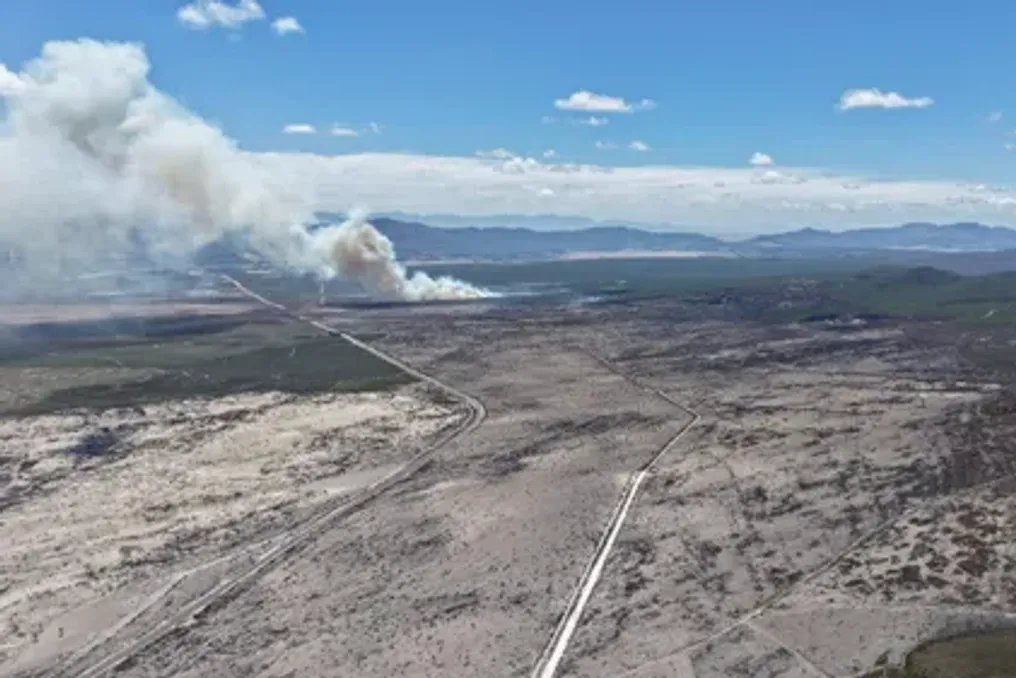
The Conservation Director of the Grootbos Foundation, Shaun Priett, described the forest fires that swept through the private nature reserve Grootbos near Stanford between November 2025 and January 2026 as a demonstration of 'raw elemental power'. These fires destroyed about half of the estate's 4000-hectare area, necessitating guest evacuation.
Following the blaze, extensive areas of hills in the Walker Bay region remained blackened, although patches of vegetation survived across the entire reserve. According to Grootbos, over 2000 hectares were burned. The situation was triggered by hot, dry, and windy conditions, prompting a large-scale coordinated response from reserve staff and local fire crews.
Despite the fires causing the death of some animals, Grootbos reported no human casualties and limited infrastructure damage. Conservationists are now monitoring the scorched landscape for the first signs of impressive natural recovery after the immediate danger has passed.
Shaun Priett, Conservation Director of the Grootbos Foundation, participated in firefighting efforts at the end of 2025, allowing him to 'witness its raw elemental power'. Before the fires, the old Protea canopies were densely covered, suppressing the growth of vegetation beneath them. Priett noted that with the immediate threat over, the reserve team is studying the initial signs of how the vegetation will recover.
He emphasized that fire is a vital 'reset button' for the fynbos ecosystem, helping to maintain biodiversity. In his words, 'fire is an integral part of the fynbos ecology. Without it, the ecological clock stops, species weaken, and diversity disappears.' What appears to be destruction is actually the fynbos's 'reset button'.
When the dense canopy burned away, critical sunlight is now reaching the soil, stimulating the growth of dormant seeds. Where the canopy burned, more light reaches the ground, giving plants that were suppressed under the old vegetation another chance to grow.
For some species, the reaction begins with exposure to heat or smoke. A study conducted by the Royal Botanic Gardens Kew and partner institutions examined the germination of 40 species of Leucadendron belonging to the Proteaceae family. Some Proteaceae species are entirely dependent on post-fire conditions for seed release from capsules or germination in the soil. Others release seeds after the fire, while others have seeds in the soil that react to smoke or to heat and smoke simultaneously.
Lead researcher Dr. Rosemary Newton noted that 'the ability to predict plant germination requirements is extremely useful'. Conservationists are now anticipating a series of flowering seasons, as fire stimulates germination and frees up space for plants previously hidden under mature fynbos. Grootbos experts predict a historic 'superbloom', similar to none seen in the area for two decades.
Grootbos described the anticipated bloom as a 'superbloom' unlike anything observed on the site in approximately the last two decades. Landscape transformation is expected to occur gradually over the coming months and years, as different species regrow and flower. This forecast extends beyond a single season: the landscape will change as various species germinate, regrow, and flower in response to the conditions following the burn. Grootbos stated that the transformation will unfold over months and years.
These varied responses are expected to result in a changing floral splendor. Priett reported that 'visitors can expect an explosion of species long hidden under dense foliage: delicate orchids, irises, and fiery lilies will color the landscape'. The post-fire environment provides botanists with a rare window of time to document the early stages of fynbos regeneration before the shrubs become dense again.
Some plants will establish from seeds, while others will regenerate from structures that survived the flames. Their appearance will allow botanists to document the early stages of recovery before the vegetation becomes dense again. Recovery is taking place within the Cape Floristic Region, which is the smallest of the six global floral kingdoms. UNESCO stated that 'the Cape Floristic Region supports 20% of the total number of plant species found on the African continent.'
The recovery at Grootbos is a vital event for the Cape Floristic Region—a unique biome home to thousands of plant species found nowhere else on Earth. According to NASA's Earth Observatory, approximately two-thirds of its nearly 9000 species are endemic. This concentration makes the fate of individual habitats particularly significant for species whose entire range is restricted to a small area.
The reserve reported registering over 1030 plant species, seven of which were discovered for science since 2001. Upcoming flowering seasons may reveal previously unnoticed plants, especially those that flower in response to fire. Priett also anticipates the appearance of 'dormant species unseen for decades'. However, as CapeNature noted in its conservation report, the long-term outcome will partially depend on whether recovering plants have enough time to mature before the next inevitable fire cycle. Too frequent fires prevent plant species that require a long time to mature from producing seeds and offspring. Thus, a successful flowering season is only one indicator of recovery; seedlings must survive, reach reproductive age, and replenish seed banks to support future generations.