How to make moringa leaf powder at home from fresh leaves
Read more
The Better India
thebetterindia.com

How to make moringa leaf powder at home from fresh leaves

Moringa leaves are rich in nutrients, and if you have a moringa plant at home, you can easily turn its fresh leaves into a homemade powder that can be stored for months.

Dr. Mina Singh, who runs the Instagram channel @gardening_ka_keeda, shares a simple method that requires only fresh moringa leaves, paper towels or a kitchen towel, a microwave oven, and a food processor.

The process begins by collecting the tender leaves from the moringa plant. Then, remove all stems or unnecessary parts, wash the leaves if necessary, and let them dry.

Simple Drying Method

Take a plate and cover it with a paper towel or a clean kitchen towel. Spread the moringa leaves evenly in a single layer. Place the plate in the microwave and heat the leaves for one minute.

After the first cycle, take out the plate and gently mix the leaves to ensure even drying. Repeat heating in the microwave for another minute. You must constantly check the leaves after each cycle, as the exact time may vary depending on the amount of leaves and the microwave's power. The leaves are ready when they feel completely dry and crumble easily when pressed between your fingers.

Once the leaves are dry, transfer them to a food processor and grind thoroughly until you obtain a fine green powder. Your homemade moringa powder is ready.

Pour the powder into a clean, completely dry jar and seal it tightly. According to Dr. Singh, the prepared powder can be stored for about three to four months. This is a simple way to use fresh moringa leaves at home without letting them go to waste. In just a few steps, the leaves can be dried, ground into powder, and preserved for later use.

Similar stories

Cheap Home Remedies to Solve Common Houseplant Problems
Read more
www.aajtak.in

Cheap Home Remedies to Solve Common Houseplant Problems

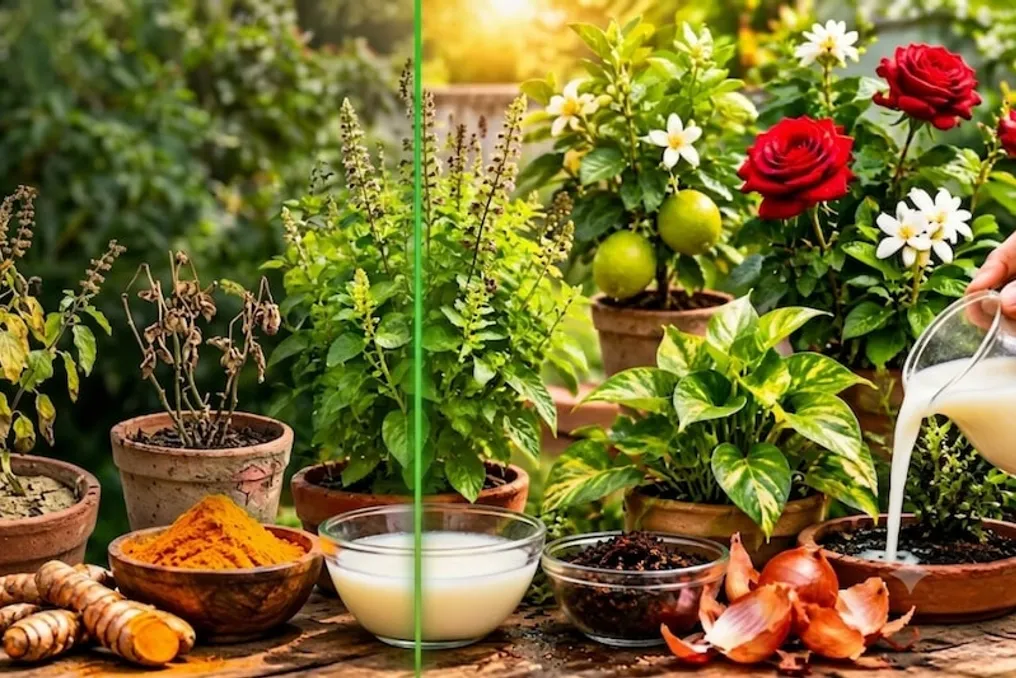
Caring for plants indoors may seem like a simple task, but maintaining their constant greenery and abundant flowering can be a difficult challenge. Although some people hire gardeners to care for their plants, many prefer to do it themselves. Various problems can arise: basil leaves turn yellow, lemon flowers drop immediately after blooming, and mogora and roses produce many leaves but do not form buds. Additionally, the growth of monstera may slow down, and new leaves become smaller compared to previous ones.

If you regularly spend money on expensive fertilizers, growth stimulants, or other gardening products to fix these minor issues, it is not necessary. Many items you have at home in the kitchen can be useful for plant care. However, it is crucial to use them correctly and in the right proportions. If your plants are growing poorly or having trouble flowering, you can try applying some simple homemade care methods that will not require financial expenditure.

How to help if basil leaves are turning yellow?

If your basil starts turning yellow instead of staying green, do not panic. First, check if there is an excessive flower stalk on the plant. If so, you need to remove dry or weak leaves. You also need to regularly prune the flower stalks so that the plant's energy is directed towards developing new leaves. There is also a folk method—adding a small amount of turmeric to the soil. Nevertheless, turmeric is not a guaranteed cure for basil problems; sufficient light, proper watering, and preventing waterlogging are necessary for good growth.

What to do if lemon flowers drop immediately after blooming?

Lemon flowering is a positive sign, but if the flowers fall to the ground immediately after opening, it can hinder fruit production. In this situation, it is important to maintain a balance of moisture and nutrition in the plant's soil. To solve this problem, it is recommended to use a method where diluted sour buttermilk (chaach) is watered at the base of the plant. When using this method, the buttermilk should be thoroughly diluted and not used too often or in large quantities. The lemon tree also requires a lot of sunlight and well-drained soil.

How to revive small and wilted monstera leaves?

If the monstera leaves look smaller and paler than before, the cause may be insufficient light, improper watering regime, or lack of space in the pot for growing roots. Some advise spraying the leaves with a solution of one glass of water and 1-2 drops of unpasteurized milk. However, leaving milk on the leaves in large amounts is undesirable, as it can cause stickiness, unpleasant odor, or fungal diseases. Therefore, it is more important to provide the plant with good light, protecting it from intense direct sun, and maintaining the correct watering schedule.

How to stimulate flowering in mogora and roses?

If you have mogora and rose plants, but they only produce leaves for a long time without flowering, you should pay attention to lighting conditions, fertilization, and pruning. Within home gardening, you can use the method of adding dried and sifted tea dregs to the soil in small amounts, as well as watering with water prepared from onion peels. The tea dregs should be used without adding milk or sugar, while avoiding excessive application to the soil. Water from onion peels must also be freshly prepared and diluted, using it in limited volume. It is important to understand that homemade fertilizers alone do not guarantee flowering; the plant also needs good light and adequate nutrition.

Important reminder before using any plant treatments

It is important to remember that the effect of any home remedy may differ for different plants. Often, the real reasons for yellowing leaves, flower drop, or slowed growth lie in overwatering, poor drainage, lack of light, pests, or nutrient deficiencies in the soil. Therefore, before applying anything to the roots or leaves, use the remedy in small doses and carefully observe the plant's reaction.

Chhawali Batata Rassa Recipe: A Maharashtrian Dish of Beans and Potatoes
Read more
www.aajtak.in

Chhawali Batata Rassa Recipe: A Maharashtrian Dish of Beans and Potatoes

When you crave variety instead of the usual dal and rice for lunch, you can prepare spicy and aromatic Chhawali Batata Rassa, which is a signature dish of Maharashtra. This dish is made from beans (chhawali) and also includes potatoes, and its recipe is quite simple to make at home.

Maharashtra, along with Rajasthan and Uttar Pradesh, is known for its unique and delicious culinary recipes. In traditional Maharashtrian cuisine, spicy and hearty rassa (thick soups) hold a special place. Although many have heard of Batata Rassa, this presents the recipe for Chhawali Batata Rassa.

This popular local dish is made from beans (chhawali), i.e., lobia, and potatoes. Below is the step-by-step process for preparing this dish.

Preparing Chhawali Batata Rassa

First, heat oil in a pan and fry finely chopped onions until golden brown. Then add grated dried coconut and cook it until it achieves a light golden hue. As soon as a pleasant aroma starts coming from the coconut, turn off the heat.

Transfer this mixture to a blender together with garlic, ginger, green chili, green coriander, and chopped tomatoes. Add a little water and blend all ingredients until an absolutely smooth paste is obtained.

Pour two tablespoons of oil into the same pan and add the prepared paste. It needs to be well fried until all the liquid evaporates and the oil begins to separate from the edges of the spices. After that, mix in red chili powder, turmeric, Goda masala, and salt, continuing to fry the spices for some more time.

Next, add the soaked lobia and chopped potatoes to the pan, stirring thoroughly with the prepared mixture. Pour in hot water, cover with a lid, and cook until the lobia is completely soft and the potatoes are well cooked.

The consistency of the rassa and the level of salt and spices can be adjusted as needed. Optionally, the dish can be garnished with fresh green coriander at the end.

What to Serve With

Thanks to the use of coconut, garlic, ginger, green chili, and special Goda masala, this dish has a unique taste and aroma. In Maharashtrian homes, it is often served with roti, bhakri, or rice, and can also be complemented with papad and pickled vegetables.

Alu Kurkure Recipe: Crispy Potato and Pohé Snacks for Homemade Preparation
Read more
www.aajtak.in

Alu Kurkure Recipe: Crispy Potato and Pohé Snacks for Homemade Preparation

When you crave something spicy and crunchy for evening tea, you can prepare Alu Kurkure. If you are tired of usual samosas, pakoras, or cookies and want to try something new, homemade potato kurkures will be an excellent choice. These snacks, made from potatoes, are characterized by a crispy outer shell and a soft texture inside. To add extra crispiness after frying, a coating of pohé is used.

The taste of these snacks is enhanced by adding green pepper, mint, cumin powder, and lemon juice. They can be served with green sauce or tomato sauce during an evening tea party. Below is the recipe for making crispy potato kurkures and a list of necessary ingredients.

Ingredients

For preparation, you will need: 4 small potatoes, ¾ cup of wheat flour, ¾ cup of pohé, 1-2 sliced green peppers, 1 teaspoon of cumin powder, a little mint leaves, salt to taste, 1 teaspoon of lemon juice, vegetable oil for deep frying, and water as needed.

Popular