History of women affected by the femicide crisis in South Africa
Read more
IOL
iol.co.za

History of women affected by the femicide crisis in South Africa

This publication is a collection of names of women who have become victims of the femicide crisis in South Africa, highlighting their individuality.

Among those mentioned is Nontokozwe Mazibuko, aged 25, who lived in Portgie, south of Johannesburg. She went missing on December 30th, and together with her friend Andiswa Sontangane, also 25 years old and a resident of Portgie, they were found discarded near the R28 highway.

Anneke 'Niki' van Heerden, 54, from Plettenberg Bay, was discovered with multiple injuries near a car after people heard the woman scream. She previously worked as a detective in Plettenberg Bay.

Nolumanyano Nonyamaeko Matanzima, 64, a first-grade teacher from Ntabankulu in the Eastern Cape, was shot during an attack at Ntabankulu primary school, despite being due to retire in June.

The list also features a woman whose name has not been disclosed; she is 34 years old and resided in Parsonsville, Gqeberha. She was shot at home; her name was withheld to protect her children.

Itumeleng Kekana, 32, from Pomona in Kenton Park, was found partially undressed near a river along the R21 highway 17 days after going missing. She left behind a 14-year-old daughter.

Elizabeth 'Contso' Moselakgomo, 38, a mother and runner from Rodsfield in Kenton Park, was found outside a hotel near the R21 highway some time after she went for a run.

Another woman, whose name has not been revealed, was found at a dumping site with her hands tied and burns on her body in Copswille, Pietermaritzburg. Her identity has not been established.

Is anyone missing from this wall?

The publication calls on readers to report women killed in South Africa this year. IOL verifies each name against police statements, court records, or published reports before adding it to the list. Information sent to xolile.mtembu@iol.co.za is used solely for verification purposes, and the sender's personal details are not published. This list is compiled based on information from SAPS statements, court records, and various media reports, but it is not a complete registry.

Similar stories

Discovery of eight women's bodies in South Africa once again raises questions about the fight against gender-based violence
Read more
iol.co.za

Discovery of eight women's bodies in South Africa once again raises questions about the fight against gender-based violence

Amidst the rising number of female murders, Acting Minister of Police Firoz Kachalia announced the closure of the Ekurhuleni area in the coming weeks. The discovery of eight women's bodies in Gauteng has once again called into question South Africa's response to gender-based violence, the transparency of police work, and men's responsibility in preventing violence against women.

The bodies of eight women were found in East Rand, Johannesburg, as part of an incident dubbed the Kempston Park murders. Although the identities of all victims have not yet been established, it is evident that men are responsible. It is also clear that the government and police are not doing enough to prevent the killing of women.

On August 1, President Cyril Ramaphosa established the National Council on Gender-Based Violence and Femicide. This body represents a target group whose creation came too late, following years of empty promises to combat this scourge. As early as 2019, after the 2018 Summit of Presidents on GBV, Ramaphosa promised to implement urgent legal and structural reforms. In the same year, he designated GBV as a national crisis during his address on the state of the nation.

In the reporting period, SAPS recorded 2,695 women killed in 2019/20. Subsequent years show an alarming trend: 2,655 women died in 2020/21, 3,198 in 2021/22, 3,914 in 2022/23, and 3,485 in 2023/24.

How many women have been killed?

In the current SAPS reporting period for 2024/25, there is no gender breakdown, which creates serious problems. Without knowing the exact number of women killed during this period, it is impossible to assess the effectiveness of measures to combat GBV. The police previously claimed that quarterly data could not be reconciled with the national report, but estimates suggest the number of victims in 2024/25 exceeds 3,500. Furthermore, there is concern that the total number of women killed is significantly higher, with estimates reaching 5,578 deaths over the previous 12-month reporting period. The situation is considered a crisis.

What is being done to solve the problem?

In light of the discovery of another eight bodies, the police advise women to be vigilant, avoid dangerous places, inform others of their movements, and allow loved ones to track their location. However, the article's author believes that placing the responsibility for crime prevention on women, who constantly live in fear of attack, rape, and murder, is absurd. He insists that the main threat to women's lives comes from men, and they must take responsibility for ending crimes against women.

In the author's view, until all men realize that simply expressing solidarity in the fight against GBV is insufficient, they will continue to participate in the killing of these women. In South Africa, men kill between 11 and 15 women daily.

What should be done?

It is required that SAPS stop ignoring the problem by not providing detailed data and allow the exact number of women and children killed to be seen. The author argues that the reaction to what resembles serial killer activity reflects a patriarchal view of women's safety. Women must be protected by men, the police, and the government, not by increased vigilance on the part of the women themselves.

The police must be transparent about the latest wave, which appears to be connected murders. It needs to be determined whether they are looking for one killer, a group, or a syndicate, and whether they are receiving information from a detained suspect. The question arises regarding the need to declare a state of emergency and impose a curfew. However, the author believes that a new meeting or task force is unnecessary. Currently, a reward has been announced for information that could lead to the arrest of men responsible for this series of murders, and a specialized investigation team has been created to collectively investigate these crimes with the support of criminal intelligence and other specialists. Until the perpetrators are caught, South Africa will live in constant anxiety, which is all too familiar a phenomenon for a country suffering from gender-based violence and seemingly unwilling to end it.

Despite declaring GBVF a national catastrophe, murders of women continue in South Africa
Read more
iol.co.za

Despite declaring GBVF a national catastrophe, murders of women continue in South Africa

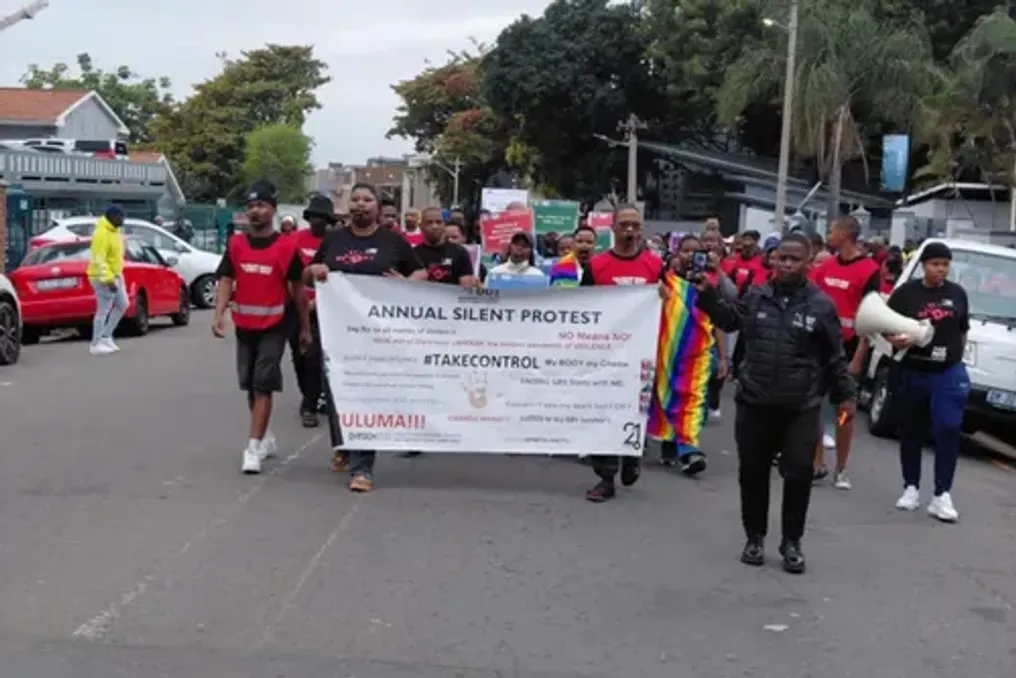
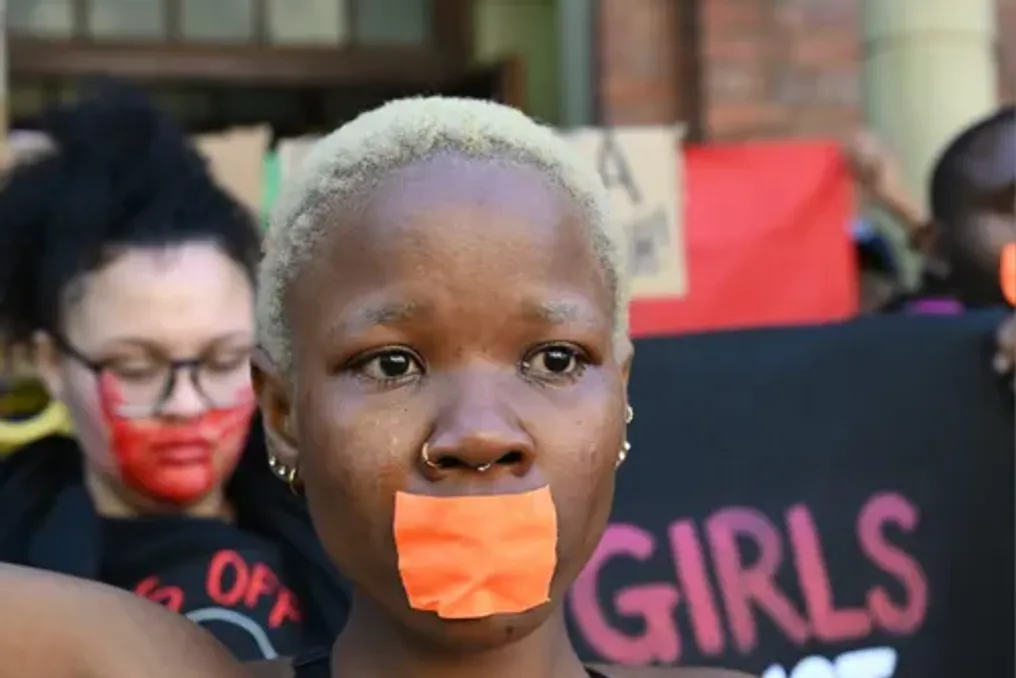
In South Africa, students and staff from DUT marched silently through Durban to honor the memory of victims of gender-based violence and femicide, and to call for an end to violence, fear, and silence.

In the eThekwini area, the body of a sixth woman was found in approximately two months. Police are investigating possible links between these cases but warn that it is too early to speak of a serial killer's guilt.

Nevertheless, this should not distract from the broader crisis. South Africa does not lack reports of GBVF; it lacks consequences, protection, and urgency.

The case of 38-year-old Elizabeth 'Ntontso' Moselakgomo intensified public anger. Moselakgomo, a mother, went missing after going for a run. Her family later identified her body at the Germiston morgue. The police deployed specialized resources to investigate her death alongside other murders.

The circumstances of the deaths are still being determined, and it would be irresponsible to claim that the women were killed by the same person before investigators establish that. However, six bodies in a concentrated geographical area demand an exceptional response.

Police have already involved multidisciplinary investigators and forensic specialists. One suspect is in custody in connection with the first body found in July. Investigators are now working to identify connections between these cases. Therefore, the public needs more than just assurances that investigations are underway; it needs results.

Because for the women living in eThekwini, the question is not whether the authorities will eventually explain what happened, but whether the state can prevent the next woman from becoming another case.

Murders in eThekwini occur against the backdrop of a national crisis. SAPS registered the murder of 569 women between April and June 2026, as well as 9201 rape cases. Over 60% of the rape cases sampled occurred in residential premises, challenging the notion that violence against women is a danger lurking somewhere outside the home.

The scale of this is precisely what led the government to classify GBVF as a national catastrophe in November 2025. This classification was intended to allow the government to coordinate its response, direct resources to the crisis, and strengthen accountability. The government also established a National GBVF Council to coordinate the national response.

However, almost a year after the declaration of the catastrophe, frontline organizations continue to report serious resource issues. The South African National Shelter Movement states that about 90% of shelters supported by them are struggling with funding and other forms of support. These facilities may be necessary for women trying to escape abusive homes, receive counseling, legal aid, or protect their children.

This reveals a fundamental contradiction. If GBVF is a national catastrophe, the infrastructure protecting its victims cannot be treated as a secondary issue.

South Africa is not alone in the fight against femicide. In Cameroon, reports indicate that over 120 women have been killed by intimate partners since the beginning of the year. In response, the government launched a three-month national campaign targeting femicide, domestic violence, gender inequality, and male dominance, focusing on prevention, reporting crimes, and prosecution.

Cameroon's campaign itself does not solve the problem. Campaigns only make sense when backed by functioning institutions. But the comparison raises an important question for South Africa: what does emergency action look like when a crisis has already been officially recognized?

It should mean swift police investigations. It should mean adequately funded shelters. It should mean prosecutors effectively handling cases. It should mean the enforcement of protection orders. It should mean early intervention when patterns of abuse emerge. And it should mean confronting the attitudes among men who normalize control, the right to dominate, and violence against women.

The most dangerous response right now will be another cycle of outrage followed by another declaration. The state has already acknowledged the problem. President Cyril Ramaphosa declared GBVF a national catastrophe, and the government established a status National Council and promised increased policing, survivor support, and prevention programs.

The question is no longer whether the government understands the crisis. The question is whether the system delivers results. This means publishing measurable targets for investigations, prosecutions, convictions, protection orders, shelter capacity, and police responsiveness. It means identifying where resources are lacking and addressing those gaps instead of creating another layer of bureaucracy. And it means that men must become part of the solution, not just receive instructions to condemn violence after another woman dies.

The women found in eThekwini cannot be reduced to statistics. Nor can the 569 murdered women in three months be reduced to statistics. South Africa has already named GBVF a national catastrophe. Now the state must act as if it believes its own declaration.
Popular