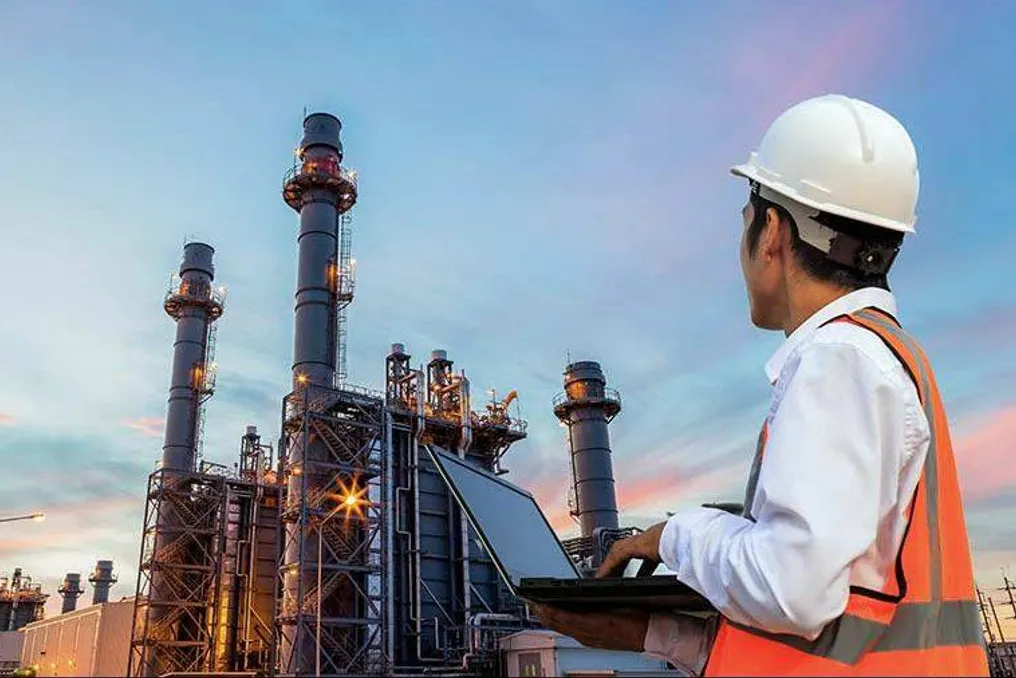
It is not enough for Uzbekistan simply to attract foreign investment, acquire modern equipment, and open new production capacities to achieve the status of a high-income country. Analysts from the Eurasian Development Bank (EDB) assert that for sustainable development, it is critically important that alongside domestic production, technologies are preserved, local suppliers, engineers, standards, and proprietary developments are developed.
The EDB has presented a new concept for industrial transformation for developing economies. Currently, 108 middle-income economies, with populations of approximately 6 billion people, are classified in this group, yet only 34 of them have managed to transition into the category of wealthy countries since 1990. Furthermore, during the period 2021–2023, 95 out of 143 developing economies remained dependent on raw materials, which accounted for over 60% of their merchandise exports. Although high prices for natural resources can ensure rapid growth, they do not guarantee a transition to a stably wealthy economy.
The Bank emphasizes that increasing investments and purchasing modern equipment do not solve the problem by themselves. External technologies must be transformed into internal production capacity, including the development of engineers, technologists, supplier networks, standardization, service, repair, design, and process efficiency improvement. At the same time, economic openness and attracting foreign investors remain necessary, but success should be measured not by the number of imported machines, but by the degree of increase in local added value and knowledge transfer through imports and participation in global supply chains.
The significance of industry is due to the fact that, according to data from the new report, the manufacturing sector was linked to 64% of economic growth cases over the last five decades. Moreover, one industrial job supports an average of 2.2 jobs in related fields such as logistics, construction, education, and services.
Uzbekistan's Transformation within the Regional Model
Within the regional model, the EDB classifies Uzbekistan and Kazakhstan as 'resource-scale transformers.' These are countries possessing both resource and energy bases, as well as agricultural potential and significant domestic demand. Their task is to transition from raw materials and primary processing to creating more complex products, such as chemical products, high-quality metals, electronics, machinery, and components.
According to the sectoral map, Uzbekistan received the highest scores in the chemistry and polymers, as well as industrial machinery sectors (scoring 4.71). Following these are the food industry and deep agro-processing (4.62), transport components (4.61), agricultural and irrigation equipment (4.58), fertilizers and agrochemicals, and light industry and technical textiles (4.55). Electrical engineering and pharmaceuticals scored 4.50.
It is important to note that these assessments do not define a single stage of development for the entire country. Chemistry and mechanical engineering are assigned to the second stage, where suppliers, engineering competencies, standards, and project financing become key. The food industry, agritech, fertilizers, and textiles fall between the first and second stages. Pharmaceuticals are positioned between the second and third stage, which implies adding proprietary research and commercialization of solutions to the production base. Thus, an economy can host basic production, mature industrial platforms, and innovative niches simultaneously.
The EDB recommends choosing development directions based not on prestige, but on a combination of factors: demand, availability of resources, current competencies, technological proximity, infrastructure, and project financing capability. For example, a complex factory lacking engineers, suppliers, and testing facilities in the country may show good investment statistics but have a weak impact on the overall economy.
Differences in the Tasks of Neighboring Countries
The EDB report does not compare neighboring countries based on who is 'better'; each country plays its role in the overall regional industrial system. Russia and Belarus are defined as the industrial core because they possess higher initial competencies in complex machinery, components, engineering, and several technological areas. Kazakhstan, similar to Uzbekistan, must deepen the processing of its own raw material base. Armenia, Kyrgyzstan, and Tajikistan are viewed as niche and cooperative hubs capable of specializing in specific segments, services, and components.
Figures demonstrate these differences: Russia leads in industrial machinery (4.97 points), transport components (4.94 points), and chemistry and polymers (4.91 points). Belarus leads in mechanical engineering (4.93 points), followed by agricultural and irrigation equipment (4.84 points) and transport components (4.83 points). Kazakhstan has the highest score in chemistry and polymers (4.87), as well as in high-grade metallurgy (4.84 points) and critical materials (4.83 points).
The profiles of smaller economies differ. In Armenia, pharmaceuticals and medical devices are rated highest (4.49 points), as are electronics and components (4.47 points). Kyrgyzstan leads in light industry and technical textiles (4.40 points), as well as in food and agro-processing (4.29 points). Tajikistan achieved the highest score in metallurgy and metalworking (4.27 points), followed by light industry (4.21 points) and critical materials (4.15 points).
A Three-Step Model Instead of a Quick Leap
The model proposed by the EDB is based on three sequential stages. The first stage is the creation of a basic production foundation, for which the country requires reliable energy supply, transport, water resources, industrial space, warehouse infrastructure, basic standards, and mass professional skills. The main goal of this stage is to ensure stable product output and form the first supplier networks.
The second stage represents the industrial platform. At this level, simple production is insufficient; deeper processing, mechanical engineering, metallurgy, certified suppliers, engineering centers, long-term financing, and the ability to adapt imported technologies to local conditions emerge. For many priority industries in Uzbekistan, this second stage is currently key.
The third stage is the knowledge economy, which includes applied research, pilot lines, intellectual property, and the development and commercialization of new products. However, analysts caution: attempting to skip to this stage without establishing an industrial platform is extremely difficult. Although individual technology companies may appear earlier, the massive complication of the economy requires personnel, suppliers, standards, and financing.
The practical application of this model for Uzbekistan dictates that a new factory should not operate in isolation. Around it, programs for staff training, local suppliers, engineering support, testing laboratories, certification, service, and access to long-term financing and sales markets must develop simultaneously. The EDB considers a full industrial transition project only complete if it includes four mandatory elements: human resources, technology adoption, quality infrastructure, and funding for pilot work followed by scaling up.
This changes the understanding of localization. Assembling a finished product from imported parts is only the initial step. A more valuable stage begins when local enterprises start producing components, repairing and modernizing equipment, redesigning production processes, complying with international standards, and selling products outside the domestic market.
Similar principles apply to foreign investment. Between 2016 and the first half of 2025, the total volume of mutual direct investment in the Eurasian region reached $48.4 billion, of which $9 billion, or 18.4%, went to manufacturing industry. The EDB advises attracting investors not only through tax incentives but also through a comprehensive offer that includes a site, infrastructure, local partners, personnel, future suppliers, financing, and an export market.
Another important principle is market validation. Large programs and broad subsidies should not be launched solely based on perceived industry prospects. A pilot project with private co-financing must first be conducted to confirm demand and competitiveness. If the project fails market validation, its scaling risks creating expensive facilities supported by continuous financial aid.
For some complex productions, the Uzbek market may be too small. The combined market of the EAEU and Central Asia is estimated at approximately 180–220 million people, and currently, about 59% of sales of second-level processed products go to this region. This is where the division of specialties becomes evident: Uzbekistan and Kazakhstan can focus on chemistry, metallurgy, electrical engineering, and equipment manufacturing; Russia and Belarus—on supplying more complex components, technologies, engineering, and standards; and smaller economies—on highly specialized niches.
The EDB formula boils down to the idea of a 'unified industrial system based on diverse competencies,' which allows national enterprises to access a wider market. The Bank highly values the potential of such a model: a previous study predicting the scenario development of four interconnected clusters—chemistry, mechanical engineering, high-grade metallurgy, and food industry—forecasted an additional annual output exceeding $510 billion at 2019 prices.
Main Conclusion
The republic's industrial base is recognized as the foundation for growth, but the mere introduction of production capacity is only the beginning of the process, not its completion. If an enterprise remains a 'technological island' after launch, dependent on imported parts, external service, and foreign engineers, its contribution to long-term development will be limited. Much more complex and less visible work begins after the workshop opens: training local specialists in servicing and improving technologies, developing dozens of suppliers around a large enterprise, bringing their products up to required standards, etc.
