Five Mythological Secrets of Radha Rani and Rukmini Unknown to Most
Read more
Aaj Tak
www.aajtak.in

Five Mythological Secrets of Radha Rani and Rukmini Unknown to Most

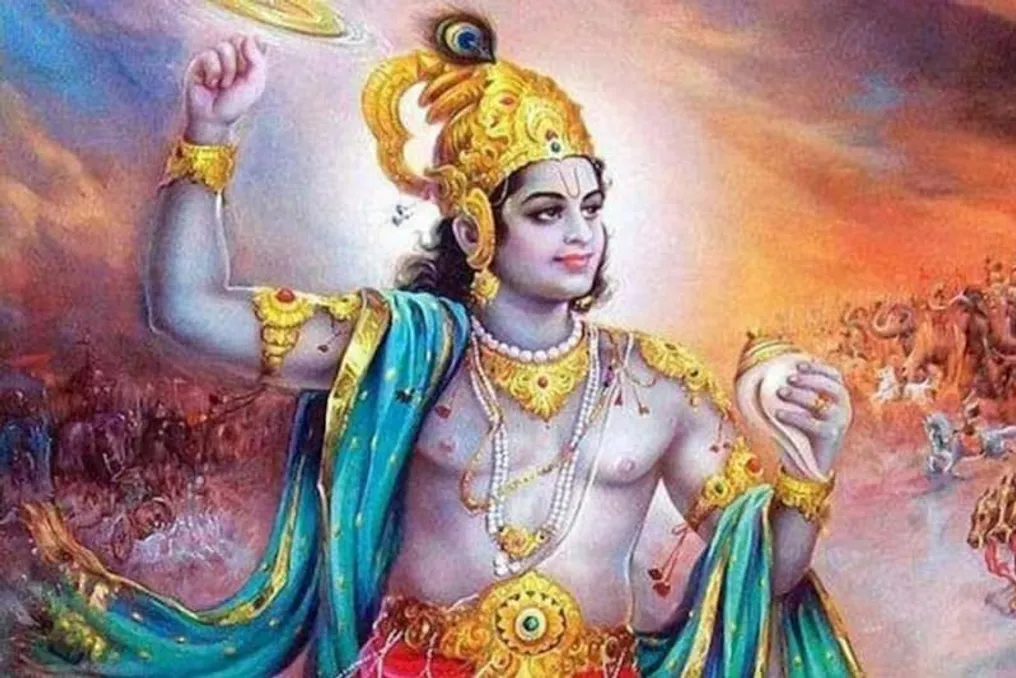
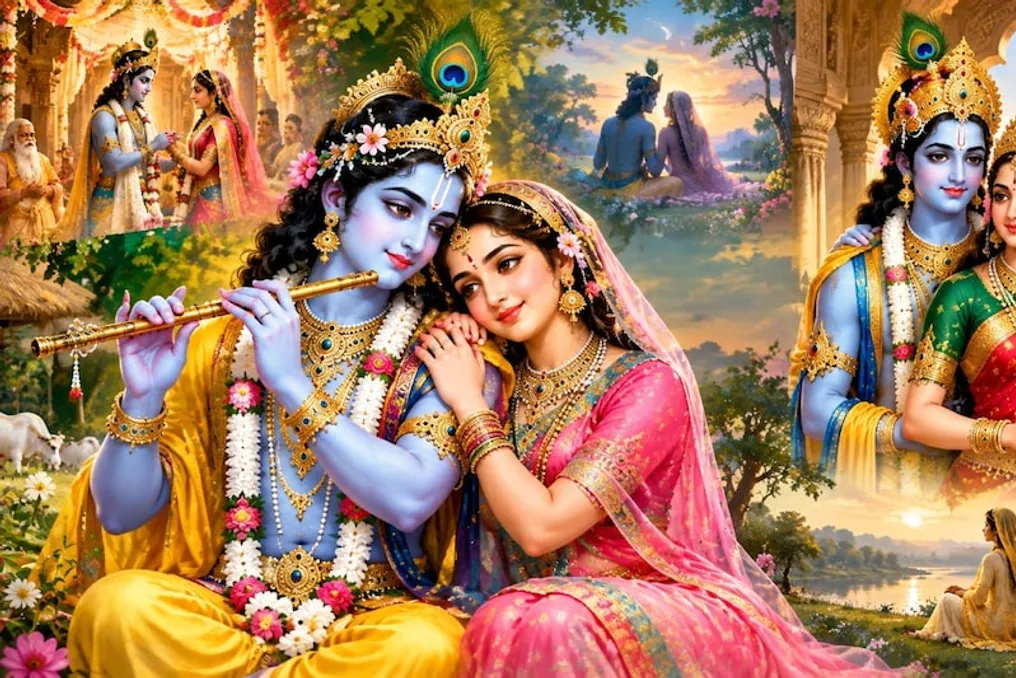
When the name of God Krishna is mentioned, Radha Rani is first recalled. Radha is considered a symbol of love and devotion to Krishna, while Rukmini is revered as his consort. God Krishna experienced love for both in different forms. However, there are many mythological secrets associated with Radha and Rukmini that few people know about. The question arises whether Radha and Rukmini are different manifestations of the goddess Lakshmi, and whether Radha and Krishna were married. These mythological stories related to Radha, Rukmini, and God Krishna are examined further.

Rukmini Made Krishna Her Husband

According to mythological history, Rukmini was the daughter of King Vidhavarhi, Bhishmaka. She was deeply moved by the qualities and personality of God Krishna and internally considered him her husband. Nevertheless, Rukmini's brother, Rukmi, wanted to marry her off to Shishupala. When Rukmini learned of this, she sent a message to God Krishna expressing her desire. According to the legend, before the marriage, God Krishna took Rukmini away, and they later got married. This is why Rukmini holds one of the most significant places among the principal wives of God Krishna.

Why Are Radha and Rukmini Considered Incarnations of Lakshmi?

In the Vaishnava tradition, God Krishna is considered an avatar of God Vishnu. Within this tradition, Rukmini is viewed as an incarnation of the goddess Lakshmi. As for the image of Radha, various Vaishnava traditions offer different interpretations. In the Gaudiya Vaishnava tradition, Radha is considered the Hladini Shakti of Krishna, meaning his divine power of bliss. Because of this, the relationship between Radha and Krishna is explained not only as worldly love but also as a spiritual connection between God and His power.

Did Radha and Krishna Marry?

There are various accounts regarding the marriage of Radha and Krishna in different religious texts and traditions. Traditions associated with the Brahmavivarta Purana and Garg Samhita mention the marriage of Radha and Krishna. According to one famous legend, Brahma arranged the marriage of Radha and Krishna in the forest of Bhandir in Braj. This forest, connected to this belief, remains an important place of religious worship in the Braj region. Therefore, it is fair to say that the story of Radha and Krishna's marriage is accepted in some religious traditions, although it is not uniformly described in all major texts.

The Story of Sita and Rukmini's Connection

In addition to the idea that Radha and Rukmini are manifestations of the goddess Lakshmi, similar concepts are added to some stories of the Ramayana. According to a common legend, during Rama's Ashwamedha Yajna, in the absence of Sita's mother, her golden statue was placed in her stead. This story emphasizes the importance of Sita as the wife of God Rama. In later mythological traditions, Sita, Rukmini, and Lakshmi are also linked to each other. However, the sources and details of these stories vary across different texts.

The Love Relationship of Radha-Krishna and the Marital Relationship of Rukmini

To understand Radha Rani and Rukmini, their relationships must be viewed not through a single lens. The bond between Radha and Krishna is considered a symbol of devotion, love, and spiritual self-renunciation. At the same time, the bond between Rukmini and Krishna manifests as marital relations. Thus, although the roles of Radha and Rukmini in Krishna's life are different, their religious significance is immense.

Stories of Separation Between Radha and Krishna

There are also many mythological and Bhakti stories about the separation of Radha and Krishna. After Shri Krishna left Vrindavan and went to Mathura, and then to Dwarka, the story of their parting became extremely important in Bhakti literature. In some traditions, Krishna's separation is explained by various curses and mythological events. However, the details of these stories do not match across all texts. This separation of Radha and Krishna is considered a symbol of the love between the devotee and God, where memory and devotion to God are valued above the meeting itself.

The Story of Rukmini and Shri Krishna's Parting

Another story related to Rukmini and Shri Krishna pertains to the sage Durvasa. Different versions of this episode exist in various Puranic traditions. This story describes events related to the hospitality of the sage Durvasa and the conduct of God Krishna and Rukmini. In some folk tales, this is also linked to a long period of their separate living. However, due to differences in the versions of this story regarding the events and duration, it should be viewed not as a specific historical event, but as a mythological tradition.

Radha Rani and Rukmini: Each Has Her Own Special Significance

In Indian religious tradition, the relationships of Radha and Rukmini with God Krishna are explained from different perspectives. Radha is considered a symbol of love, devotion, and complete self-renunciation before Krishna. At the same time, Rukmini is associated with the role of wife, domestic life, and the image of the goddess Lakshmi. Consequently, instead of comparing Radha and Rukmini, their religious image and the various traditions associated with them should be considered.

Similar stories

Naim Karoli Baba: The Legendary Saint Whose Miracles Remain a Mystery to the World
Read more
www.aajtak.in

Naim Karoli Baba: The Legendary Saint Whose Miracles Remain a Mystery to the World

Paramah-siddha saint Naim Karoli Baba, the spiritual guide of Kanti Dham located in the sacred valleys of Uttarakhand, is a living example of divine abilities and boundless compassion. Millions of followers consider him a direct incarnation of Lord Hanuman in Kali Yuga. Baba's life was extremely simple and unostentatious: he often sat covered only by a blanket, yet no pilgrim who came to him left empty-handed.

Countless events occurred during his lifetime when the laws of nature yielded to his spiritual power. Below are five such miracles from the life of Naim Karoli Baba that continue to inspire deep reverence and faith among his followers.

Transformation of River Water into Pure Ghee

At the beginning of the construction of the Kanti Dham ashram, a large feast was organized. Due to the huge number of arriving pilgrims, the ghee for frying puri ran out. The servants panicked and immediately reported this to Baba. Baba calmly replied: 'Do not worry, bring two barrels of water from the nearby river.'

The servants quickly brought the river water. When the water was added to the hot pan for frying puri as per Baba's instruction, it instantly transformed into pure ghee with a divine aroma. All the puris for the entire banquet were fried with this ghee. The next day, upon Baba's direction, the same amount of ghee was purchased from the shop and returned to the river.

Transformation of Salty Water into Sweet, Like Gangajal

One day, the only natural water source near Baba's ashram became completely salty. The water was so bitter that it could not be used for drinking or cooking. Local residents and ashram devotees were greatly concerned about this.

When Baba learned of this problem, he went himself to the source. With deep feeling, he added a little Sharantra (sacred drink) to the water and began chanting mantras, meditating on God. After this, when people drank this water, they were astonished: the salty water not only became completely sweet and easily digestible but also acquired a divine freshness, similar to the water of the Ganga.

Taking On the Fatal Illness of a Pilgrim

Naim Karoli Baba loved his devotees like a mother. When any close pilgrim suffered from an incurable, fatal illness or unbearable pain, Baba's compassion would awaken. He used his spiritual power to take on the karmic burden and suffering of the sick.

There were many instances where a pilgrim suddenly recovered and stood up, while Baba, on the other hand, might be seen writhing in pain inside his blanket. He patiently accepted the suffering of his children, smiling so that nothing would threaten them.

Samadhi in the River During Severe Frost

During the harsh winters of Uttarakhand, when ordinary people freeze even in several layers of warm clothing, Baba lived only in a cotton dhoti and blanket. Many times, on frosty nights, Baba descended into the cold river water and remained in aquatic samadhi for hours.

When he emerged from the aquatic samadhi, there were no traces of cold on his body. His body shone as if he had simply been at normal temperature. This yogic practice served as direct proof of his high level of attainment as a Siddhi Yogi.

Granting New Life to a Pilgrim

In Baba's temple, there were no limits to devotion, and there were no limits to his blessings. There were cases where the lives of many of his devotees were threatened due to severe illnesses or accidents, and doctors diagnosed inevitable death. In such moments, the relatives of the patients turned only to Baba, or gave the patient 'Arogya Prasad' (or Sharantra) touched by him.

Thanks to Baba's protective promise and determination, even time receded. Patients who reached the gates of Yamaraja miraculously recovered completely, remaining an unsolved mystery to the doctors forever.

The Mystery of the Vamana Avatar: Why Vishnu Took the Form of a Child and the Story of King Bali
Read more
www.aajtak.in

The Mystery of the Vamana Avatar: Why Vishnu Took the Form of a Child and the Story of King Bali

Imagine a king whose kingdom was so vast that even heaven was under his dominion. He was not only powerful but also extremely generous, so that no one who came to him asking left empty-handed. This king was Mahabali. One day, he began a grand yajna (sacrifice) that attracted the attention of all three worlds. During this sacrifice, a small Brahmin boy suddenly appeared. An astonishing calmness reigned on his face; he held a kamandalu (pot) and an umbrella, and his request was so humble that it surprised even the king.

The boy asked for only three steps of land. King Bali smiled, thinking he could ask for whatever he wished. However, he did not know that the boy, whom he considered an ordinary Brahmin, was the embodiment of Vishnu in the form of Vamana Avatar. In the next moment, this little boy was supposed to take on a majestic form, so enormous that the entire universe would seem tiny before him. But the question arises: why did Vishnu not engage in battle with Bali? Why did he choose the form of a small Brahmin? And what was the secret of these three steps?

Who is King Bali? King Bali was the grandson of Bhakta Prahlada. He was renowned for his strength, valor, and vast kingdom. Gradually, his influence grew so much that he established his rule even over territories belonging to the gods. But Bali's main characteristic was not just his might; he was also known for his generosity and for always keeping his word. No one returned from his threshold empty-handed.

Against the backdrop of such prestige, King Bali organized a great sacrifice and vowed not to disappoint anyone who came to ask during this ritual. Meanwhile, the gods became worried about Bali's growing power and appealed to Vishnu for help. Instead of defeating Bali in battle, Vishnu chose another path: he took the form of a small Brahmin boy, who later became known as Vamana Avatar.

Why Did God Choose a Small Form?

This is where the most interesting aspect of Vamana Avatar is revealed. Vishnu possessed infinite power; he could have defeated Bali in battle. But he did not. He chose the form of a small Brahmin boy. Behind this form lies a deep meaning: strength does not necessarily have to be manifested in size. Often, the greatest power is hidden in the smallest form. In the Vamana form, he proceeded to Bali's sacrificial site. Arriving there with a kamandalu and an umbrella, he attracted the attention of everyone present.

Vamana asked for only three steps of land. Seeing Vamana, King Bali immediately stood up. He honored him and humbly asked what he needed. Vamana said in a quiet voice: 'I only need three steps of land.' King Bali considered this request very insignificant and offered: 'You can ask for much more than that.' He wondered why such a small request. Then Vamana explained that for one whose desires never end, even three worlds might be insufficient, so he needed exactly as much as required. Bali was pleased with his words and agreed to give the three steps of land. However, his teacher Shukracharya tried to stop him.

Why Did Shukracharya Stop King Bali?

Shukracharya realized that this was not an ordinary Brahmin boy. He understood that Vishnu himself had appeared in the form of Vamana. He warned Bali that if he gave his promise, his entire kingdom could pass into the hands of the guest. Now Bali faced a choice: obedience to his teacher or the promise made. In the end, Bali chose his word. He said: 'If God Himself comes to me as a beggar, what blessing can it be?' After this, Bali completed his act of charity by accepting water as a gift. And here the story turned in a way no one could foresee.

Little Vamana Took Majestic Form

As soon as Bali fulfilled his promise to give the three steps of land, Vamana began to assume his majestic form. His body started to grow; he expanded to the heights of the sky. Soon, the little Brahmin boy transformed into the magnificent Trivikrama form of God. The entire universe appeared before him. God took the first step and measured the Earth. Then he took the second step, and his majestic form spread to the celestial realm. Two steps allowed him to measure both the Earth and the heavens. But the third step remained.

What Was Left for the Third Step?

God asked King Bali: 'Bali, what is left for my third step?' Bali had no kingdom, no property, no land left to give. But then he realized that he still had one thing left—his own existence. Bali bowed his head and said: 'Lord, place your third step on my head.' At that moment, King Bali offered God not only his kingdom but also his pride.

Did King Bali Truly Lose?

p>On the surface, it seems that King Bali lost his kingdom. However, if viewed from a spiritual perspective, the story does not end here. Vishnu accepted Bali's selflessness and bestowed upon him a special grace. Scriptures say that...

354

The Story of King Poundrak Who Claimed to Be Krishna and Challenged God
Read more
www.aajtak.in

The Story of King Poundrak Who Claimed to Be Krishna and Challenged God

Lord Shri Krishna is considered an incarnation of Lord Vishnu. Born as the son of Vasudeva and Devaki in the Dwapara Yuga, Krishna was known for his extraordinary intellect, valor, and divine powers. He possessed divine weapons and ornaments such as the Sudarshana Chakra, Kaustubha Mani, and Panchajanya Shankha. However, during the Mahabharata period, there existed a king who claimed to be the real Krishna and even challenged him to battle.

Krishna Janmashtami 2026:

According to mythological tales, there was a king named Poundrak who claimed to be the true form of Lord Shri Krishna. It is also said that his father's name was Vasudeva. Based on this fact, Poundrak began promoting himself as Vasudeva and the real Krishna. Gradually, some sycophants around him also supported his delusion, constantly convincing him that he was the real Vasudeva and that Shri Krishna was assuming his form to mislead people.

Adopting the Form of Krishna

To prove himself as the real Krishna, Poundrak started adopting attire similar to Shri Krishna. He wore a peacock feather, a yellow garment (Pitambara), and kept items resembling Krishna's divine symbols with him. According to the stories, he also had replicas of the Sudarshana Chakra and Kaustubha Mani made. He propagated in his kingdom and surrounding areas that he was the real Krishna, thereby attempting to spread confusion about his identity among the people.

Poundrak Sent a Message to Krishna

It is said that at one point, Poundrak's ego grew so much that he sent a message to Lord Shri Krishna. He claimed that he was the real Vasudeva and that Shri Krishna should stop assuming his form. Poundrak issued a challenge to Shri Krishna: either renounce his divine symbols and identity, or fight with him. When Poundrak's message reached Shri Krishna, he accepted the challenge.

When the Real and Fake Krishna Met Face to Face

On the battlefield, when Lord Shri Krishna and Poundrak faced each other, Poundrak was completely dressed like Shri Krishna. He tried to appear like Krishna through the peacock feather, Pitambara, and other symbols. However, no one can become like another merely by changing clothes. The difference between Poundrak's imitation and Shri Krishna's divinity became clearly apparent during the battle.

Poundrak's End by the Sudarshana Chakra

According to mythological tales, Lord Shri Krishna used his Sudarshana Chakra in the battle and killed Poundrak. Thus, Poundrak, who claimed to be the real Krishna, met his end. The stories further mention that Poundrak's associate, Kashi Naresh, chose the path of war against Shri Krishna after his death, although he too ultimately faced defeat.

What Does Poundrak's Story Teach?

This saga of Poundrak and Shri Krishna illustrates the consequences of ego and illusion. By imitating others, Poundrak drifted away from his true identity. Meanwhile, the sycophants around him further fueled his arrogance. This story teaches that a person should move forward by recognizing their own qualities and abilities instead of imitating others. An identity based on false ego and pretense cannot last long.

Popular