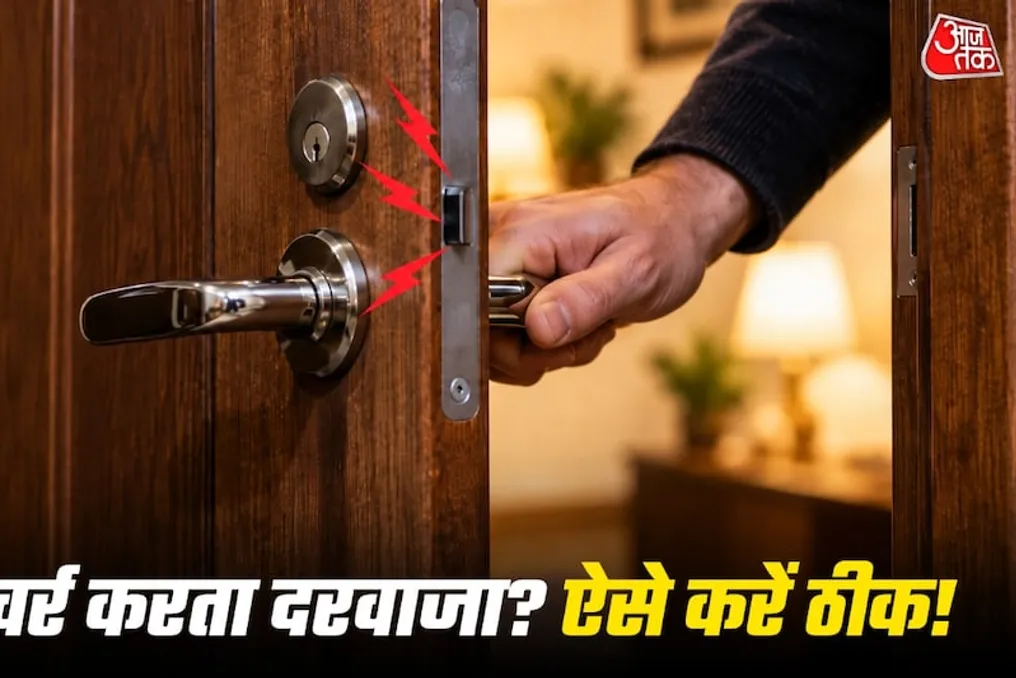
Modern homeowners pay close attention to interior design, whether it's choosing flooring or kitchen cabinets. However, attention is often not paid to problems that arise over time, such as squeaky doors. Many complain that a characteristic squeak, creak, or screech sounds when the door panel is opened or closed.
These sounds are often ignored as a minor annoyance, but over time they can become so irritating that they hinder even nighttime use of the door. Instead of immediately calling a carpenter, who may demand a significant fee, it is worth conducting a self-check first, as many problems can be solved at home.
First, you should check the fastenings. Since wooden doors are quite heavy, they rely on hinges secured with screws. Over time, these screws can loosen, causing the door to sag and rub against the door frame, which causes squeaking.
If the door makes a sound, you need to inspect all the screws on the hinges and tighten any that are loose. If a screw continues to turn but does not hold in the wood, it means the hole has loosened. In this case, you can use a makeshift method: insert a wooden matchstick, coated with carpentry glue, into the loosened hole. After the glue dries, trim the protruding part of the matchstick to a level surface and install a longer screw, which will help secure the fastening.
If the screws are fine, the cause might be friction in the hinge itself. To eliminate this, place a solid support under the door and slowly unscrew it. After cleaning the hinge, you can lubricate it with paraffin wax or wax, or use dry silicone spray, then put the screw back in place.
If rust on the hinge is observed due to moisture, you must first clean the spring mechanism with fine steel wool, then wipe it dry with a cloth and reinstall it. Simply applying lubricant on top does not always solve corrosion problems.
If the squeak occurs specifically when closing the door, you should check the alignment between the door frame and the panel itself. A slight shift in the frame can increase the load on the hinges or cause the door to rub against the frame. If necessary, you can slightly adjust the position of the hinge by adding a thin layer of cardboard or a special shim behind the hinge plate, but this must be done very carefully so as not to deform the door.
Another possible cause is a thick layer of old paint around the hinges. This layer can prevent the hinge from sitting correctly on the wood, causing friction. In this case, you should remove the excess paint using a scraper, which will reduce friction and may stop the squeak.
Finally, if the squeak persists after all manipulations—tightening screws, cleaning, and removing paint—the hinges may be worn out. In this case, it is advisable to replace them, for example, with ball-bearing hinges, which provide less friction, especially in heavy wooden doors.