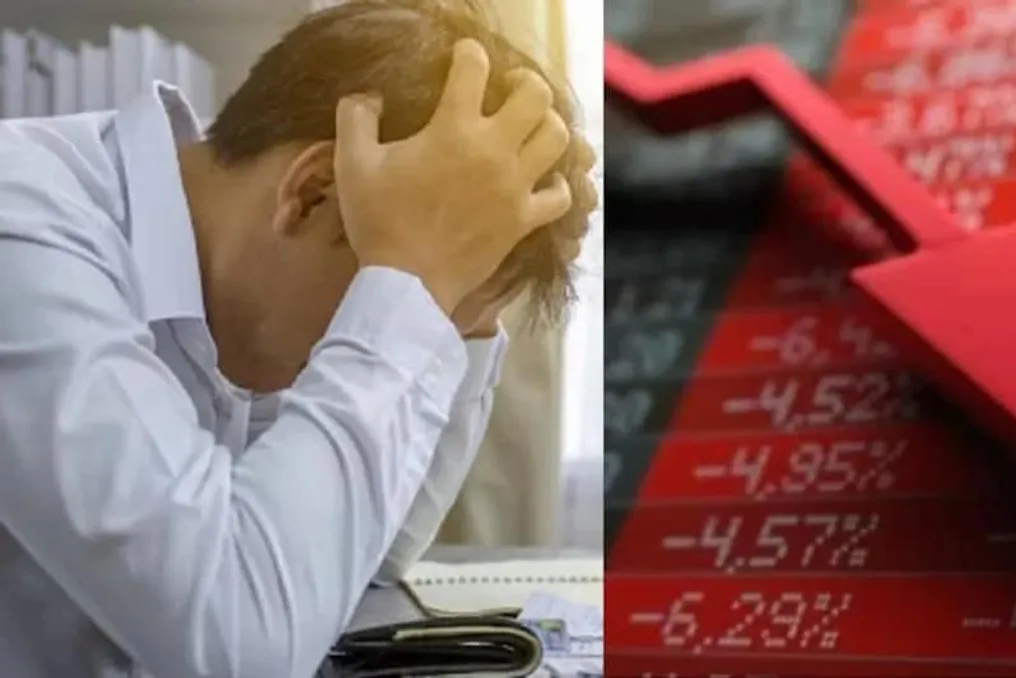
Three US-related signals could trigger stock market crash
Read more
Aaj Tak
www.aajtak.in

Three US-related signals could trigger stock market crash

A new crisis in the stock market is possible, as evidenced by signals coming from abroad. In particular, two decisions made in the United States are causing concern among investors in India. Furthermore, the collapse of the American stock market and the movement of Gift Nifty indicate a probable significant decline in the Sensex-Nifty index. After two days of growth, the market has once again faced a threat.

After a period of prolonged stagnation, the market began to show activity. Previously, there was a continuous downward trend in the stock market. For example, before the start of the current week, the Sensex with 30 stocks and Nifty with 50 stocks showed a drop of more than 2%, leading to substantial losses for investors. However, over the last two trading days, the dynamic changed, and investors felt relief due to the rise of Sensex-Nifty. Nevertheless, new signals received by the market cast doubt on this relief.

Two of the most significant signals pointing to a potential stock market crash are related to the US. Firstly, the US Federal Reserve announced an interest rate hike. At the Fed meeting led by Kevin Powell, the interest rate was increased by 25 basis points, or 0.25%. As a result, the federal rate in the US reached the range of 3.75% to 4%.

The second major factor is the expected approval in the US Senate of a bill that introduces new sanctions against Russia. This step is causing tension in India. According to this provision, US President Donald Trump will gain the right to impose tariffs of up to 100% on countries importing oil and gas from Russia, and India is among the major buyers of Russian oil.

The third indicator signaling a possible crash comes from Gift Nifty, which is considered a key indicator for Sensex-Nifty and reflects the state of the American stock market. Following the announcement of interest rate hikes in the US, the Dow Jones index plummeted in the previous trading day, showing a sharp drop of 1.21% or 631 points. Moreover, Gift Nifty traded in the red zone since the beginning of Thursday, indicating deteriorating sentiment in the Indian stock market.

The indices of the Indian stock market, Sensex-Nifty, closed with strong growth on the previous trading day, Wednesday. The BSE Sensex finished trading at 74,336.45 points, demonstrating a rise of 332.63 points during the day. The NSE Nifty closed at 23,217.60 points, showing a drop of 99 points. However, signals from abroad indicate that this sharp rise may be followed by a significant decline on Thursday.

Similar stories

Indian stock market experiences crash: index decline and significant losses in stocks
Read more
www.aajtak.in

Indian stock market experiences crash: index decline and significant losses in stocks

The Indian stock market is witnessing a substantial decline. The Nifty index fell by 230 points, which is 1 percent, and is trading at the level of 23,255. Meanwhile, the BSE Sensex decreased by 0.87 percent or 637 points, reaching the mark of 74,265.32. Pressure is felt across all indices, with a notable sell-off in the metallurgical sector.

Of the top 30 BSE stocks, only 8 show a slight increase, while the remaining 22 stocks are experiencing a sharp decline. Shares of companies such as Bajaj Finance, Mahindra & Mahindra, and Tata Steel have lost over 2 percent of their value. The fall has also affected large-cap stocks, including L&T, HDFC Bank, and Reliance.

Due to strong pressure on the stock market, investors have incurred significant losses. The market capitalization of BSE dropped from 483 billion rupees to 500 billion rupees to 478 billion rupees. Furthermore, today, a lower price limit was set for 120 stocks on BSE, while 70 stocks traded at the upper limit. Out of 3,365 stocks, 117 are at their lowest level in 52 weeks, and 68 are at their highest.

Strong pressure is observed in several specific stocks. Hindustan Copper is trading at 508 rupees per share, down by 4 percent. Hindustan Zinc shares also showed a drop of 4 percent. Lodha Developers shares declined by 5 percent. Cochin Shipyard fell by 6 percent, and Godrej Properties and NACL shares also lost 6 percent. Dixon Tech shares decreased by more than 3 percent, while Muthoot Finance shares demonstrated a drop of about 4 percent.

Stock Market Plunge: Oil Price Hike Triggers Collapse in Sensex and Nifty, IT Sector Stocks Suffer
Read more
www.aajtak.in

Stock Market Plunge: Oil Price Hike Triggers Collapse in Sensex and Nifty, IT Sector Stocks Suffer

The Indian stock market is experiencing a serious downturn on the third working day of the week. The BSE Sensex index plummeted by more than 600 points immediately after the market opened. At the same time, the National Stock Exchange's Nifty index also fell sharply, dropping below the 23,500 level, which dealt a significant blow to investors.

A notable decline was observed in the shares of information technology (IT) companies. A major drop was recorded for both TCS and Infosys. However, among the falling assets, stocks such as Paytm also showed growth.

Sensex and Nifty Open with Decline

The Sensex index from BSE began the trading session with a sharp decrease. This index of 30 stocks opened at 75,216, lower than the previous close of 75,577, and the rate of decline then accelerated significantly. By the time of writing, it had dropped by more than 609 points, reaching the mark of 74,968.

Parallel to the fall of the Sensex, the NSE Nifty index also showed a decline. NSE Nifty started at 23,522, which was below the previous close of 23,635, and then continued its rapid descent, trading at 23,477.

Sharpest Decline in IT Company Stocks

During the initial trading on Wednesday, IT company stocks faced the steepest decline. In the Nifty IT index, a drop of 3.06% was recorded. Among the companies showing the largest decrease were HCL Technologies (3.67%), Tech Mahindra (3.43%), TCS (2.88%), and Infosys (3.50%).

Companies that suffered the greatest losses in the IT sector also included Coforge, whose shares fell by 5.70%. Additionally, declines were recorded for Persistent Systems (2.42%), LTI Mindtree (2.52%), Amfaxis (2.32%), and Wipro (2.07%).

Main Reasons for the Fall, Including Crude Oil Prices

The reasons for the stock market collapse are linked to several factors. The sharp rise in global crude oil prices occurred due to escalating tensions in the Middle East and attacks on ships in the Strait of Hormuz. The price of Brent Crude approached $100, which once again increased the threat of inflation globally and worsened sentiment in the stock market.

Furthermore, geopolitical tension intensified due to the trade war between the US and Canada. Canada imposed tariffs of up to 50% on American goods, while Trump announced additional tariffs on a wide range of Canadian goods by the end of September. Attacks on ships in the Gulf also raised global tension to a high level.

Despite the overall slump, some stocks managed to generate profits for investors. These included Paytm Share, which rose by 4%, Medanta Share (+3.10%), Reliance Power Share (+2.50%), and NTPC Share (+1.10%).

Indian stock market sharply falls after opening due to Middle East tensions
Read more
www.aajtak.in

Indian stock market sharply falls after opening due to Middle East tensions

The stock market is once again experiencing a significant decline. On Tuesday, both the Sensex and Nifty indices saw a sharp drop immediately after trading began. The Sensex index, comprising 30 shares from the Bombay Stock Exchange (BSE), started poorly and quickly lost over 400 points. Simultaneously, the Nifty-50 index of the National Stock Exchange (NSE) followed suit, falling by approximately 100 points.

Among the 30 major companies in the BSE Largecap segment, 26 showed a decrease in quotations. Analysts have established a direct link between the stock market decline and the tensions in the Middle East.

At the start of trading, the BSE Sensex opened at 75,970, which was lower than the previous day's closing figure of 76,132. It soon continued to fall, losing 418 points to reach 75,714. Similarly, the NSE Nifty index also showed a decline at the open. This index of 50 stocks started at 23,743 compared to the previous close of 23,779, and then the rate of decline accelerated. By the time of writing, Nifty was trading at 23,668.

Among the stocks that fell the hardest amid the general market downturn, the following can be highlighted: in the BSE Largecap category were M&M Share (down 1.40%), Bharti Airtel Share (down 1.10%), and ICICI Bank-Axis Bank, which decreased by about 1%. In the Midcap segment, the largest drop was recorded by Voltas Share (2.50%) and TI India Share (1.50%), while Godrej Properties Share (1%) also saw a decline. Among Smallcap stocks, the most noticeable drops were seen in Amber Share (1.60%), Cyient Share (1.45%), and Angel One Share (1.40%).

The main reason cited for the stock market decline on Tuesday was the tensions in the Middle East, statements from Iran and Donald Trump, as well as the subsequent rise in crude oil prices in international markets. Iran increased gas prices for its consumers, while heightened tensions in West Asia have caused the price of Brent Crude to exceed the $97 mark, increasing inflation risk. The price of WTI Crude also exceeded $93, and the cost of Murban Crude trades around $107 per barrel.

Popular