
Mandakini spoke about the filming of the waterfall and breastfeeding scenes in Raj Kapoor's film
Read more
Aaj Tak
www.aajtak.in

Mandakini spoke about the filming of the waterfall and breastfeeding scenes in Raj Kapoor's film

The renowned actress Mandakini shared memories of shooting the famous waterfall scene in Raj Kapoor's film 'Ram Teri Ganga Mali'. She emphasized that during the shoot, she found nothing indecent or uncomfortable.

When the project began, she was only 16 years old, and this film became Raj Kapoor's last directorial work.

In an interview with ANI, Mandakini discussed public debates surrounding controversial scenes, including the white sari scene at the waterfall and the breastfeeding scene in the song 'Tujhe Bulayein Ye Meri Baahan'. She explained that the purpose of these shots was to demonstrate innocence and purity within the context of the plot, rather than to create a sensation, as happened later.

Speaking about the waterfall scene, Mandakini mentioned that Raj Kapoor had thoroughly explained the essence of the scene to her and refuted claims of its vulgarity. She noted that the main idea of the film concerned the purity and image of Ganga. The actress quoted the director: 'His approach was that you didn't ask him any questions... so tenderly, so gently, as if it were a family member... I felt no indecency anywhere. No bad feeling. The essence of the whole film was that any purity... they wanted to make her (Ganga) impure. But they failed.'

She also added that when she was slightly worried, she doubled the sari at Raj Kapoor's request, and then the take was shot. This was very significant for her, as she comes from a modest background. However, she admitted that at 16, she did not fully understand how these scenes would be perceived by audiences in the future.

Regarding the breastfeeding scene, which caused much controversy, Mandakini clarified that this moment was created not for feeding, but using a special camera angle. She wore a low-cut dress and held a child nearby, and the correct composition created the visual impression of a mother feeding her infant. Mandakini reported that after the film's success, cinematographers repeatedly insisted on redoing this famous scene, but she categorically refused to repeat it in subsequent projects.

Emphasizing that the impact of any scene depends entirely on strong storytelling and the director's vision, she continued working in cinema throughout her career without repeating this episode.

After the triumph of 'Ram Teri Ganga Mali', she collaborated with many big names in the industry, such as Mithun Chakraborty and Govinda, and appeared in numerous films. Among her works is 'Tejab', where Anil Kapoor and Madhuri Dixit played the lead roles. In 2023, Mandakini appeared on the show 'Da Kapil Sharma Show' with actress Varsha Usangaokar and Sangeeta Bijlani, where she shared interesting stories with Kapil Sharma.
Similar stories

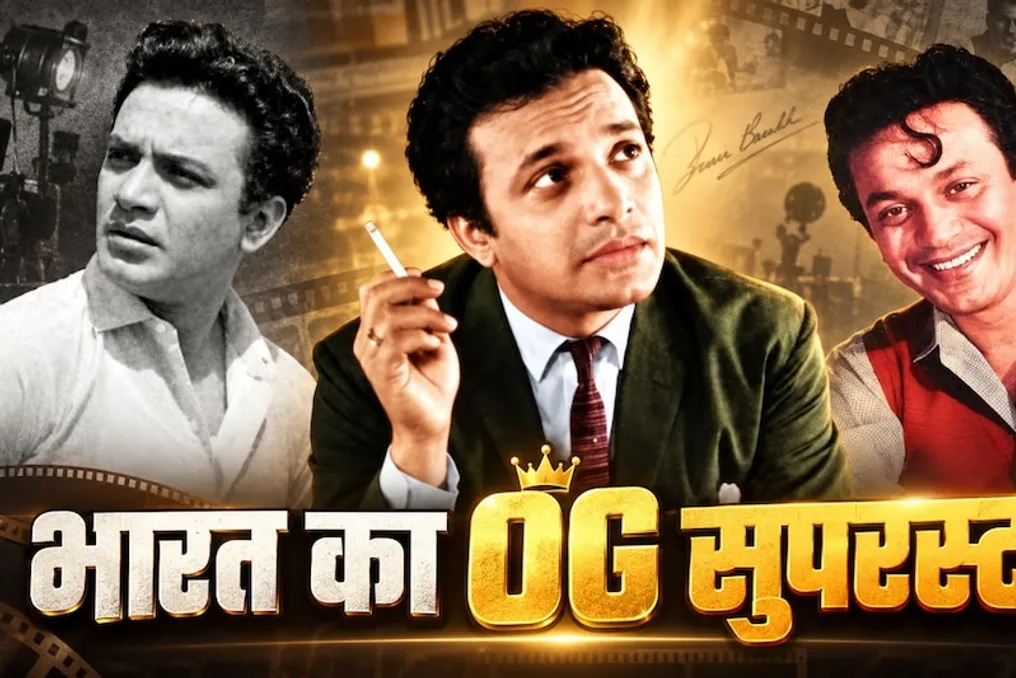
Mahanayak Uttam Kumar remained popular even in the era of Amitabh
Read more
www.aajtak.in

Mahanayak Uttam Kumar remained popular even in the era of Amitabh

The term 'superstar' was first used in the Western world and later began to be applied to major film stars in the 1950s and 1960s. However, in India, mainstream media first applied this word to Rajesh Khanna in the early 1970s, when his star status lasted about five years and could not be called anything other than an obsession. But there was another star whom his fans called Mahanayak.

This refers to Uttam Kumar, one of the greatest and most popular actors to emerge from Bengali cinema. He was born exactly one hundred years ago, on September 3rd. Uttam Kumar, born in Calcutta as Arun Kumar Chatterjee, began his film career in 1947 in the Indian film 'Maya Dore' as an extra. His first leading role film came out in 1948—'Drishtidan,' where he played young Asit Barno. In early films, he was given the names Arup Kumar or Uttam Chatterjee.

He started using the name Uttam Kumar in the 1951 film 'Sahayatri.' The following year, the Basu family gave him his first major chance. In this film, he worked for the first time with Supriya Devi, who later became one of his regular colleagues.

In the 1950s, Uttam Kumar established himself as one of the leading young actors in Bengali cinema. During this time, he released many hits, but 1960 was the year he began to be called 'Mahanayak.' That year, he acted in nine films, and all of them were successful at the box office.

Bengali cinema represented a significant force in the 1950s and 1960s. Although many industry stars used it as a springboard to transition into Hindi films due to the wider reach of Hindi cinema, Uttam Kumar did this very rarely. During the peak of his career in the 1960s, he rejected many offers to work in Hindi films, including major projects like 'Bisa Saal Baad.' In 1964, he also declined to participate in Raj Kapoor's film 'Sangham,' which eventually starred Rajendra Kumar. Later, in 1968, Uttam Kumar debuted in Bollywood with the film 'Choti Chulikaat' alongside Vijanthimala; he was also the producer of this film. After this, he acted in several other Hindi films, among which 'Amanush' stands out, but his heart always remained in Calcutta, where he held absolute dominance in Bengali cinema.

Nevertheless, Mahanayak was extremely selective in his creative choices. In 1956, the young Satyajit Ray offered him to work on the film 'Ghare Baire,' but Uttam Kumar politely refused, stating that playing negative roles was inappropriate for an already established star. About a decade later, they jointly made the historical film 'Nayak,' which became a big hit.

Uttam Kumar's popularity persisted into the 1970s. During this period, Rajesh Khanna's heyday in Hindi cinema ended, and Amitabh Bachchan became the country's biggest superstar. Amitabh Bachchan's popularity was so immense that his films received more attention than those of regional stars. However, in Bengal, Uttam Kumar was still considered the Mahanayak. In Bengali-speaking areas, screenings and screens of his films often surpassed the popularity of Amitabh Bachchan's films.

Despite Uttam Kumar continuing to act in successful films after 1976, his star status gradually began to decline. He was already over fifty, and his films did not achieve the same box office success. His works in films such as 'Kitab' and 'Anand Ashram' were highly praised by critics, but the box office collections were mixed. The film 'Dui Pratiti' in 1980 was his last successful and critically acclaimed work. On July 23, 1980, during the filming of 'Ogo Badhu Sundari,' Mahanayak's health deteriorated, and he passed away the next day from a heart attack.

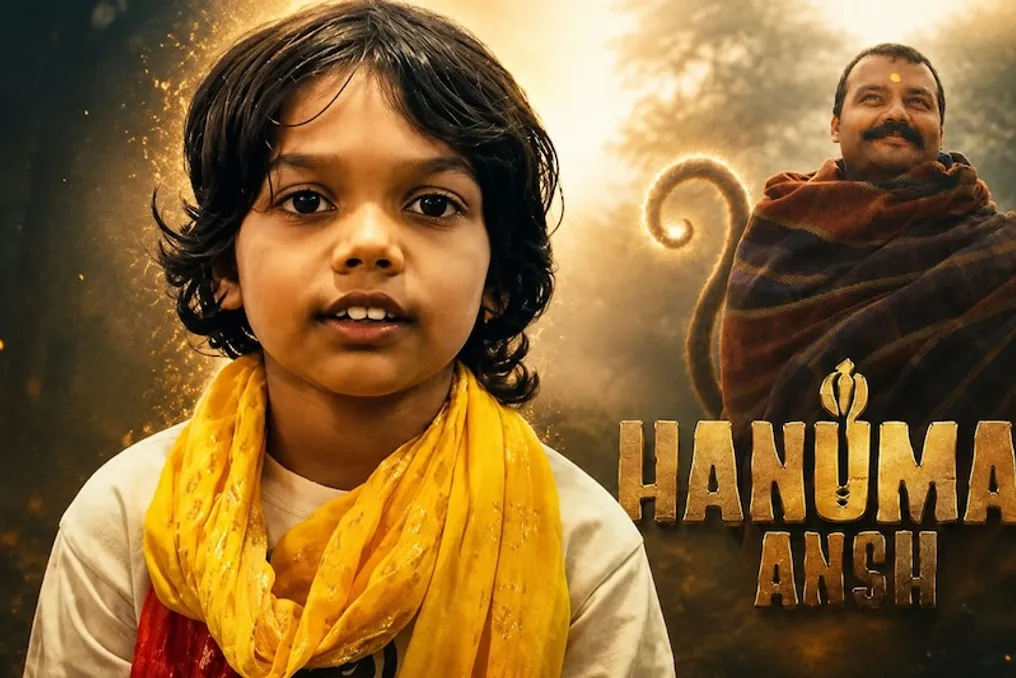
Eight-year-old Satvik played a mascot role in the film 'Hanuman Ansh', gaining recognition for complex dialogues
Read more
www.aajtak.in

Eight-year-old Satvik played a mascot role in the film 'Hanuman Ansh', gaining recognition for complex dialogues

Eight-year-old young actor Satvik Sharma, a resident of Bhopal, began building his career in the world of acting at an early age. Recently, he performed the role of a mascot in the film 'Hanuman Ansh', and his performance attracted the attention of viewers, becoming one of the significant milestones in his modest career.

Satvik is originally from Ganjbasaud, but he is currently studying at St. Joseph's School in Bhopal. Alongside his studies, he is actively involved in acting. At the age of just eight, he has been working in this field for about four years.

During his time working, Satvik participated in numerous series, films, and web series, playing various roles. Constant work in front of the camera at such a young age has significantly expanded his acting experience. With the support of his family and school, he continues to advance in the entertainment industry.

Speaking about his experience working on 'Hanuman Ansh', Satvik noted that he really enjoyed participating in the film's creation. He emphasized that all the actors in the movie played magnificent roles, and he also had the opportunity to fully dedicate himself to his character.

The actor shared that the opportunity to work on the film came to him suddenly. One night he received a call informing him of the need to participate in 'Hanuman Ansh'. After that, he played the mascot role, and this project became a special experience for him.

For Satvik, filming in the movie was a difficult test because some dialogues were initially hard for him. However, he did not give up and kept trying. Eventually, he managed to pronounce these complex lines correctly.

Satvik shared the most memorable moment of his experience, saying that sometimes it was difficult for him to pronounce certain phrases. Nevertheless, he believes that thanks to the grace of Rama and Hanuman, he managed to deliver these dialogues. For him, this experience was not only professional but also emotionally significant.

Satvik is very passionate about acting. He stated that he enjoys working in this field and intends to continue creating quality work in the future. Over four years, he has tried to demonstrate his talent by participating in various projects.

Satvik's steps, working in cinema and web series at such a young age, are a source of pride for his family and school. He considers the mascot role in 'Hanuman Ansh' another important milestone in his acting journey.

Satvik also expressed his opinion regarding the film, stating that 'Hanuman Ansh' should come out in parts 2 and 3. Furthermore, he urged viewers to watch the film as a family, noting that it is a very good picture.

Satvik's story shows that talent and hard work allow one to find a place in the world of acting even at an early age. Continuing to work in front of the camera alongside his studies, he plays in different roles.

For Satvik, the mascot role in 'Hanuman Ansh' was a new experience. The journey from memorizing complex lines to confidently delivering them on screen was special for him. In the future, he aims to strengthen his fame in the acting sphere through new projects.

Popular