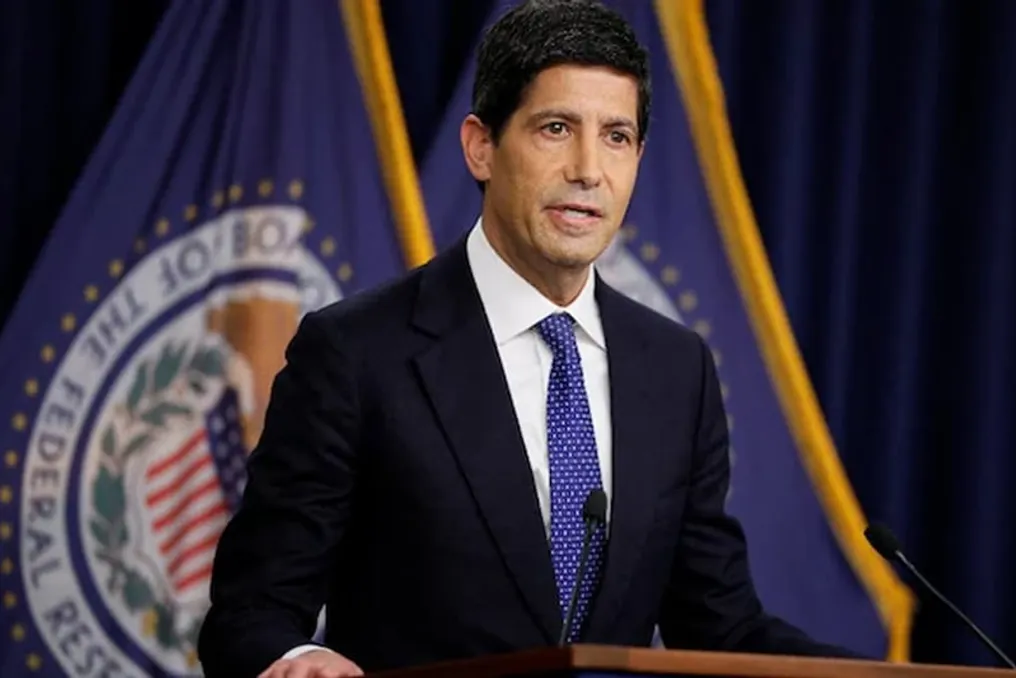
The Central Bank of America, the Federal Reserve, raised interest rates by 25 basis points, bringing the federal funds rate to a range of 3.75% to 4%. This is the first rate hike in over three years.
This decision by the US has significant implications for India as it can affect the Indian rupee, foreign investments, the stock market, bonds, and crude oil prices. Simply put, higher rates in America make investments there more attractive, which could lead to capital outflow from markets like India towards American assets.
Following the Fed's rate hike, attention will initially focus on the rupee. Generally, rising interest rates in the US strengthen the dollar. A stronger dollar puts pressure on the rupee, meaning more rupees may be required to purchase one dollar. This can affect the cost of goods needed by India, as many are paid for in dollars, such as crude oil. If the rupee weakens and the price of crude oil rises, this will increase inflationary pressure in the country and widen the import bill.
High Fed interest rates can make American investments more appealing to foreign investors. This increases the risk of foreign capital outflow from emerging markets like India. According to data from the National Securities Depository Limited (NSDL) of India, foreign investors have already sold Indian company shares worth about 2.41 lakh crore this year. If the Fed continues to raise rates or signals maintaining high rates for an extended period, selling pressure from foreign investors may persist, affecting stock market dynamics.
Increased selling by foreign investors can put pressure on the Indian stock market, especially on stocks with a high foreign investor stake. However, the Fed's decision is not the only factor influencing the market. Market direction is also determined by the performance of domestic companies, India's economic growth, inflation, and the Reserve Bank of India's (RBI) stance on interest rates. Therefore, the Fed's rate hike does not guarantee an inevitable fall in the Indian stock market; the real effect will depend on the future actions of foreign investors and Fed signals in the coming months.
Monitoring crude oil prices also remains important after the Fed's decision. India imports over 80% of its crude oil needs, so rising international oil prices directly impact India's import expenditure. If the dollar strengthens and oil prices rise, purchasing crude oil for India could become even more expensive. This could affect not only gasoline and diesel prices but also transportation and other goods costs. Amid ongoing tensions in the Middle East, there is already uncertainty regarding oil prices, making the movement of oil and rupee prices in the near term extremely crucial for India.
After the US Fed's decision, close attention will be paid to the position of the Reserve Bank of India (RBI). When setting interest rates, the RBI considers not only the US but also numerous other factors such as inflation in India, economic growth, the state of the rupee, and money demand in the country. Nevertheless, if US interest rates remain high and the dollar strengthens, the RBI may face the challenge of managing pressure on the rupee and foreign capital. If the RBI also raises interest rates, it will directly affect borrowing costs for ordinary citizens and businesses, as mortgage, personal, and business loan rates may increase, putting pressure on monthly installments (EMI).
The Fed's decision can also influence gold and silver prices. On Wednesday, gold traded at ₹1,51,850 per 10 grams on MCX, and silver at ₹2,35,421 per kilogram. Gold showed a rise of ₹1,040, and silver rose by ₹3,303, recovering after a three-week decline. The market attributes this to bargain hunting and attempts at short covering. However, the future trajectory of gold will largely depend on how hawkish the Fed's stance remains.
The Fed not only decided to raise the current rate but also hinted at a possible further increase later this year. This means that hopes for a near-term reduction in US rates may weaken. The US central bank's decision was made against a backdrop of persistently high inflation in America, Middle East tensions, and a strong labor market. The goal of the American central bank is to bring inflation closer to the target level of 2 percent.
This Fed decision differs from the demands of US President Donald Trump, who has repeatedly called on the Fed to lower interest rates, stating that...