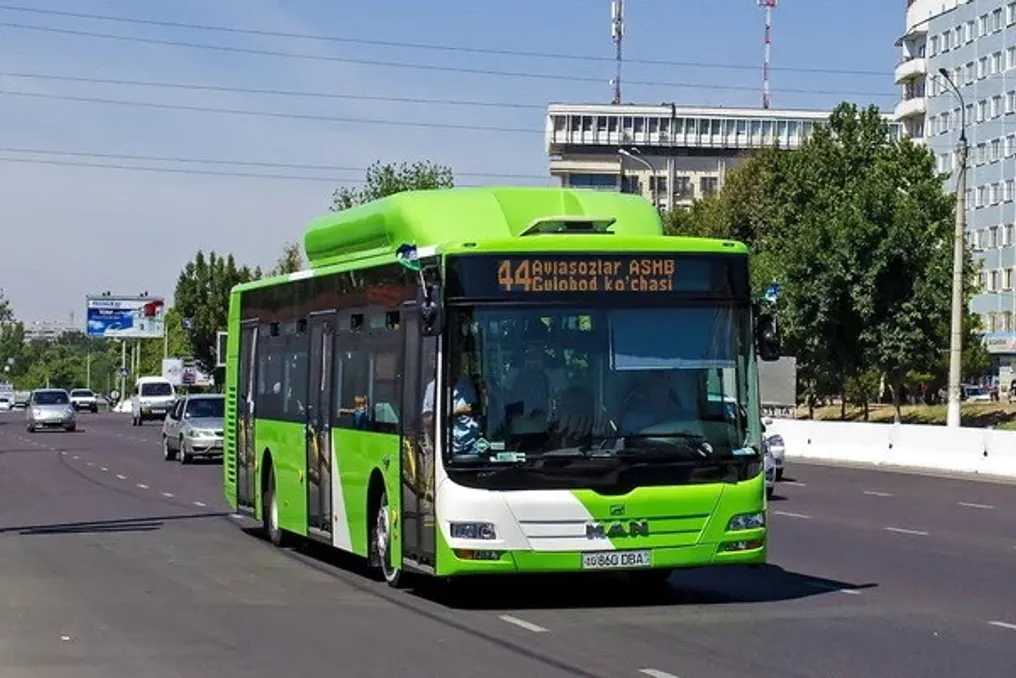
Tashkent buses transport about 1.5 million passengers daily
Read more
UzDaily
uzdaily.uz

Tashkent buses transport about 1.5 million passengers daily

Bus transportation in Tashkent, the capital of Uzbekistan, reaches an average of 1,491,117 passengers daily. Public transport in the capital operates on 165 routes, which are serviced by Tashshahartranskhizmat JSC.

During the period from 07:00 to 10:00, which is the morning peak time, 343,997 passengers used city buses on September 16.

The highest passenger flow during this period was observed on Route 131, which runs between the Dustlik-2 residential area and the Olimpiyskiy residential area, carrying 5,166 passengers. Routes 116, connecting Medgorodok and Chilanzarsky market, also transported a significant number of passengers with 4,402 passengers, and Route 24, running between the TTZ bus station and the sixth quarter of the Yunusabad residential area, carried 4,131 passengers.

Additionally, Route 38, linking the Almazar mahalla and the Uzbekkishlokmash plant, transported 3,661 passengers during the morning hours. Overall, the 165 routes managed by Tashshahartranskhizmat provide transport services for an average of 1,491,117 passengers per day.

Similar stories

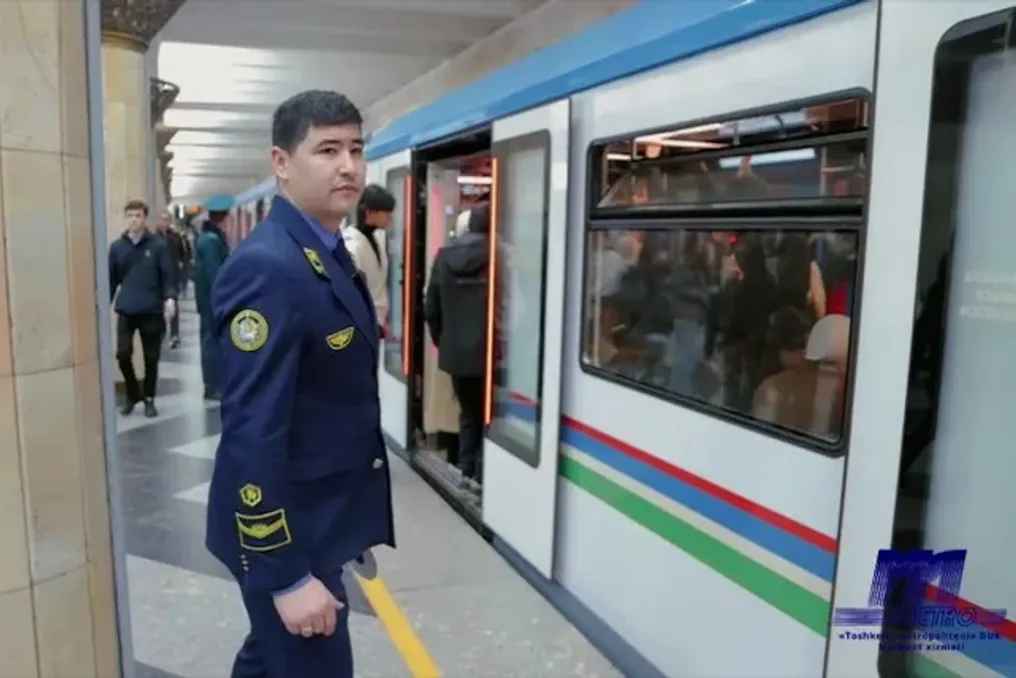
Tashkent Metro Set New Daily Passenger Traffic Record
Read more
uzdaily.uz

Tashkent Metro Set New Daily Passenger Traffic Record

According to the press service of the Tashkent metro, on September 14, 2026, a new record high number of passengers was achieved in one day. On this day, the metro transported 1,165,550 people.

Previously, the record was set on May 8, 2026, when public transport carried 1,117,061 passengers. The new figure exceeded the previous maximum by 48,489 people.

1.47 million vehicles registered in Tashkent on September 14
Read more
uzdaily.uz

1.47 million vehicles registered in Tashkent on September 14

On September 14, 1,466,093 vehicles were recorded moving in Tashkent. On the same day, the new academic year began at higher educational institutions. This data was provided by the Tashkent City Traffic Management Center.

During morning peak hours, from 08:00 to 09:00, 254,453 cars were on the streets of the capital, while this number reached 316,154 between 17:00 and 18:00.

Public Transport Operations

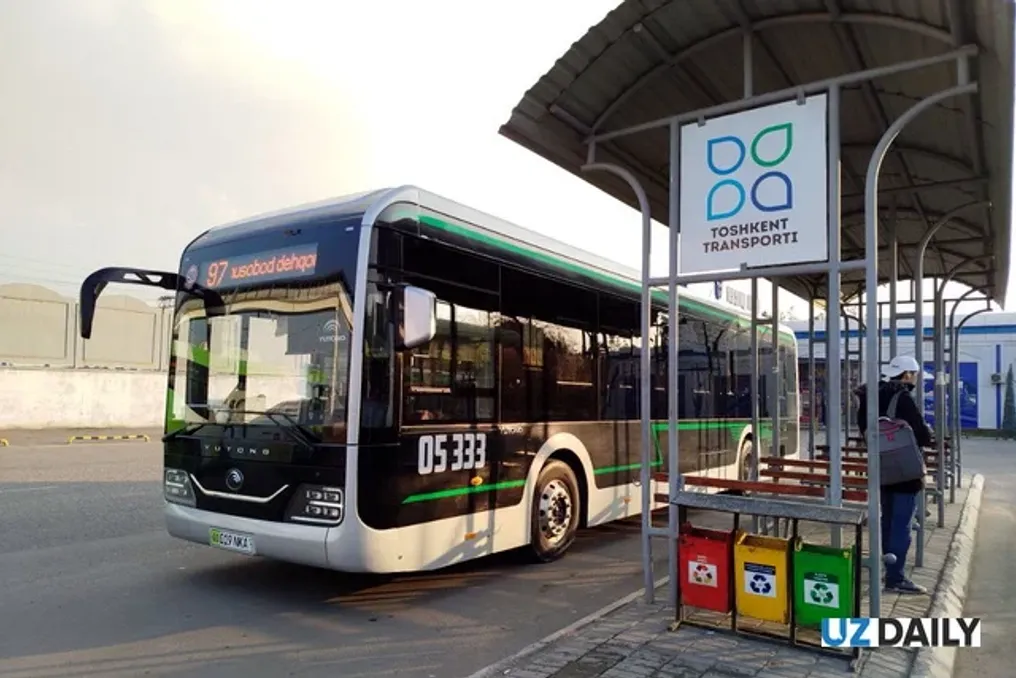
Throughout September 14, 1,680 buses operating on 170 routes completed 22,011 trips. The total number of passengers who used the buses amounted to 1,500,667 people. Additionally, the Tashkent metro transported 1,165,550 passengers during the day. The highest passenger flow was observed at the Chinor, Sergeli, Choshtepa, Almazar, Chillanzar, Buyuk Ipak Yuli, Dustlik, and Beruni stations.

Traffic Congestion

According to monitoring data from the Situation Center, traffic jams exceeding seven points occurred at four intersections between 08:00 and 09:00. These intersections included the crossings of P. Mahmud, TKAD–3rd Beshkurgansky Proezd, Mukimi–Katartal, and Nukus–A. Kakhgor. Traffic jams also exceeded seven points at six other intersections, including Fergana Yuli, Akhangaran, Merdjon–Sarykul, Gavhar–Sh. Rustaveli, Sagban–Farabi, and TKAD–University.

To stabilize traffic, traffic light operating modes were adjusted, and the duration of green signals was increased on certain directions. Additionally, traffic police officers were deployed to regulate traffic at some intersections.

Road Works

On September 14, municipal structures conducted works that partially affected traffic on 18 streets of the capital. Among the listed streets were Labzak, S. Mashhadiy, Al-Khorezm, Shahriobod, 1st Gulnora Proezd, Shurtepa, Birlashgan, Moikurgan, V. Vohidov, Korasuv, A. Temur, Uzumbog, Korasaroy, Mukimi, M. Yusuf, M. Ulugbek, 1st Katartal Proezd, and Akkurgan. Drivers were advised to plan their routes in advance considering road conditions and repair work, and to choose alternative routes if necessary.

Violations and Traffic Accidents

In order to ensure priority for public transport, pedestrian safety, and compliance with traffic rules, traffic police officers recorded nine instances of vehicles crossing pedestrian crossings, eight parking violations, and 16 stops on September 14. There were also 17 cases of driving under the influence of alcohol and 18 cases of pedestrians crossing roads in unprepared areas.

Three traffic accidents occurred in the capital during the day, resulting in one person being injured. No cases of serious injuries or fatalities were recorded.

As part of measures to monitor compliance with traffic rules, drivers were reminded of the need to yield to pedestrians at designated crossings, the prohibition of stopping at or immediately before pedestrian crossings, the prohibition of occupying bus stop zones, and the prohibition of driving in dedicated lanes A. Drivers were also urged not to obstruct buses when boarding or alighting at stops.

Road Infrastructure Modernization

As part of the modernization of the capital's road infrastructure, about 6,000 meters of road markings and seven pedestrian crossings were updated. The Situation Center monitors traffic flows on the streets of Tashkent in real time.
Tashkent Metro transported 243,821 passengers during the morning rush hour on September 7
Read more
uzdaily.uz

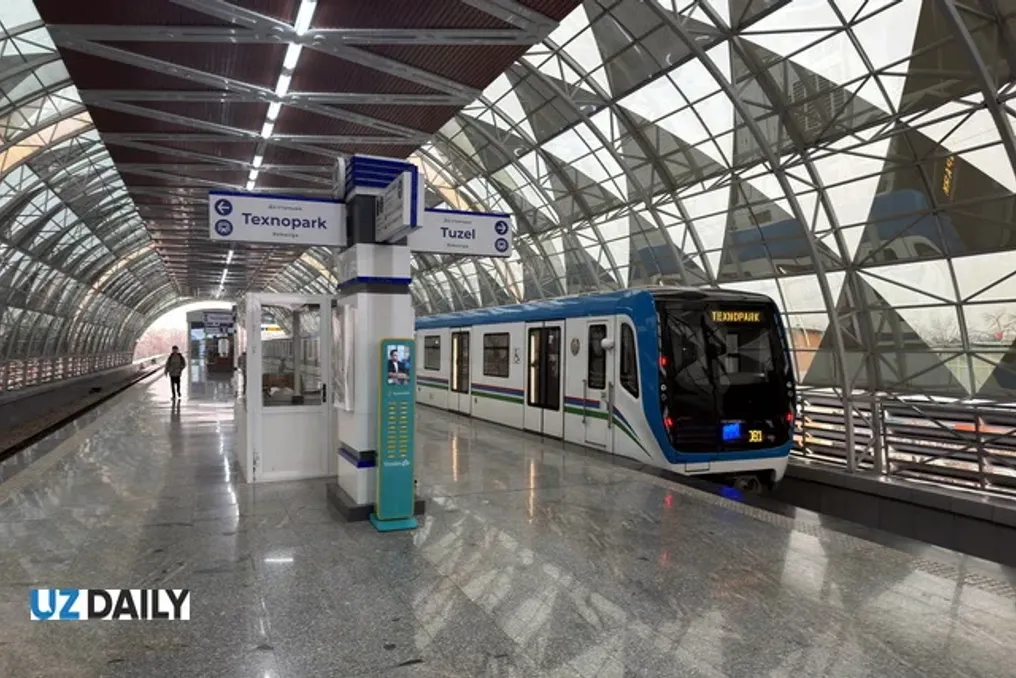
Tashkent Metro transported 243,821 passengers during the morning rush hour on September 7

The Tashkent City Transport Management Department (CODD) reported that the Tashkent metro operated stably during the morning rush hour on September 7. During this period, 64 trains served passengers across four lines, completing 243,821 trips between 07:00 and 10:00.

Due to the start of the new academic year in higher education institutions, public transport during this period was under constant monitoring. Monitoring was conducted in collaboration with partner organizations.

On the lines with the highest passenger flow—Chillanzar and Uzbekistan—the train intervals were reduced. According to CODD, these measures helped maintain stable metro operation during the morning rush hour.

The situation management center monitored the condition of metro stations and lines in real time. No failures or inconveniences in train operation, nor any passenger crowding at stations, were recorded during the observed period.

Furthermore, no emergencies related to passenger service occurred during the morning rush hour. CODD emphasized that the operation of the metro and other modes of public transport remains under continuous observation, with special attention paid to ensuring comfortable and safe conditions for passengers.

Popular