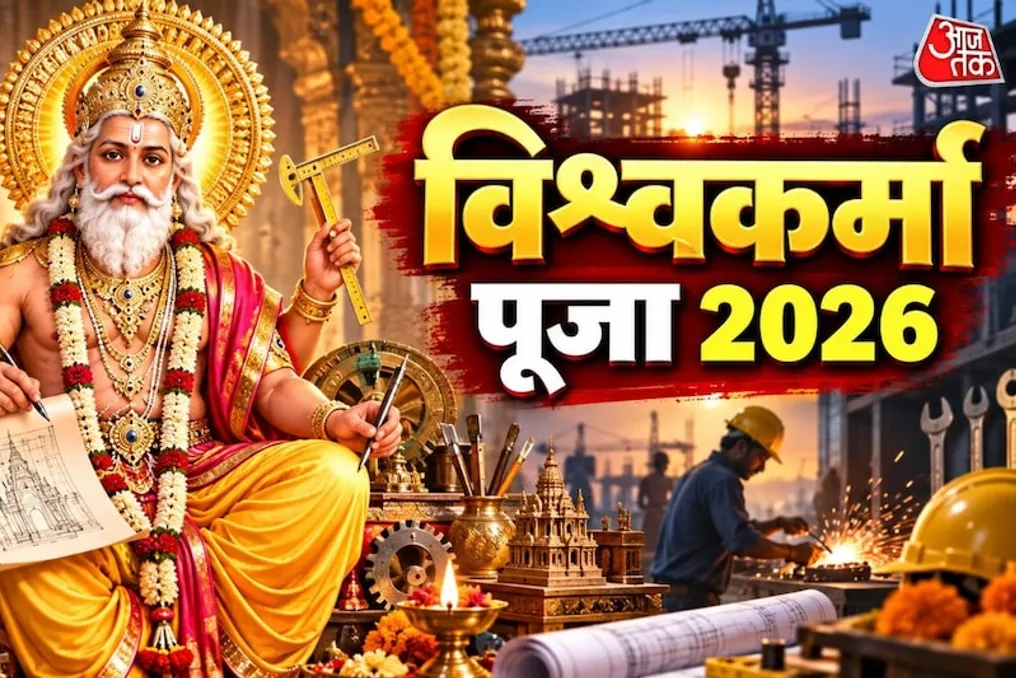
Every year, Vishwakarma Puja is celebrated on the day of Kanya Sankranti, dedicated to worshipping Lord Vishwakarma, the creator of all things. According to beliefs, performing this ceremony promotes increased profit and success in career and business. This day holds special significance for those whose work involves the use of specialized tools, mechanisms, or equipment.
The article presents information on auspicious time intervals for worshipping Lord Vishwakarma, as well as the period of Rahukala, during which one should refrain from any important or favorable activities.
There are three main auspicious time windows for conducting the ritual: the morning period from 7:58 to 10:43, the daytime period from 12:15 to 13:48, and the evening period from 16:52 to 18:24.
It is important to note that Rahukala occurs between 13:48 and 15:20, and during this time, it is not recommended to perform any favorable or ritualistic deeds.
Lord Vishwakarma is revered as the first architect and master of the world. According to religious beliefs, Vishwakarma created magnificent cities and palaces in all four yugas. Among his creations are Ravana's Golden Lanka, the city of Dwarka, Ravana's flying apparatus Pushpaka, and the celestial world itself.
Certain items are required for the worship. These include a statue of Lord Vishwakarma, a wooden platform, ghee, incense, rollers, sandalwood, a snack (supari), betel leaves, cloves, cardamom, camphor, water from the Ganges, a pot (kalash), fruits, flowers, sweets, coconut, akshat (rice), and kalava.
The ritual begins with a thorough cleaning of the workspace after the morning ablution, followed by sprinkling the area with Ganges water for purification. Then, a red or yellow woven material is spread on the platform, upon which a pot decorated like an eight-petaled lotus is placed. An image or statue of Lord Vishwakarma is placed nearby. After this, all mechanisms, tools, and other devices on the workplace are worshipped by applying roli, sandalwood paste, and turmeric to them. Next, incense and a lamp are lit, after which the Aarti is recited to Lord Vishwakarma. The worship concludes with offerings of fruits, flowers, and sweets, followed by the acceptance and distribution of prasad among family members and attendees.
The text of the Aarti is provided, which begins with the chant: 'Om Jai Shri Vishwakarma, Prabhu Jai Shri Vishwakarma' and includes eight verses praising him as the creator and protector of all creation, as well as describing his various forms and abilities.
