
Delhi High Court requests opinion from Center on regulating social media design
Read more
The times of India
timesofindia.indiatimes.com

Delhi High Court requests opinion from Center on regulating social media design

The Delhi High Court demanded on Wednesday that the Center clarify whether it is considering developing a policy aimed at regulating design elements in social media that can cause addiction, such as infinite scrolling and autoplay.

The court stated that it will review the petition in three weeks, which calls for the creation of an expert committee to study the features of social media platforms that promote engagement maximization and cause addiction.

When the Court asked the Center if it plans to formulate a policy on this matter, Deputy Secretary General Chetan Sharma stated that he has no specific instructions on this topic. He noted: 'You will receive instructions... and we will consider this issue in three weeks.'

During the hearings, the Center and some social media platforms objected to the admissibility of the petition, citing Supreme Court and High Court rulings that dismissed appeals on similar issues.

The petitioner, Vikas Katuria, emphasized that the problem lies not in the content carried by the platforms, but in how they are designed to induce addiction through infinite scrolling, autoplay, personalized feeds, notification systems, and likes.
Similar stories

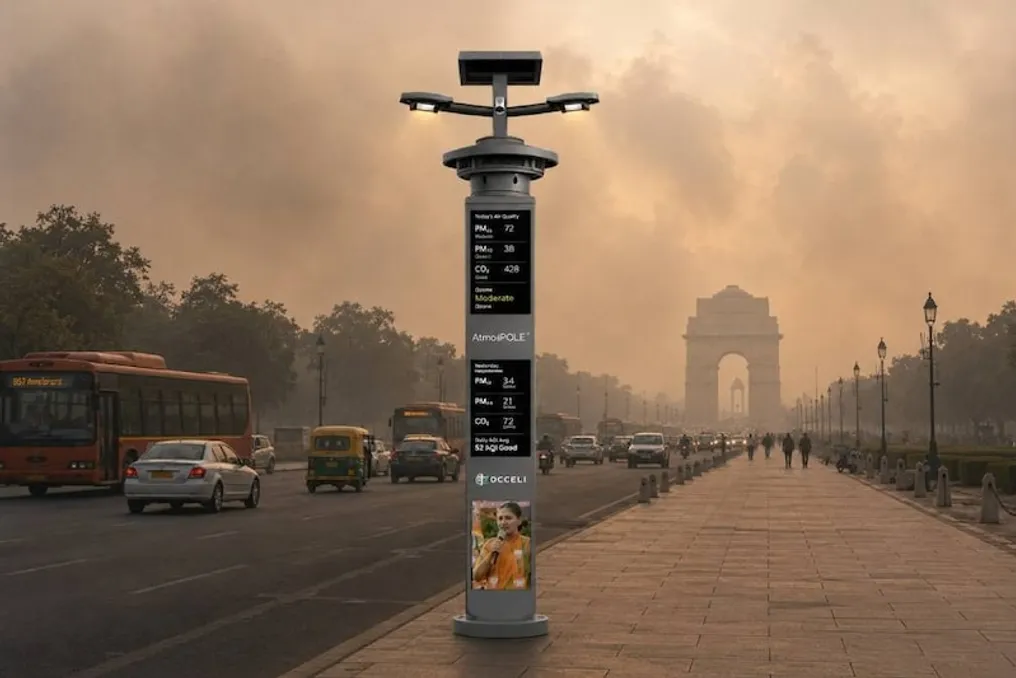
Smart poles are being implemented in Delhi to combat air pollution
Read more
www.aajtak.in

Smart poles are being implemented in Delhi to combat air pollution

The problem of air pollution in Delhi is well known, and the situation worsens during the winter period. The rise in pollution levels causes breathing problems for residents. To solve this issue, technological support is now being actively used. Smart poles have been installed in Delhi that can not only track air quality but also help reduce pollution levels.

The smart poles installed in Delhi provide information about the air condition, including pollution levels of substances such as PM2.5 and PM10. It is important to note that this data is updated every few minutes. This allows residents to know how clean or polluted the air is in their immediate vicinity. Some of these poles also display the volume of air cleaned by the system over the last 24 hours.

The functions of the smart poles go beyond simple air information. They are used to actively reduce atmospheric pollution. Currently, these smart poles are being tested in various locations in Delhi to assess their real effectiveness in combating pollution. If this technology passes testing successfully, it may begin to be implemented in more places in the future.

The Delhi government is not limited to just smart poles in the fight against pollution. Various other technologies are also being tested. Among them are filter systems to reduce emissions from vehicles, as well as technologies aimed at reducing road dust and controlling air pollution. Some of these systems function like large air purifiers, while others work on reducing dust and pollution around roads.

The key point is that no technology will be widely adopted just because it looks high-tech. First and foremost, it must be established how much the pollution level is actually reduced. Specialists from IIT Delhi and other scientists are involved in testing and monitoring these technologies. The goal of this cooperation is to find out which system demonstrates the greatest practical effect. If any technology shows better results during trials, it can be scaled up for wider use.

Thus, in the future, air purification in Delhi could become more comprehensive, involving the use of technologies rather than relying only on plants and traditional methods.

Popular