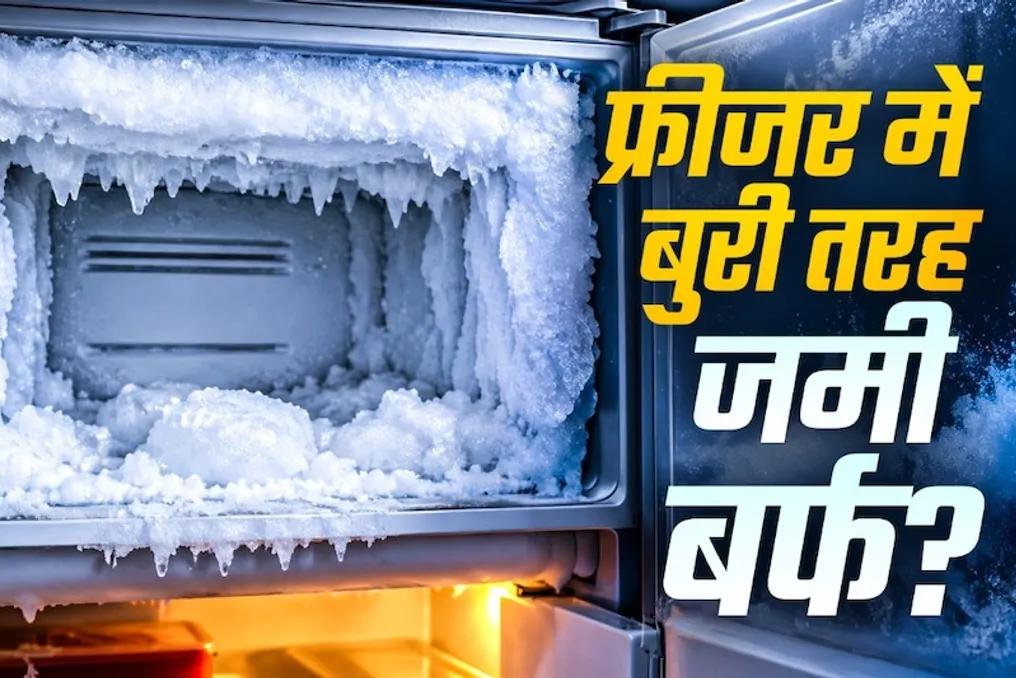
A refrigerator is a kitchen appliance that operates continuously for 24 hours. Its constant operation is necessary to maintain the freshness of food for a long time. However, problems often arise that people may ignore, considering them insignificant. One such problem is the formation of ice in the freezer compartment.
If a thick, mountain-like layer of ice gradually forms in the freezer compartment of an old refrigerator, it should not be considered mere dirt. Excessive frost accumulation reduces the internal space of the freezer compartment and negatively affects air circulation and the cooling process. Therefore, periodic defrosting is required in older refrigerators to melt the accumulated ice.
Failing to perform the defrosting procedure forces the refrigerator to work harder to maintain cold, leading to increased electricity costs. The good news is that calling a specialist is not necessary for this; there are simple and safe methods available to remove ice at home.
The formation of a large amount of ice occurs because warm and moist air enters the refrigerator every time the door is opened. Upon contact with the cold surfaces of the freezer compartment, this moisture begins to freeze, gradually forming a thick layer of ice. This process can accelerate in conditions of high humidity. Furthermore, excess ice reduces the usable storage volume in the freezer compartment.
A thick layer of ice prevents normal heat exchange and air circulation in the freezer compartment. This forces the refrigerator to exert more effort to maintain the set temperature. According to studies, due to excessive frost formation, the cooling efficiency of the freezer compartment can decrease by 15–25 percent.
It is important to understand that daily defrosting of the freezer compartment is not required. Most modern models are equipped with an automatic defrost system, so manual intervention is unnecessary. Nevertheless, if a thick layer of ice accumulates in an old refrigerator, it should be removed regularly. Even in frost-free models, if ice formation is observed, it is recommended to check the door's rubber seal or the defrost system itself.
- Natural Defrosting: Disconnect the refrigerator from the power supply and remove all food, placing it in insulated containers with ice. Place towels on the floor under the freezer compartment and leave the door open. After the ice has melted, carefully remove it using a plastic spatula. It is crucial to strictly avoid using knives or any sharp metal objects to scrape off the ice, as this can damage the cooling lines.
- Using Hot Water Steam: After disconnecting and unplugging the refrigerator, place a heat-resistant container with warm, but not boiling, water inside the freezer compartment. The resulting steam will help loosen the ice faster. Care must be taken to ensure that water does not come into direct contact with the walls of the freezer compartment or electrical components.
- Airflow Defrosting: After turning off the power and opening the freezer compartment door, ensure outside air enters using a fan. Room temperature promotes faster ice melting. Placing towels underneath, carefully remove the softened ice.
After all the ice has disappeared, thoroughly wipe down and dry the freezer compartment before plugging the refrigerator back in. Before returning the food, allow the appliance to cool completely. It is also advisable to avoid storing food outside the refrigerator for extended periods. It is recommended to maintain the temperature in the refrigerator compartment at 4.4°C or lower, and in the freezer at about -17.8°C or lower. If a thick layer of ice begins to form again shortly after defrosting, it is necessary to check the condition of the door's rubber seal and the defrost system.