India's economy demonstrated impressive GDP growth of 7.8% in the first quarter of the fiscal year 2026-27. This figure exceeded expectations amid global economic difficulties and the crisis in West Asia, indicating strong economic momentum for the country. However, this statistical result sparked debate.
Former Deputy Finance Minister Subhash Chandra Garg questioned the official GDP data and changes made in previous periods. Congress also accused the government of manipulating these figures. Subhash Garg asserted that the real growth rate of the Indian economy is only 2.6%, although he later revised his forecast to 5% in an interview.
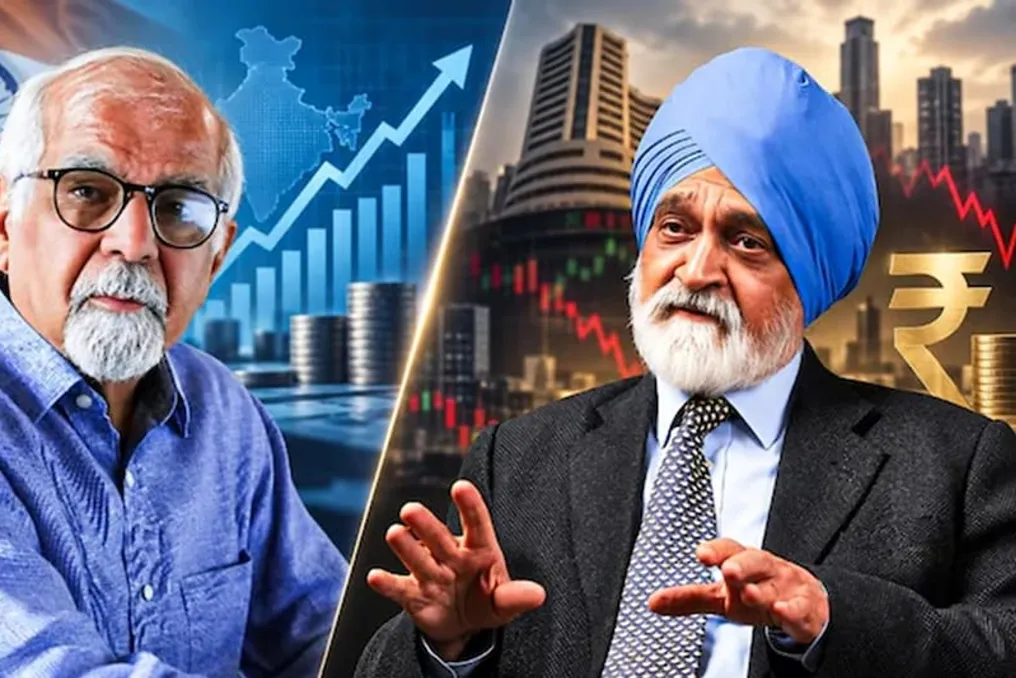
In contrast to these claims, two leading economists, Surajit Bhalla and Montek Singh Alawalia, refuted allegations of GDP data falsification. They emphasized that even with 7.8% growth, India will require faster economic growth to become a developed nation by 2047.
Following the release of new GDP data, former Finance Secretary Subhash Chandra Garg criticized significant adjustments made to the first-quarter figures of the previous year. He noted that the initial GDP at current prices was around 86 lakh crore rupees, but this amount was later reduced to approximately 80 lakh crore rupees in the new GDP series. Garg requested clarification from the government regarding the difference of 6 lakh crore rupees and used this as grounds for doubting the current growth calculation of 7.8%.
Garg's argument was that when comparing old and new figures on different bases, the GDP growth at current prices appears to be less than 2.5%. Nevertheless, the government and economists dismissed his calculations as unfounded, stating that GDP cannot be calculated by comparing data from two different statistical series.
After Subhash Garg's objections, the GDP data became a subject of political discussion. Congress criticized the government over the new GDP series, the GDP deflator index, and changes in past reports. The party stated that the new GDP series showed a decline in India's GDP of approximately 43 lakh crore rupees over four years. The government rejected these claims, explaining that the new GDP series uses 2022-23 as the base year and applies improved data sources and a new calculation methodology. The Ministry of Statistics and Programme Implementation (MoSPI) also confirmed that the correct method is not comparing data from different GDP series to determine growth rates.
Amid ongoing disputes over GDP data, Surajit Bhalla and Montek Singh Alawalia shared their views. Both agreed that there is no convincing evidence that the 7.8% figure is artificially inflated. Economist Nilakanth Mishra, representing India at the World Bank, also did not approve of achieving growth of 2.6% or 2.8% by combining different GDP series.
Surajit Bhalla noted that if the government aimed to show higher GDP, it could have also increased consumption data. However, in the new series, consumption was adjusted downwards. In his opinion, there is currently no evidence that the GDP data has been manipulated.
Separate from the GDP disputes, the most important point was the discussion of the 'Developed India 2047' goal. Although India did record strong growth of 7.8% in the first quarter of the fiscal year 2026-27, according to Surajit Bhalla and Montek Singh Alawalia, one or two quarters of rapid growth are insufficient to guarantee India's transformation into a developed economy by 2047.
Surajit Bhalla believes that to achieve this goal, India needs to maintain double-digit growth for a prolonged period. He positively assessed the strengthening of the investment-to-GDP ratio to about 34% but added that much faster growth is required to increase per capita income in dollar terms.
Montek Singh Alawalia also noted that the Indian economy looks stronger than pessimistic forecasts suggested. However, he believes the current pace is insufficient to realize the 'Developed India 2047' goal, insisting on the need for higher and sustained growth.
According to economists, national development is not just about increasing overall GDP. It is crucial that the growth in per capita income, employment, production, and development benefits reach broad segments of society. Economist Rohit Lamb distinguishes India's development model from those of China and South Korea. According to him, India rapidly transitioned from an agrarian economy to a highly skilled service sector, whereas large...