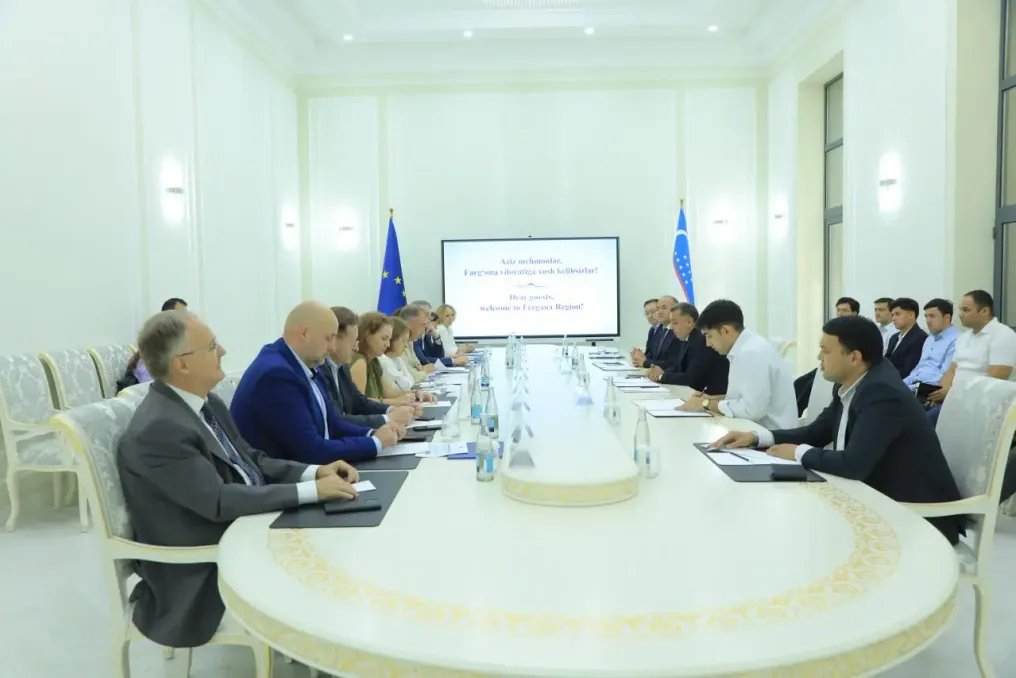
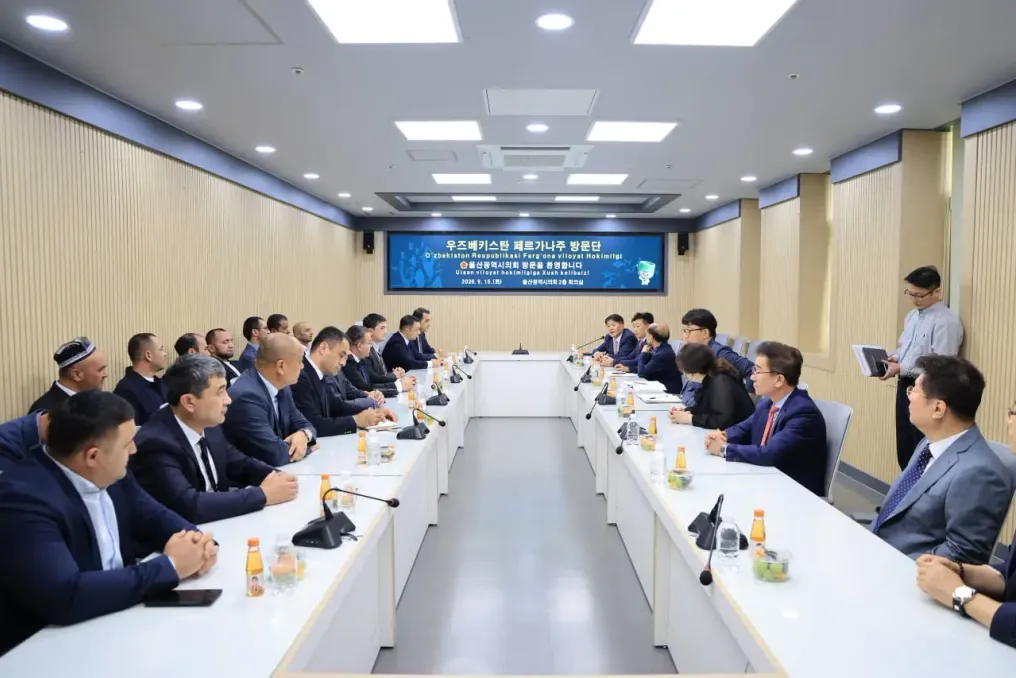
The Governor of the Fergana Region, Khayrullo Bozorov, met with the Mayor of Ulsan, Kim Sang-gu, during a working trip to the South Korean metropolis. According to the administration of the Fergana Region, the parties discussed the further development of relations between the partner cities, the implementation of specific projects, and new areas for interaction.
Ulsan is one of the largest centers for export and industry in the Republic of Korea. The city's economy is mainly based on shipbuilding, automobile manufacturing, and petrochemicals. New areas for development highlighted include hydrogen energy, offshore wind power, future mobility, and advanced energy technologies.
During the meeting, Ulsan's expertise in combining industrial growth with environmental sustainability was also noted. In particular, the parties drew attention to the restoration of the Taehwagang River, which previously suffered from severe industrial pollution but has since become an important ecological space for the city after large-scale restoration work.
Active development of ties between Fergana and Ulsan began in 2025. In March of this year, Fergana signed a protocol of intent to develop friendly relations, and the agreement on establishing partnerships was concluded in Ulsan in October.
Current cooperation includes training specialists in Fergana according to Korean standards. Young people from the region also work at shipbuilding enterprises in Ulsan, where they are familiarizing themselves with modern technologies, production practices, and industry standards.
The parties discussed the possibility of transferring Ulsan's industrial experience and technologies to the Fergana Region, as well as developing production cooperation and implementing joint projects in the fields of automotive manufacturing, future mobility, energy, and 'green' industries.
To strengthen cultural and humanitarian ties, it was also proposed to hold 'Ulsan Days' events in Fergana. Khayrullo Bozorov emphasized: 'We view the documents signed between Fergana and Ulsan not just as diplomatic agreements, but as a solid foundation for long-term friendship and economic and technological partnership. Most importantly, the results of this friendship must be felt by our people, youth, and entrepreneurs.'
After the negotiations concluded, the parties defined steps for further advancing cooperation and agreed to develop a corresponding roadmap.