Hang Ten Systems raises $53 million to scale enterprise artificial intelligence services
Read more
Ventureburn
ventureburn.com

Hang Ten Systems raises $53 million to scale enterprise artificial intelligence services

Hang Ten Systems has secured an additional $53 million in a seed funding round. The round was led by the fund Xora, which is supported by Temasek. This investment brings the company's total funding to $85 million. Mayfield and Aramco Ventures also participated in the latest round.

These two seed rounds were closed just five weeks apart. During this period, Hang Ten has signed several multi-million dollar enterprise contracts. Some of these projects are already in the implementation phase, while others have been successfully completed across various industries and business functions.

The company provides large enterprises with consulting, transformation, and applied artificial intelligence services. Its approach combines code generation using agents, reusable AI skills, and industry expertise. Hang Ten uses this model to create, modify, and operate enterprise software.

Hang Ten Systems operates in software development, finance, and financial analytics. Furthermore, its services cover enterprise migration, human resources management, and other technology-intensive functions. The company aims to execute these projects with smaller teams and in shorter timeframes.

The company positions its model as an AI-based alternative to traditional integration systems. In its implementation process, it utilizes agentic systems, allowing Hang Ten to reuse skills across various enterprise projects. The company's skills library can also support recurring technical and business requirements.

The company is led by founder and CEO Dr. Vishal Sikka. Previously, Sikka served as the CEO of Infosys. Investor support also includes high-profile technology executives such as Intel CEO Lip-Bu Tan and Micron CEO Sanjay Mehrotra. Another investor is Jerry Yang, co-founder of Yahoo and founder of AME Cloud Ventures, who has also joined the board of directors of Hang Ten Systems. The company is already collaborating with major industrial enterprises.

Specifically, the company supports Aramco with AI applications for several operational functions. Mahdi Aladel, CEO of Aramco Ventures, noted that more potential areas of application are being identified. Several teams are also exploring additional projects. Siemens Gamesa Renewable Energy is another corporate client. Its CEO, Vinod Philip, mentioned that the initial engagement yielded desired results, leading the company to expand its cooperation with Hang Ten. The next phase of work will focus on scaling this approach to more industries and regions.

This demonstrates an early example of expansion within existing enterprise partnerships. These projects also highlight the company's focus on production deployments. Hang Ten strives to move enterprises beyond experimental AI use and integrate it into operational systems.

The new capital will be directed towards increasing capacity for current projects, as well as expanding Hang Ten's engineering and consulting structure. Additional investments will go into the company's platform and infrastructure, as well as further developing the library of reusable agent skills. Xora noted that the adoption of enterprise AI largely depends on its implementation, and the fund views secure and cost-effective deployment as a significant challenge for businesses. Xora's investments also provide Hang Ten access to networks in Singapore and Southeast Asia.

Xora invests in AI infrastructure, applied AI, and deep technologies. Mayfield, which led Hang Ten's first seed round, participated again. Aramco Ventures provides strategic ties with enterprises and potential implementation opportunities. The new funding gives Hang Ten additional resources as the number of client projects grows and strengthens the company's ability to scale its implementation technical team. Hang Ten's model focuses on combining AI capabilities with corporate engineering expertise.
Similar stories

Veridion raises $20 million to expand its AI-powered business analytics platform
Read more
ventureburn.com

Veridion raises $20 million to expand its AI-powered business analytics platform

Veridion has successfully raised $20 million to scale its artificial intelligence-based business analytics platform. The funding round was led by Hoxton Ventures, with participation from existing investors, including Underline Ventures, OTB Ventures, Gapminder, Day One Capital, and Launchub Ventures.

The funds will be used for product development and international expansion into several strategic markets. Furthermore, the company plans to significantly increase its staff in the US as demand from American clients continues to grow.

More than seventy percent of the company's revenue currently comes from US clients. Veridion is strengthening its presence in North America and forging closer ties with American institutions, which is supported by this funding for commercial growth.

Founded in 2019, Veridion has developed a live AI-driven business graph that covers companies worldwide. This platform provides continuously updated information on enterprises across various industries and geographical regions.

The company's digital twin currently includes over 640 million businesses globally. Veridion analyzes billions of digital signals to maintain and update this extensive business dataset. These signals include company websites, public registries, and regulatory documents from different markets.

Product catalogs, social profiles, and news sources are also integrated into the platform. The system uses this information to create a constantly updated view of companies and their commercial activities.

The platform can provide market analysis 52 times faster than traditional sources and covers more than 30 times more companies than many standard business analytics systems. This approach is aimed at organizations that require accurate and up-to-date commercial information.

The company is expanding amid growing volatility in global commercial conditions. Traditional business analytics often relies on quarterly or annual updates, which can pose problems during rapid changes or unexpected company disruptions.

Enterprises can be formed, fail, relocate, or change their risk profiles in much shorter timeframes. Veridion claims that its real-time data helps organizations identify these changes earlier. The platform can also show connections between suppliers and customers affected by changing commercial conditions.

This capability becomes critical when disruptions affect multiple companies in one supply chain. For example, during disruptions around the Strait of Hormuz, users were able to identify vulnerable enterprises and commercial links.

Veridion's clients collectively represent a market capitalization of nearly $2 trillion. As part of its expansion strategy, the company is now dedicating more resources to the US market. The Series A funding gives Veridion the necessary momentum to accelerate product development and strengthen ties with American institutions.

The company currently employs over 60 people in Europe and North America, but it plans to double its team in the US soon. This growth will help attract more clients and establish itself in the American market.

Hoxton Ventures noted that Veridion is transforming the methods of building business analytics. The investor emphasized that the real-time updating data model is a key part of the company's approach. Veridion believes that real-time information allows businesses to react sooner to changing commercial conditions.

The company's technology aims to replace static information with a continuously updated view of global business. The secured funding will provide Veridion with additional resources to expand the platform and develop new features, as well as support efforts to make live business analytics more accessible worldwide.

Factory raises $200 million at $5 billion valuation to scale AI software development
Read more
ventureburn.com

Factory raises $200 million at $5 billion valuation to scale AI software development

Factory has successfully raised $200 million in a new funding round, achieving a valuation of $5 billion. Investors in this round include Blackstone, Khosla Ventures, and Sequoia Capital. Insight Partners, Evantic Capital, and Sound Ventures also participated.

Factory was founded in 2023 by Matan Greenberg and Eno Reyes. Other investors included NEA, Mantis VC, and Clearlake. The round also attracted angel investors, including Nico Rosberg, Brad Gerstner, and Mark Benioff.

The new funding increases the company's total capital raised to over $400 million. This represents significant growth compared to the $1.5 billion valuation set in April. Thus, in five months, Factory's valuation has more than tripled; previously, the company had raised $150 million at that same valuation.

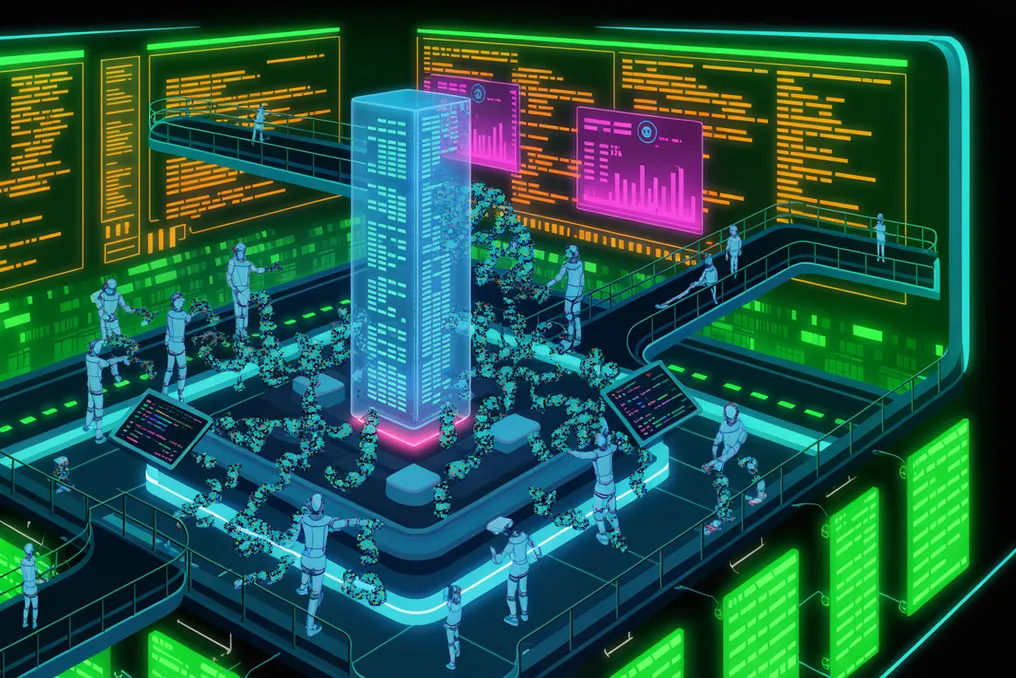
The latest capital raise reflects growing enterprise demand for autonomous software development tools. The San Francisco-based company aims to increase the degree of autonomy in software development. Its platform enables large enterprises to create, test, and maintain software using artificial intelligence agents throughout the entire development lifecycle.

Factory differs from platforms focused on individual coding agents because it provides enterprises with a unified system for managing software development. The platform allows companies to control the training process of their 'software factory,' as well as manage models and system deployment. Factory can operate through its managed cloud infrastructure, or clients can deploy it on-premises or in fully isolated environments, giving enterprises greater control over AI-driven development.

The company reports that its platform is used by hundreds of thousands of developers. Factory's clients include Nvidia, Blackstone, Royal Bank of Canada, Palo Alto Networks, and Adobe. This growing client portfolio underscores the increased interest from the corporate sector in AI-powered software development.

Enterprises are increasingly using AI to boost engineering productivity. Factory believes that companies are moving from using individual coding assistants to building broader software factories around autonomous systems. Matan Greenberg noted: 'Major enterprises worldwide are transitioning from individual coding agents to software factories,' adding that clients confirm the potential for rearchitecting software development systems, although the company is still in the early stages of this transition.

Factory's strategy is focused on creating autonomous software factories that operate continuously under human supervision. Enterprises can regulate measurable outcomes while AI performs development tasks. The company competes in the rapidly growing AI coding market. Factory plans to use the new capital to support further growth, focusing particularly on platform expansion and adoption within the corporate sector.

Positron AI raises $875 million to scale AI inference hardware
Read more
ventureburn.com

Positron AI raises $875 million to scale AI inference hardware

Positron AI has successfully raised $875 million in a Series C funding round, valuing the company at $5 billion. The company's core business involves developing hardware that makes the artificial intelligence inference process more energy-efficient and cost-effective.

The funding was secured in two stages: first, a Series C round of $375 million was closed, followed by a Series C-1 round of up to $500 million. The main round was led by NEA, Atreides Management, and Valor Equity Partners, with co-leads from Andra Capital and SemiAnalysis Capital participating. The second tranche was led by Jim Clark, founder of Silicon Graphics and Netscape, with participation from several institutional and strategic investors.

The capital raised will allow Positron to significantly expand its growing business in inference and add several experienced technology investors to its board of directors. Forest Basket from NEA and Gavin Baker from Atreides Management will join the board. Thomas Germoluk and Dylan Patel will also become directors.

As AI workloads increasingly shift towards inference, infrastructure is necessary for the continuous operation of models by every AI assistant, agent, and helper. Positron focuses on solving memory and power issues arising from this growth. The company's systems are designed with an emphasis on bandwidth and memory capacity, rather than raw computational power.

The company's next-generation systems utilize standard LPDDR5X memory, which reduces dependence on constrained high-performance memory supply chains. Positron claims its systems can achieve over 90% of available memory bandwidth.

Furthermore, the company focuses on high performance in tokens per dollar and tokens per watt metrics. Positron's architecture supports both air-cooled and liquid-cooled data centers, giving customers flexibility in deploying systems across various rack densities.

Positron already has clients using the first version of the Atlas system. Over 50 Atlas racks have been deployed in Oracle Cloud Infrastructure, where Parasail uses this power for its own inference services. Jump Trading and i3d.net are also production clients of Atlas.

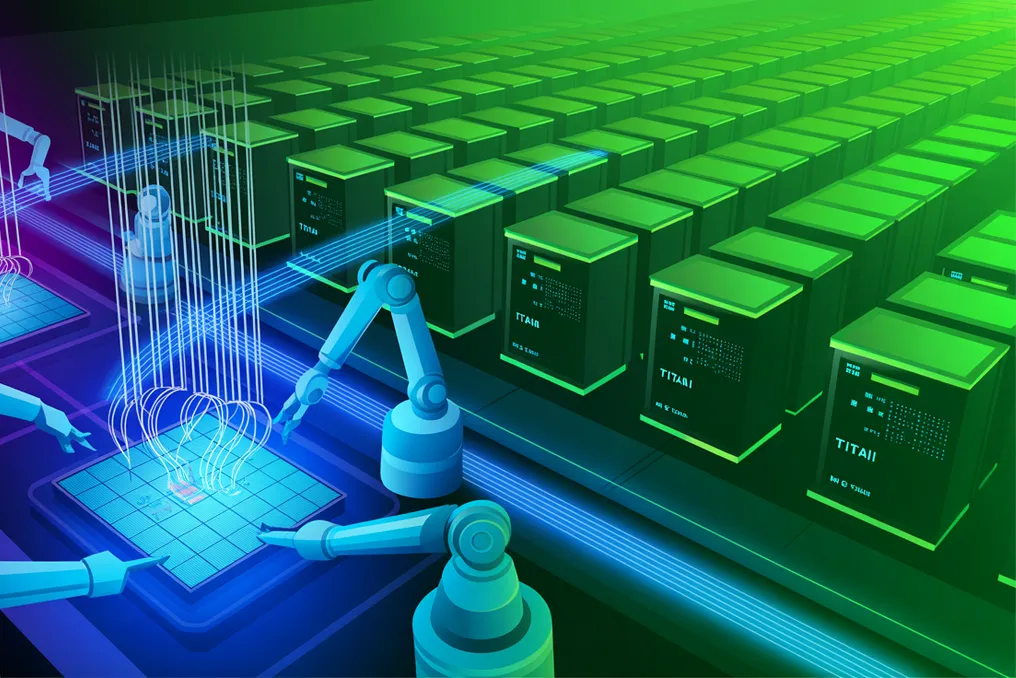
The new funding will be directed towards developing the next generation of silicon chips. The Asimov chip is scheduled for fabrication using TSMC's N3P process by the end of 2026; TSMC describes N3P as an improved 3nm process. Production of Asimov is slated for the second half of 2027. Each Asimov chip will support between 288 GB and 2304 GB of memory, meeting the demands of increasingly complex AI inference workloads.

The Titan system will integrate four to eight Asimov chips into a single system and is designed to support models exceeding 16 trillion parameters. Titan will also target context windows exceeding 10 million tokens and can scale to thousands of nodes for larger deployments. Positron also plans to build a data center engineering facility with a capacity of over 2 MW and an emulation platform to support development, testing, and manufacturing readiness.

Positron intends to use the funds to secure LPDDR5X supply commitments, as well as to increase manufacturing capacity and system integration. Go-to-market operations will expand in parallel with production, helping the company meet the growing demand for inference infrastructure.

CEO Mitesh Agrawal noted that the Atlas deployments provided valuable customer insights that influenced the design of Asimov and Titan. The company is currently in a demanding execution phase, requiring it to complete silicon development while simultaneously scaling production and customer adoption.

Positron's strategy is focused on the economic efficiency of AI model operation. Its memory-centric architecture aims to reduce both energy consumption and infrastructure costs. The $5 billion valuation reflects investor confidence in the inference market.

Popular