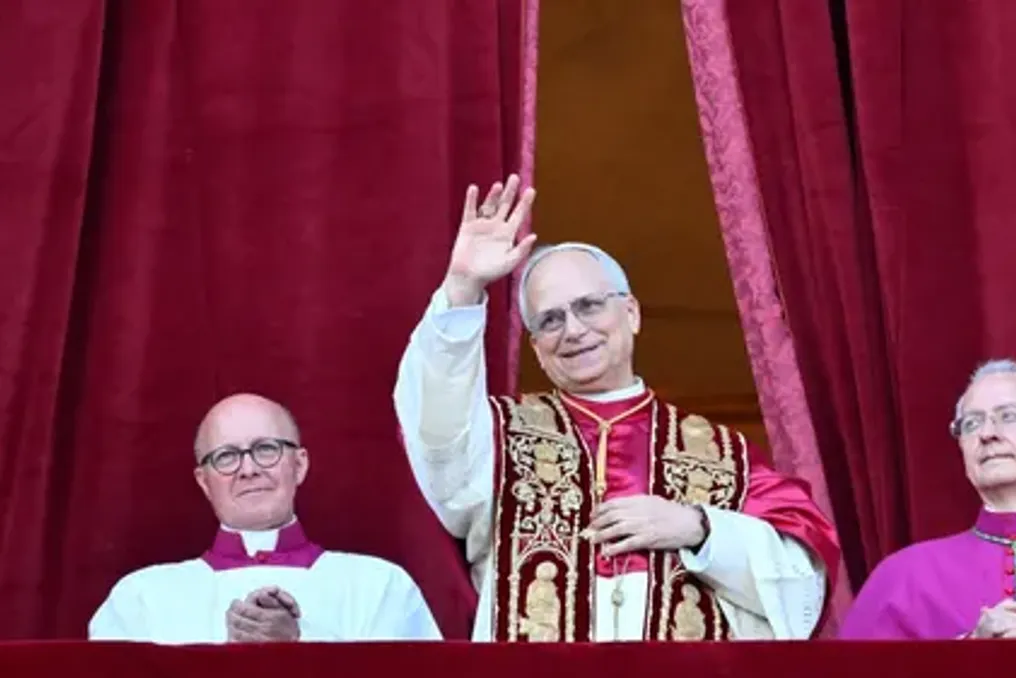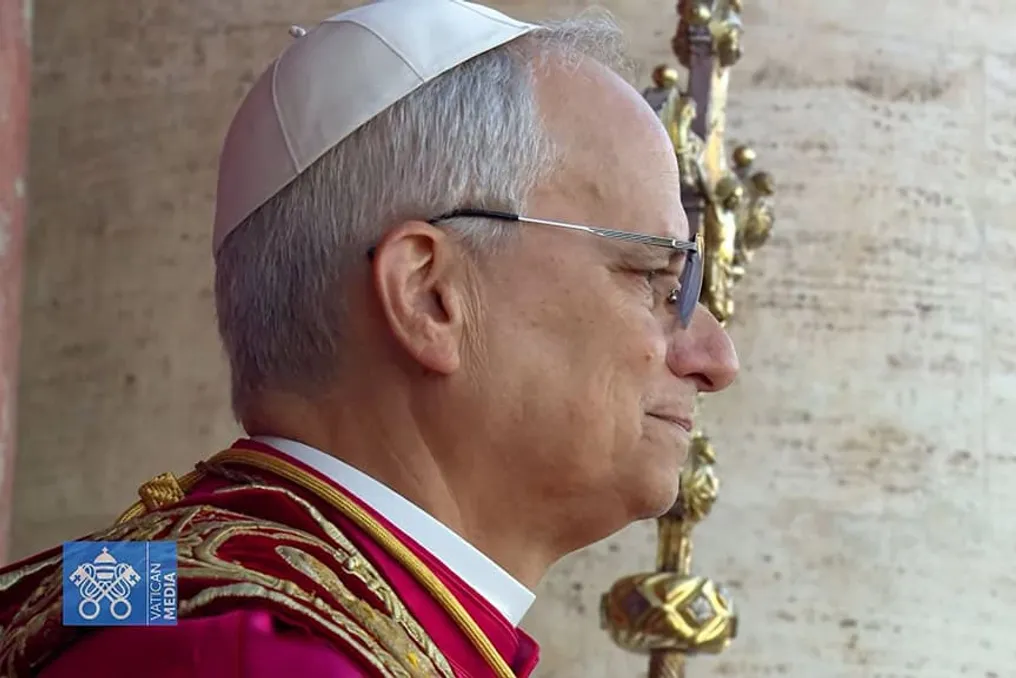
Pope Leo XIV reiterated his warning this Wednesday, the 16th, about the dangers of allowing algorithms to make decisions that are inherently exclusive to human consciousness. During a general audience held in the Vatican, the pontiff acknowledged that technological progress and the expansion of Artificial Intelligence (AI) bring new opportunities but also have the potential to make human interactions progressively less personal and more virtual.
Leo XIV stated that there is a risk of becoming accustomed to delegating choices to algorithms that belong solely to human consciousness, emphasizing that relationships tend to become less intimate and more digital. This declaration was part of a catechesis aimed at the 'human community,' based on the second chapter of the Pastoral Constitution Gaudium et spes, a document originating from the Second Vatican Council.
In the audience, the pope connected the advance of communication technologies and AI with the urgency of maintaining bonds based on respect, dignity, and personal depth. He observed that while technology can eliminate barriers and distances, the result of this process must be a community composed of individuals, not merely a vast network of virtual interactions. The pontiff emphasized that the contribution of the Christian community is to ensure that social relationships have real weight and personal depth.
Additionally, Leo XIV mentioned that AI is already integrated into various sectors of society, such as management, communication, and control. While recognizing the benefits of efficiency and improved services brought by this application, he warns against accelerated implementation devoid of critical analysis, also citing the environmental impact of AI systems.
Regarding public and political communication, the pontiff paid special attention to the use of AI. He pointed out that digital platforms and AI systems can accelerate the change in how information is generated and shared, which facilitates the creation of false narratives and hinders the differentiation between facts and opinions. For Leo XIV, AI functions as an amplifier of disinformation, enabling the manipulation of videos, images, and content, while the credibility of public communication depends on mutual trust and the collective search for factual truth.
More information:
Leo XIV's stance becomes even more emphatic when the topic addressed is moral decisions or those that are irreversible. In the encyclical, the pope refutes the notion that artificial systems can be considered 'moral agents' capable of discerning good from evil with the same level of capacity as human consciousness. He argues that moral judgment transcends mere calculation because it involves personal responsibility, conscience, and the recognition of the other as a person.
For this reason, the document establishes that lethal or irreversible decisions should not be entrusted to artificial systems. The pontiff also linked this issue to the use of AI in armed conflict scenarios, arguing that technology can make violence faster and depersonalized, treating victims as data and lowering the barriers to the use of force.
However, during Wednesday's audience, the warning about AI was part of a broader reflection on how to build a human community. Leo XIV defended that diversity among peoples and people should not be seen as a threat, but rather as a source of enrichment and growth. He also advocated for the principles of reciprocity, care, and sharing among different groups.
The catechesis also reinforced the intrinsic link between individual development and social development. According to the interpretation presented by the pope from Gaudium et spes, separating these two spheres would harm both. Finally, the pontiff underlined the importance of respecting the human person, loving even those who think or act differently, the fundamental equality among all, and the need for social justice, promoting a posture of responsibility and participation over individualism.
Leo XIV concluded his reflection by stating that the conception of humanity as a 'community of people' is a legacy of the Second Vatican Council, capable of assisting in the discernment of contemporary social and political projects, using human dignity, social justice, and participation in the construction of the common good as criteria.