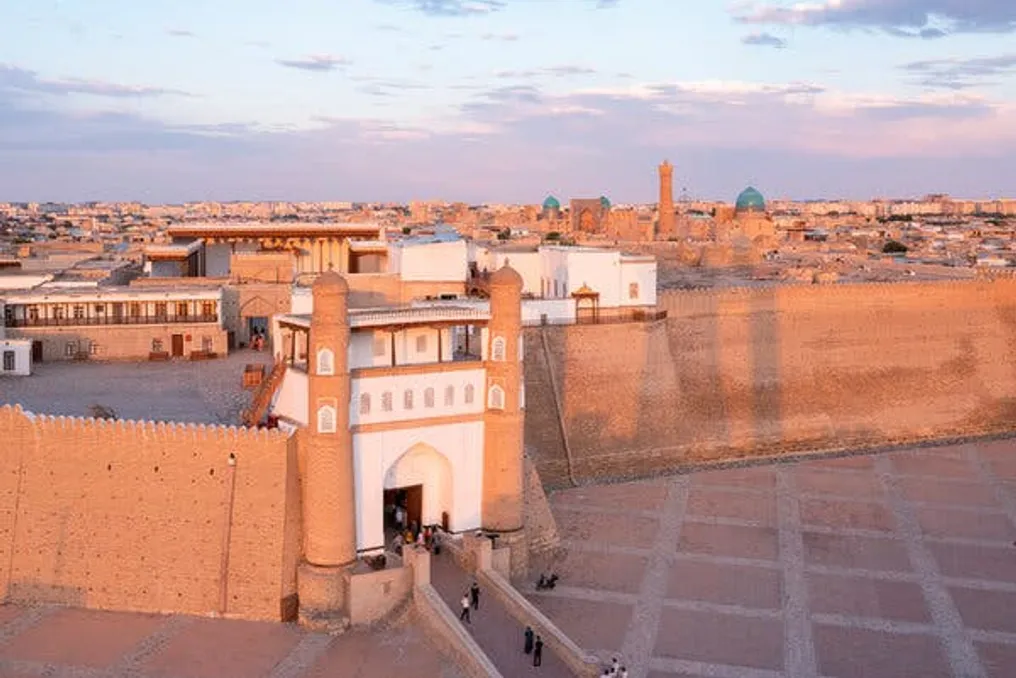
More than a thousand years ago, Bukhara, located in south-central Uzbekistan, was a major settlement on the Silk Road, functioning as a bustling trade center specializing in precious stones, textiles, and porcelain.
From approximately the 8th to the 13th century, the city also served as a cultural hub during the so-called Islamic Golden Age. During this period, scholars, architects, mathematicians, and artists residing in the region achieved significant successes in fields such as medicine, mathematics, and painting techniques.
Thanks to the city's wealth, richly decorated mosques with turquoise domes, Sufi mausoleums, and massive mud-brick fortresses emerged, resembling sets from the series 'Game of Thrones'. Today, many of these structures have been preserved, and over 140 UNESCO-protected monuments are easily accessible for walking tours.
Currently, the city is attracting the attention of the global art community. Last autumn, international and Uzbek artists jointly held exhibitions, worked on projects, and hosted communal gatherings as part of the first-ever Bukhara Biennale.
According to Uzbek curator and Biennale organizer Gayane Umerova, the goal of the event was to revitalize historical sites, support local artisans, and restore parts of the city's traditional architecture. Simultaneously, there is a commercial revival as new shops and hotels appear to meet the demand from the international flow of visitors.
Suna Abdullaeva-Park, co-founder of the new conceptual shop and cultural space Pavilion Kalon, noted: 'The energy in the city is palpable. Bukhara is regaining its place as a cultural center.'
Abdulvahid Bukhoriy Karimov, a ceramics master from Bukhara, is known for using historically significant glazes, including the very turquoise hue visible on the domes of the city's mosques.