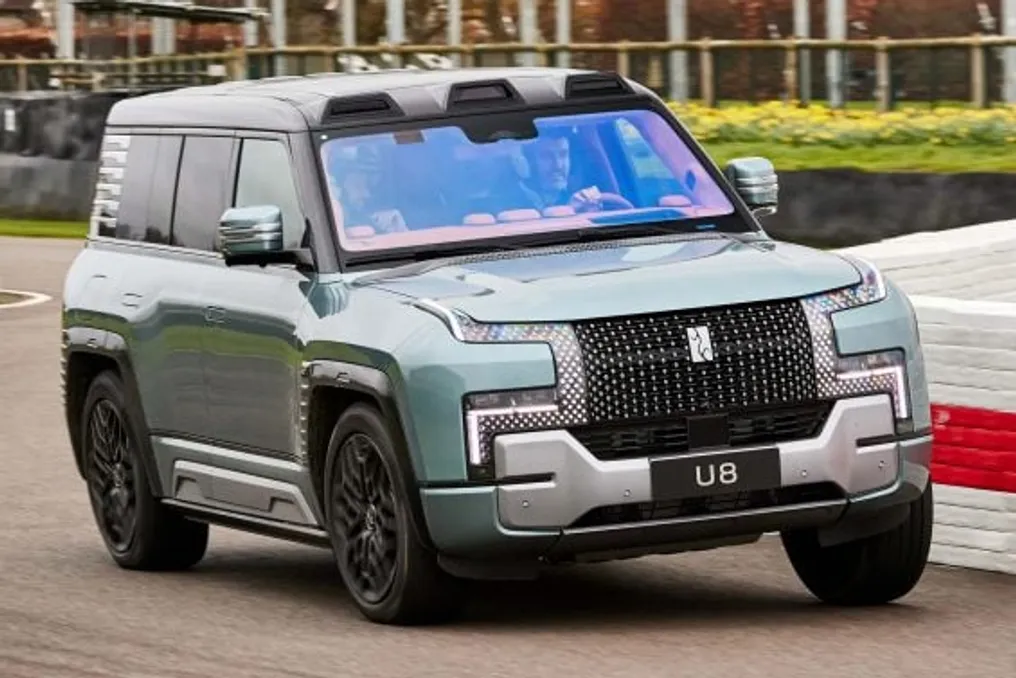
Drivers with Category B licenses are now permitted to drive electric and hybrid cars whose Gross Vehicle Weight (GVW) does not exceed 4,250 kg, starting Monday the 14th. This permission was established by Law No. 15,503/2026, which was sanctioned by President Luiz Inácio Lula da Silva without vetoes, creating an exception of 750 kg above the usual limit for the B license.
The change brought modifications to the Brazilian Traffic Code (CTB), but maintains the original rule: for vehicles that use only combustion, the GVW limit remains at 3,500 kg. Any weight exceeding this value still requires holding a license in Category C or higher.
This change aims to correct an existing incompatibility between technological evolution and a standard dating back to 1997, when electric vehicles were a remote possibility in the Brazilian market. Due to the considerable weight of battery packs, large SUV and pickup trucks electrified models exceed 2.5 tons even before being loaded with passengers and luggage.
In practice, imported models that reached the limit of the B license were being excluded from national trade by manufacturers. However, the legal relaxation does not apply to all electrified vehicles; the law restricts the benefit to vehicles with electric or hybrid propulsion that have predominantly electric traction, a term that still lacks a consolidated technical definition.
Current industry interpretation suggests that mild hybrids (MHEV) will be excluded, while PHEVs and hybrids that use a combustion engine as a generator might be included. Nevertheless, the definitive classification will depend on the publication of additional criteria by the National Traffic Council (Contran), as provided for in the law itself.
It is crucial for the buyer to note that the GVW represents the sum of the vehicle's curb weight and its maximum loading capacity, meaning passengers and cargo. The valid weight for legal purposes is the one registered in the Brazilian homologation of the automobile, not the weight disclosed in promotional materials. Until regulations are issued, verification must be based on the vehicle's documents.
The establishment of the 4,250 kg limit was not arbitrary; it mirrors the standard adopted by the European Union for alternative fuel vehicles, which has been integrated into the bloc's new licensing directive. This directive came into effect in November 2025, motivated by the need to prevent the weight of batteries from forcing ordinary drivers to migrate to professional license categories.
The modification to the CTB was introduced within a broader credit legislation. Law No. 15,503/2026 originated from Provisional Measure 1,366/2026, which was reported by Deputy Amanda Gentil (PP-MA), and also incorporated Provisional Measure 1,359/2026, intended to allocate up to R$ 30 billion to finance new vehicles for ride-share drivers, taxi drivers, cooperatives, and school transport professionals.