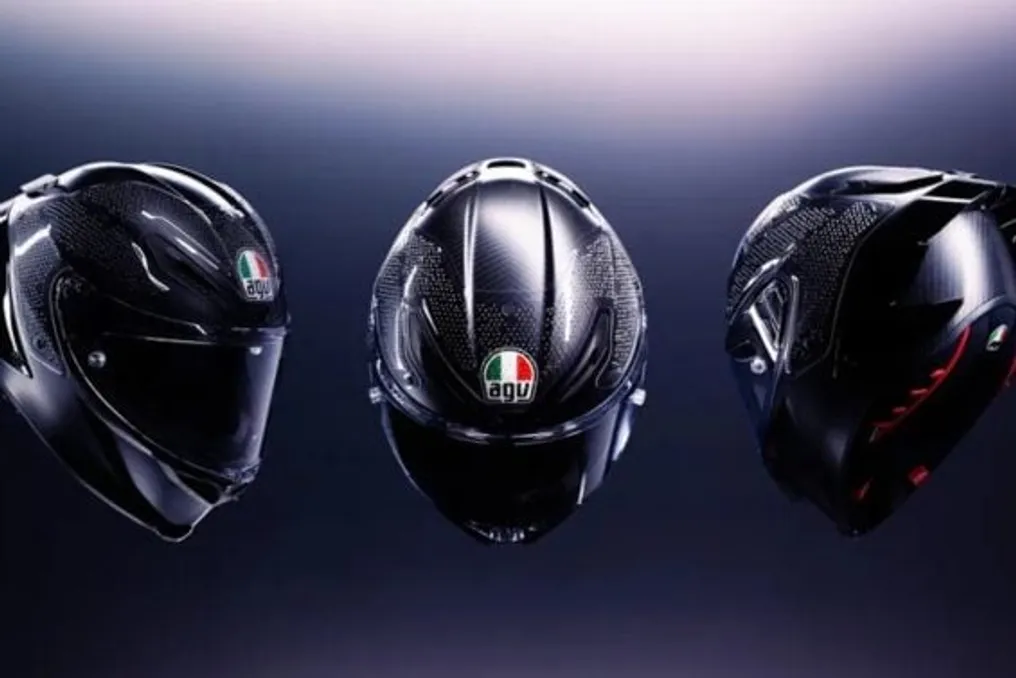
AGV has introduced the Pista GP R3 helmet, which is the flagship model for MotoGP and is designed to partially break apart during certain falls. According to information from the Italian manufacturer, the outer layer detaches in a controlled manner upon angled impacts, which in laboratory tests reduces the calculated risk of concussion by six times compared to traditional construction.
The model was presented at the free practice sessions of the San Marino and Riviera di Rimini Grand Prix in Misano on September 11th. The helmet is used by brand-sponsored riders in the MotoGP, Moto2, and Moto3 classes. This is the most significant change in the Pista GP line since its release in 2011 and replaces the Pista GP RR 2020 model.
The shell is made entirely of carbon fiber, but it features an additional outer layer positioned over a matrix of hundreds of microspheres—the AGV Sphera system. This system is based on RLS (Release Layer System) technology, developed in collaboration with the British startup of the same name. These floating panels slide in the direction of the applied force and completely separate from the main structure under intense load.
This approach contradicts the intuitive understanding of buyers of helmets certified by Inmetro, who expect them to withstand impact entirely. Traditional tests focus on direct impacts against flat surfaces, whereas heads have a rounded shape and fall at an angle. During such oblique collisions, the helmet and skull rotate while the brain, suspended in cerebrospinal fluid, lags behind the movement. It is this relative rotation that creates the stresses responsible for the most serious injuries.
By exiting the shell, the sacrificial panels dissipate some of the rotational energy before it reaches the head. The design complies with protocol FRHPhe-02, the latest FIM (Fédération Internationale de Motocyclisme) standard for racing helmets, which now requires manufacturers to demonstrate performance under angled impacts.
AGV is not the first brand to implement sacrificial elements: the Japanese Arai has been using air deflection systems and spoilers that detach upon impact for many years. However, the difference lies in scale. In the Pista GP R3, the area designed to detach covers a significant portion of the helmet and functions almost like a second shell, increasing the surface area available for dissipating rotational forces.
The manufacturer has not yet announced the price or release date of the product for the general public, which is expected in 2027. Today, the Pista GP RR model costs around $1500 USD (approximately 7700 Brazilian Reals) abroad and often exceeds 10 thousand Reals in Brazilian stores, which will likely be the minimum price for the new generation.