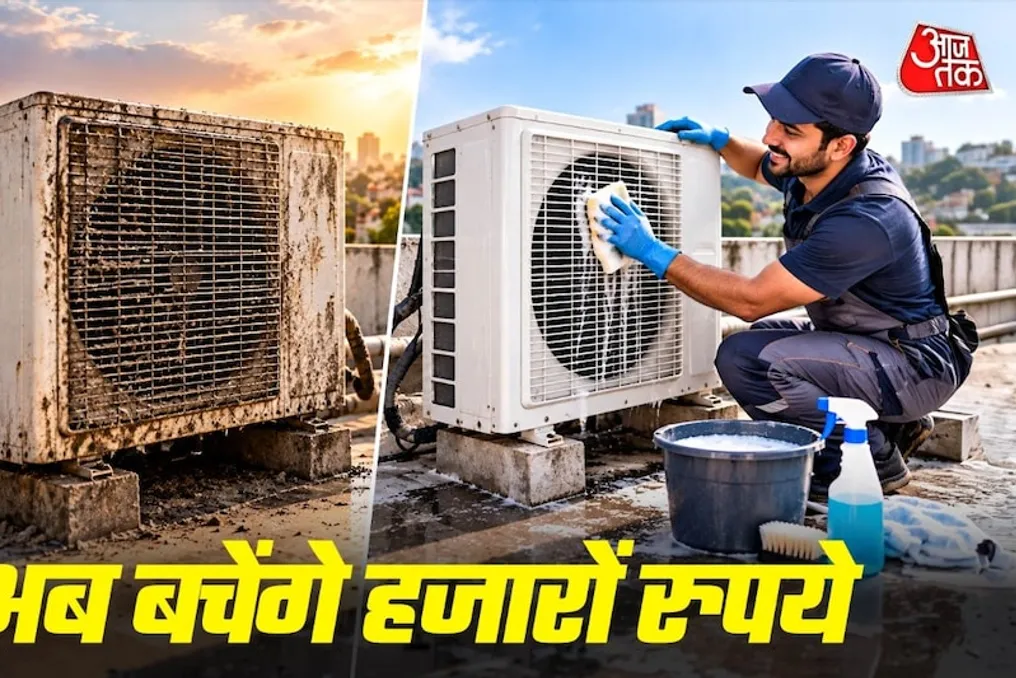
How to Clean Your Air Conditioner at Home: A Guide to Cleaning Filters and Coils
Read more
Aaj Tak
www.aajtak.in

How to Clean Your Air Conditioner at Home: A Guide to Cleaning Filters and Coils

During hot weather, air conditioners (ACs) are used in many homes. Sometimes it feels like the AC is not cooling enough, which is often related to dust and dirt buildup on the filters, fins, and coils of the unit itself. Many people turn to specialists for cleaning and maintenance, spending significant amounts of money. However, if you want to save money and perform a deep cleaning of your split system or window AC unit at home without unnecessary hassle, you can do the maintenance yourself by following several simple and safe steps.

What You Will Need for Cleaning

To carry out the cleaning, you will need the following items: a dry cotton cloth and an old toothbrush; a solution of liquid soap or mild detergent; a spray bottle filled with water; a large plastic bag or protective cover for servicing the air conditioner (to protect against water); a dust brush or blower (if available).

Cleaning Method

First, for safety, you must completely disconnect the power supply via the main switch of the air conditioner and unplug the plug from the socket. Next, gently lift and open the front plastic cover of the indoor unit of the split system. Carefully clean the installed air filters inside.

First, shake off the dust accumulated on the filters using a dry cloth or brush. After that, rinse them under running water, using liquid soap and a toothbrush very carefully. Allow the filters to dry completely in the shade. Next, on the back side of the filters are thin aluminum plates; the dirt on them needs to be carefully removed from top to bottom using an old toothbrush or a soft brush.

Place a plastic sheet or basin under the air conditioner so that water does not get onto the wall. Then, spray the mixture of water and a small amount of dishwashing liquid onto the coils using the spray bottle so that the contaminants are washed into the drain pipe. It is important to ensure that water does not get onto the electrical board located on the right. Also, check the drain pan and the air conditioner's drain pipe, making sure there are no blockages. Check if water drains easily from the drain pipe by adding a little water.

When the filters and coils are completely dry, reinstall the filters and close the front panel. Wipe the exterior surface of the air conditioner with a dry cloth. After 30 minutes of drying time, turn on the power and run the air conditioner at a temperature of 24–25°C. You will notice that fresh and cool air begins to flow.


Similar stories

Ways to clean a cooler from mold and odor during the rainy season
Read more
www.aajtak.in

Ways to clean a cooler from mold and odor during the rainy season

During the summer and rainy season, air coolers provide coolness, but with the start of the rains, an unpleasant smell of rot, dampness, and mold often appears from the cooler. Due to increased humidity in the monsoon season, bacteria, mold, and algae begin to develop very quickly in the tank and on the cooler's leaves. When the cooler is running, this contaminated and smelly air spreads throughout the room, which not only makes breathing difficult but also increases the risk of illness.

If you are concerned about the unpleasant odor from your cooler during the rainy season, you can quickly eliminate this problem using a special item you have at home, without using expensive chemical agents. Below are simple tricks and other effective methods.

First, you need to completely empty the cooler: unplug it and remove all dirty water from the tank. Then, apply white vinegar or spray vinegar diluted with water onto the inner surfaces and corners of the tank. Leave the vinegar for one hour, after which carefully remove the mold and accumulated residue using an old brush or scraper. After this, the tank should be thoroughly rinsed with clean water two or three times to remove all dirt and odor. To prevent the re-development of bacteria and mold, add a piece of alum to the tank after filling it with clean water.

To combat odors, you can use baking soda and neem oil: add two tablespoons of baking soda and 8–10 drops of neem oil or camphor to the cooler reservoir. Baking soda instantly absorbs the smell of rot and mold growing in the water, while neem oil destroys bacteria and mosquito larvae. You can also prepare a spray from vinegar and alum: mix 2 tablespoons of white vinegar and a little alum in a spray bottle with 1 liter of water and spray it on the cooler's leaves or felt panels. This will eliminate mold and fungus on the panels, as well as get rid of the odor.

Another useful trick is the use of alum: adding a small piece of alum to the cooler tank helps settle dirt contained in the water. Alum purifies the water and makes it free of bacteria, thus stopping the appearance of a musty odor. Furthermore, during the rainy season, it is recommended to change the water every 2–3 days instead of waiting a whole week; you must drain the old water, dry the tank thoroughly, and pour in fresh water. When filling the tank, you can add a few drops of lemongrass, eucalyptus, or lavender essential oils so that a fresh and pleasant aroma spreads in the room when the cooler is running.

Tips for Cleaning Wet Carpets: How to Clean and Freshen a Carpet After the Rain
Read more
www.aajtak.in

Tips for Cleaning Wet Carpets: How to Clean and Freshen a Carpet After the Rain

During the rainy season, driving around and enjoying hot tea with snacks are pleasant activities, but this period also brings dirt. Carpets laid on the floor of a house become dirty very quickly after people come in from outside. Expensive and heavy carpets can easily get wet and soiled during the rain, which looks very unsightly.

Due to wet shoes brought in from outside, traces of dirt, mud, and water remain on the carpet. Sometimes the carpet becomes completely soaked. If it is not cleaned and dried in a timely manner, a musty smell can appear, and the risk of bacteria and mold proliferation increases. Nevertheless, several simple home methods can easily clean a wet and dirty carpet.

If the carpet is heavily soaked due to rain, you should absolutely not start scrubbing it immediately. This can cause dirt and debris to penetrate deeper into the carpet fibers. First, you should use dry towels or a clean cloth to press down and absorb the water from the surface of the carpet. Instead of rubbing, gently press the carpet with the cloth.

The carpet gets dirty and damp from dirty shoes and feet, causing an unpleasant odor. To combat this smell, baking soda, which is used in the kitchen, can be employed. After the carpet has dried as much as possible, sprinkle a layer of baking soda on it and leave it for several hours. Baking soda is capable of absorbing moisture and odors. Then, the carpet should be thoroughly vacuumed.

Spots often appear on the carpet, whether they are soil or traces of tea and coffee. To remove these light stains, you can prepare a solution by mixing a little liquid dish soap, water, and white vinegar in a bowl. Before applying this solution to the entire carpet, be sure to test it on a small, inconspicuous area to ensure it does not damage the color. If the color is unaffected, carefully apply the solution to the stain with a clean cloth, and then blot the excess with a dry cloth.

After cleaning, it is crucial to ensure the carpet dries completely. Therefore, it should be spread out in a well-ventilated area or placed under the airflow of a fan. If the carpet is left wet for a long time during the rainy season, it can worsen the musty odor problem.

Since the composition of each carpet fabric differs, a test dyeing should be conducted on a small area before using any home remedy. If the carpet is very expensive, fragile, or has been in a wet state for a long time, it is better to consult professional cleaners.

Popular