LIC and Norway's ADIA fund become anchors in the placement of NSE shares worth 6,746 crore rupees
Read more
Business Standard
business-standard.com

LIC and Norway's ADIA fund become anchors in the placement of NSE shares worth 6,746 crore rupees

Life Insurance Corporation of India (LIC), as well as Norway's Government Pension Fund Global, the Monetary Authority of Singapore, Abu Dhabi Investment Authority (ADIA), and Societe Generale were among the key participants that ensured the anchor placement of the National Stock Exchange of India (NSE) initial public offering.

The exchange approved the distribution of shares among 189 anchor investors on Wednesday. According to the disclosure, the board of directors allocated 377,937,399 equity shares to anchor investors at a price of 1,785 rupees per share, totaling 6,746.18 crore rupees.

LIC, being the largest shareholder of NSE, became the largest anchor investor, acquiring 2.24 million shares worth 400.3 crore rupees. This was followed by Societe Generale's offshore derivatives division with 1.77 million shares amounting to 316 crore rupees, and the Norway's Government Pension Fund with 1.4 million shares valued at 250 crore rupees.

Offshore investors accounted for 43 percent of the total anchor placement volume, investing 2,883 crore rupees. Additionally, the Monetary Authority of Singapore and ADIA's Monsoon fund acquired shares worth 200 crore rupees, while Fidelity Funds’ India Focus Fund invested 178.24 crore rupees.

Among the total anchor allocation, 29 domestic mutual funds—which applied through 98 schemes, including SBI, ICICI Prudential, HDFC, Nippon India, Kotak, and Axis funds—received 1.40 crore shares, constituting almost 37 percent of the anchor portfolio, and are valued at 2,494.99 crore rupees. Insurance companies and pension funds, such as SBI Life and HDFC Life, along with various NPS Trust schemes, acquired an additional 60.61 lakh shares worth 1,081.84 crore rupees.

Sources added that demand for shares within the anchor placement reached approximately 1.2 trillion rupees, nearly 20 times the size of the anchor portfolio itself. The NSE IPO, with a total volume of 22,560 crore rupees and including only the offer sale, is scheduled to begin subscription for the general public on Thursday, with listing expected next week. Shares are trading at a premium of about 9 percent in the grey market.
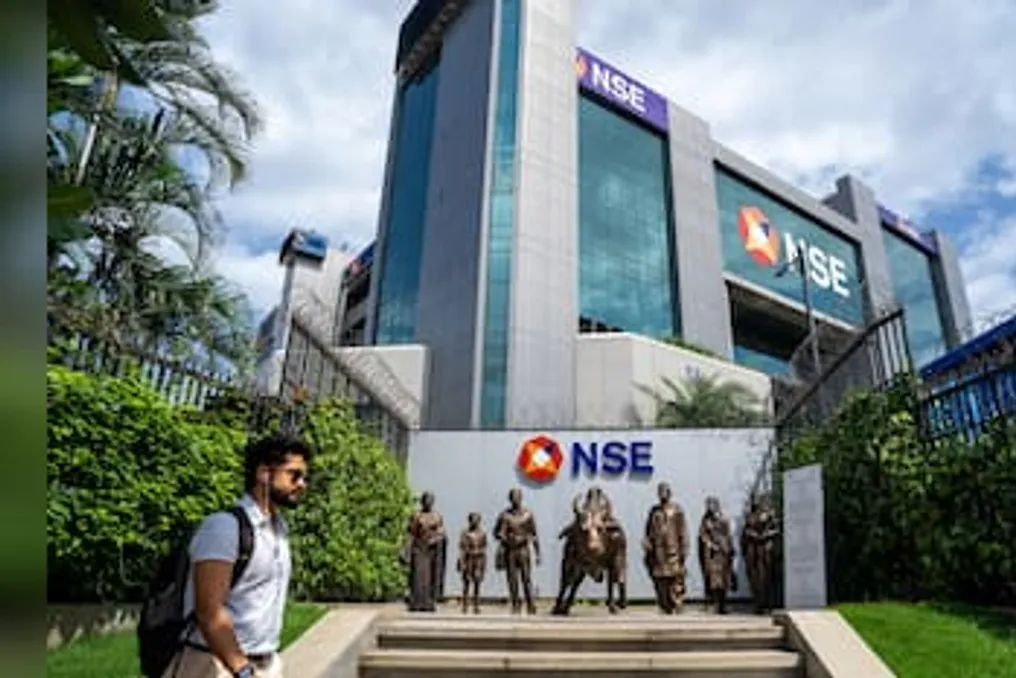
Similar stories

India's National Stock Exchange IPO attracts unexpectedly high demand, book size reaches over 6000 crore rupees
Read more
business-standard.com

India's National Stock Exchange IPO attracts unexpectedly high demand, book size reaches over 6000 crore rupees

The National Stock Exchange of India (NSE) reported that its Initial Public Offering (IPO) attracted 'unexpectedly large' demand, significantly exceeding the number of shares available for distribution, stated Managing Director and CEO of NSE Ashishkumar Chauhan on Tuesday.

Chauhan did not disclose the ratio between Domestic Institutional Investors (DIIs) and Foreign Portfolio Investors (FPIs), noting that the allocation process is still ongoing. He also mentioned that the initially expected book size of around 9000 crore rupees was reduced to over 6000 crore rupees, despite sustained high demand.

'The demand is unexpectedly large,' emphasized Chauhan, adding that the offering interested a large number of investors wishing to acquire a limited number of shares.

The allocation will be made among various categories of institutional investors, including domestic mutual funds, other domestic institutions, and FPIs, in accordance with prevailing regulations. The NSE IPO is scheduled to begin subscription on September 17 and conclude on September 21. The price band is set at 1700–1785 rupees per share. The offering is a Follow-on Public Offer (OFS), wherein existing shareholders sell up to 12.64 crore shares; no new NSE shares are being issued.

Chauhan also noted that initially, some shareholders were reluctant to sell their stakes at the proposed valuation, which led to a reduction in the offer from the previously stated 6.2% to 5.11%. Furthermore, NSE had to approach some of its shareholders to participate in the OFS so that the exchange could meet listing requirements.

Listing the exchange will provide existing shareholders with a more transparent and liquid way to realize their assets. Currently, NSE shares trade in a private market, where shareholders may face increased transaction costs and counterparty risks, according to Chauhan.

According to the company's IPO prospectus, the shares will be listed on BSE. Regarding pricing, Chauhan clarified that the company's bankers consulted with investors both in India and abroad, including large institutions, mutual funds, pension funds, and retail investors. He explained that during discussions, it was decided to maintain the option for retail investors.

The proposed IPO comes as NSE remains India's largest stock exchange by turnover in several key segments. According to the IPO prospectus, as of June 30, 2026, NSE accounted for 93.05% of India's money market turnover and 68.48% of equity options turnover based on the premium turnover for the three months ending June 2026.

Chauhan also refuted the notion that NSE's operations heavily depend on weekly options. He stated that weekly options currently account for about 42% of NSE's total revenue, compared to 60–70% three to four years ago. The rest of the revenue comes from monthly index options, equity options, stocks, equity futures, colocation services, data, indices, and other business areas. The exchange has also expanded its activities into various asset classes, including equities, currencies, commodities, interest rates, and power.

NSE's integrated business model includes exchange listings, trading, clearing and settlement, indices, and market data. Chauhan explained part of the decrease in NSE's EBITDA margin last year due to a large one-time fine, noting that the exchange's normalized EBITDA margin remained in the range of 76–79% over the past five years.

As per the company's IPO prospectus, NSE's consolidated operating revenue grew by 9% year-on-year to 4560 crore rupees in the quarter ending June 2026, and net profit increased to 3121 crore rupees compared to 2811 crore rupees the previous year.

Chauhan stated that NSE's investor base has significantly expanded beyond major cities in the country, and the exchange will continue efforts to attract more investors and companies from regions such as Jammu and Kashmir, Northeast, Odisha, Jharkhand, and Chhattisgarh to the capital market. As of June 30, NSE had 13.237 crore unique registered investors and 26.136 crore registered investor accounts, with investors spread across over 99% of India's postal codes. 3005 organizations are registered on the exchange platform with a cumulative market capitalization of 474.08 trillion rupees.

NSE sets IPO price band at ₹1700–₹1785; subscription begins September 17
Read more
yourstory.com

NSE sets IPO price band at ₹1700–₹1785; subscription begins September 17

The National Stock Exchange (NSE) has determined the price band for its highly anticipated Initial Public Offering (IPO) at ₹1700–₹1785 per share. Subscription for this offering will commence on September 17.

The total IPO size will be ₹22,569 crore and will conclude on September 21. This will make it the second-largest public offering in the country after Hyundai Motor India's offer of ₹27,870 crore in 2024.

This IPO takes place nearly a decade after NSE's plans to list were suspended due to regulatory hurdles. Now that approval has been received from Sebi, the exchange plans to debut in the market on September 24.

According to the public announcement, the auction for anchor investors will take place on September 16. The IPO will entirely consist of an Offer for Sale (OFS) of up to 12.64 crore shares among existing shareholders, which is less than the previously planned 14.9 crore shares.

The reduction in the OFS volume led to a decrease in the overall issue size from the initial estimate of ₹30,000 crore. At the lower end of the price band, the issue is valued at ₹21,494 crore, and at the upper end, at approximately ₹22,569 crore, which will prevent it from becoming the largest public offering in India.

The NSE IPO will surpass the Life Insurance Corporation of India's offering of ₹21,000 crore, which took place in 2022, but Hyundai Motor India retains the record for the largest public offering in the country with its ₹27,870 crore proposal.

As part of this offering, the company has reserved shares worth up to ₹70 crore for eligible employees. NSE employees will also be offered a discount of ₹170 per share.

Share allocation will include a 50% reserve for qualified institutional buyers, 15% for non-institutional investors, and 35% for retail investors.

According to the Red Herring Prospectus (RHP), existing shareholders have also reduced the volume of their stake sales. State Bank of India has reduced its proposed OFS to approximately 1.60 crore shares from 2.47 crore shares, and MS Strategic (Mauritius) Ltd has reduced its offer to 1.1 crore shares from 1.6 crore shares.

Bank of Baroda, Stock Holding Corporation of India Ltd, and General Insurance Corporation of India have also reduced the volume of shares offered for sale, while SBI Capital Markets Ltd is a new selling shareholder in the RHP.

Since the offering is entirely an OFS, the proceeds from the share sale will go to the selling shareholders, not to NSE itself.

This public offering marks a significant milestone for NSE after the market regulator Sebi granted the exchange permission to conduct the offering last week. Listing plans had been frozen for almost ten years due to regulatory issues, including a dispute over co-listing.

The NSE offering will compete with the Jio Platforms offer, a digital services division of Reliance Industries conglomerate led by billionaire Mukesh Ambani. The Jio offer is valued at ₹37,700 crore, although its timeline has not yet been announced.

Manipal Payment IPO placement price set in the range of 322–339 rupees; subscription starts September 9
Read more
yourstory.com

Manipal Payment IPO placement price set in the range of 322–339 rupees; subscription starts September 9

Manipal Payment and Identity Solutions Ltd announced on Friday that it has fixed the price range for its Initial Public Offering (IPO) amounting to 805 crore rupees. The price per share is set between 322 and 339 rupees, and the subscription will begin on September 9.

This IPO includes a fresh equity issuance of 320 crore rupees, as well as an Offer for Sale (OFS) of up to 1.43 crore shares worth 485 crore rupees from the promoter Manipal Technologies. At the upper limit of the price band, the total issue size is approximately 805 crore rupees, and the projected market capitalization after the listing will reach approximately 7,858 crore rupees.

The IPO subscription will close on September 11, while the anchor investor auction will open on September 8. Manipal Payment plans to use the proceeds from the new issue to purchase and install new and used equipment at all its locations in Manipal, Chennai, Navi Mumbai, and the Regional Transport Offices (RTO) in Chhattisgarh.

Manipal Payment provides solutions for payments, identification, secure solutions, smart tagging, and Internet of Things (IoT) solutions to banks, fintech companies, non-banking financial companies, and governments in both domestic and international markets. Its payment solutions include payment cards, cheque solutions, Near Field Communication (NFC) technology, Quick Response (QR) codes, payment-enabled wearables, and digital automation solutions.

The Draft IPO documents were filed with Sebi by the company in June 2025 through a confidential pre-filing route, which allows companies to keep IPO details undisclosed until a later stage. Subsequently, the company received Sebi approval in December 2025. The shares are planned to be listed on both BSE and NSE on September 17.

The managing underwriters are Axis Capital, Motilal Oswal Investment Advisors, ICICI Securities, IIFL Capital Services, and Nuvama Wealth Management.

Popular