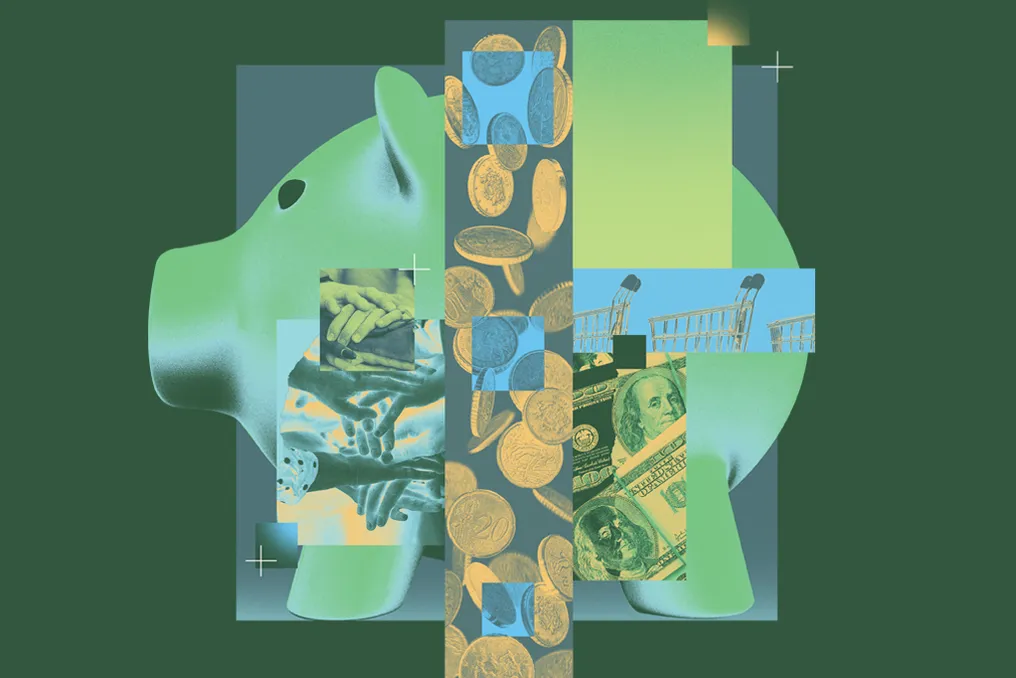
The Marshall Islands, a small Micronesian territory in the Pacific approximately 5,000 kilometers from Australia, have become a global focus since November 2025 after becoming the first country to officially implement a Universal Basic Income (UBI) program. The government began crediting $200 quarterly to every resident, either via bank transfer or cryptocurrency, accessible to any permanent resident.
This program covers almost all 42,000 inhabitants of the Marshall Islands. A large part of the financial resources comes from an agreement with the United States, where the American government finances the local government in exchange for military access to the region. The goal of this initiative is to mitigate poverty, combat the high cost of living—since most goods must be imported—and curb emigration, which has seen a 20% decline since 2011.
The experience in the Marshall Islands materializes an old, simple, yet radical notion: what would happen if the government provided money to all citizens, regardless of income or occupation, to cover the essential expenses of a dignified life? While proponents point to UBI as an effective method against inequality and poverty, opponents consider it excessively utopian, questioning the origin of the necessary funds.
The debate unexpectedly gained support from Silicon Valley billionaires. Concerned about potential unemployment generated by the massive adoption of artificial intelligence, these entrepreneurs see the measure as a tool to sustain capitalism and face the crisis. Elon Musk, CEO of Tesla and history's first trillionaire, stated on his X (formerly Twitter) that 'A HIGH VALUE Universal Basic Income, through payments issued by the federal government, is the best way to deal with AI-caused unemployment.' Sam Altman of OpenAI and Mark Zuckerberg of Meta also showed sympathy for the proposal.
The concept of 'minimum income' presupposes that in a civilized society, no one should live in extreme destitution. This idea dates back to 1797, when the British philosopher and revolutionary Thomas Paine, considered one of the founders of the USA, suggested that the government should pay £15 to every young person upon reaching 21 to start adult life, and £10 annually after age 50.
Although the defense of UBI is often associated with the left, guaranteeing some minimum income has supporters from diverse ideologies, including many liberals. Milton Friedman, a liberal economist (1912-2006), was one of the first to detail a model of this policy, advocating for the 'Negative Income Tax,' an idea preceding the British policy of Juliet Rhys-Williams.
In this scheme, everyone declares their income to the state. Those above a limit pay progressive taxes, while those below the established value receive a government subsidy proportional to their need. For Friedman, this would be a less bureaucratic and simpler system to replace various American welfare programs focused on specific groups.
However, the term 'basic income' generally refers to a distinct model: periodic, fully universal, and unconditional transfers. 'Universal' means that everyone can receive it, regardless of age or income, covering even millionaires, unlike the 'targeted' model, which requires eligibility criteria.
Currently, most countries offer social assistance, but it is usually restricted to vulnerable groups, such as the unemployed or people with health problems. Bolsa Família, one of the largest global income transfer programs, exemplifies this, limiting receipt to families with a per capita income of up to R$ 218.
The 'unconditional' characteristic of UBI is unusual because the state does not require counter-considerations; in Bolsa Família, for example, beneficiaries must meet requirements such as keeping children in school and vaccinations up to date. In rich nations, unemployment benefits often require active proof of job searching and can be suspended if offers are refused.
Arguments in favor of universality include an ethical perspective that national wealth derives from collective effort, justifying its broad distribution. Pragmatically, it is simpler and less bureaucratic to pay everyone. Fábio Waltenberg, an economist at the Federal University of Fluminense (UFF), points out that 'Separating who will receive and who will not requires a surveillance apparatus.' Although Brazil has the Unified Registry, the preparation of other nations varies, and all this bureaucracy is expensive, something Friedman criticized.
Additionally, if there is a fair and progressive tax system, it is expected that the wealthiest who receive the benefit will return it through Income Tax and other fees. Right-wing defenders argue that the policy can combat automation unemployment and boost consumption, while progressives see it as a chance to reform or overcome capitalism. Liberals, meanwhile, view it as a way to protect or save the existing system.
Disagreements persist: many liberals advocate for UBI as a replacement for current programs, seeking to reduce public services, while the left tends to see it as a complement to existing welfare systems. Critics point to the high cost, defending targeted programs, and question whether distribution without obligations will lead to increased unemployment. There are also internal criticisms on the left, which consider the transfer insufficient, merely a state 'handout,' preferring quality public services.
Basic Income Experiences
To date, no country has managed to implement universal income sustainably. Experiences in Mongolia and Iran in the 2010s, which resembled the idea, did not last. In 2016, Swiss citizens rejected, in a referendum, a law that provided for the gradual implementation of the program, with 77% of votes against.
Besides the Marshall Islands, there is only one example of UBI in the world: Alaska. Since 1982, almost all 730,000 permanent residents of the US state receive a universal and unconditional annual amount, financed by a fund from local oil exploration royalties. The amount varies according to investment returns, fluctuating between $1,000 and $2,000 annually per person in recent years.
Although the case of Alaska is an isolated example, comparative studies are conducted with programs like Bolsa Família, which, although not universal or unconditional, is vast (about 19 million families) and long-lasting (since 2003).
Another evaluation methodology involves 'pilot programs' or real minimum income experiments. The Basic Income Lab, affiliated with Stanford University, monitors over 275 of these experiments globally. These tests vary in scope, value, and level of universality, but all consist of providing money directly to inhabitants for a determined period, monitoring impacts such as employability, health, and well-being.
Notable cases include Stockton, California, Utrecht, Netherlands, Ontario, Canada, and countries like Finland (with the unemployed) and Ireland (with artists). A relevant experiment in Brazil occurred in Maricá (RJ). Since 2013, the municipal government distributes amounts to low-income citizens. The project gained momentum with oil royalties starting in 2019, making the Fluminense municipality the largest recipient of this type of compensation in the country.
At its peak, the program reached 93,000 people (almost half of the 212,000 inhabitants), paying R$ 200 monthly. Currently, 70,000 residents receive R$ 230, but this amount is paid in mumbucas, a digital currency exclusive to local commerce, stimulating the internal economy. The conclusions of these pilots are varied, but there is an emerging consensus: contrary to critics, giving money does not necessarily lead people to stop working.