At the international exhibition of medical equipment and pharmaceuticals, 'UzMedExpo-2026,' which is taking place from September 15 to 17 at 'UzexpoMarkaz' in Tashkent, modern solutions for the healthcare sector are being demonstrated.
Among the presented innovations are AI bracelets, digital medical records, and medical simulators. The exhibition highlights technologies and tools designed to improve the healthcare system.
The company 'Sino AI' presented an artificial intelligence-equipped device—a 'bracelet.' This gadget collects data on heart rate, sleep, stress levels, blood pressure, blood oxygen saturation, and ECG. The collected information is then analyzed in an application and saved in the system.
A representative of 'Sino AI,' Sherzod Khujaev, noted that the bracelet does not diagnose diseases but only provides warnings, drawing attention to conditions such as diabetes, oncological diseases, and stroke, so people can learn about health problems in advance.
According to Khujaev, the team is currently expanding the device's functionality, specifically developing NFC capabilities, which will in the future allow the bracelet to be used not only for health monitoring but also for travel payments.
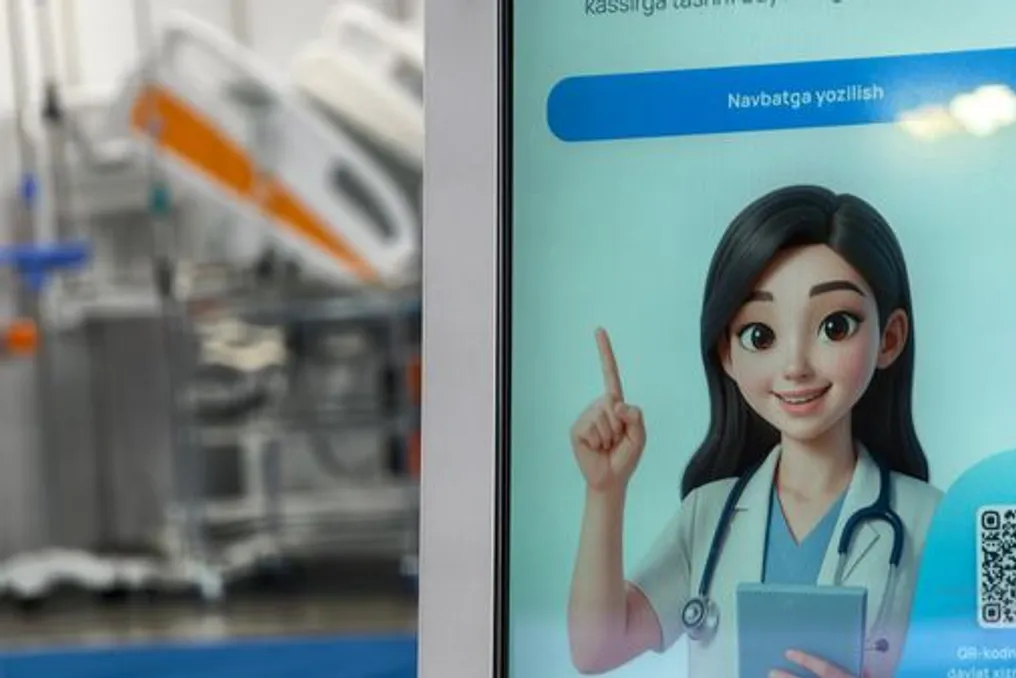
Another participant in the exhibition is the 'Dmed' project from 'Uzinfocom,' which aims to solve issues within the medical system itself. Through an application, users can find a clinic, book an appointment, and receive information about services and tests. Medical history is stored electronically, and medical documents are officially processed through the system, eliminating the need to provide paper certificates to employers.
Sherzod Gulomov, head of sales at 'Dmed,' explained that the system is designed to support the patient at all stages of their stay in the clinic: from registration and payment to choosing a doctor and viewing test results. The platform is integrated with all state medical institutions, and the company is currently connecting private clinics. The application is available free of charge for patients in Uzbek, Russian, and English.
Products for healthcare professionals were also presented at the exhibition. The company 'GEOTAR U MEDIA' showcased electronic educational materials and simulation equipment for doctors and students. This company has already developed concepts for localizing simulator production in Uzbekistan.
Ruslan Khaskhanov, a representative of 'GEOTAR U MEDIA,' reported that the simulators closely approximate real anatomical parameters and have undergone various tests, including exposure to cold, heat, and a three-meter fall. 'GEOTAR U MEDIA's' library contains over two thousand medical books and textbooks, and the company plans to seek partners to translate educational materials into Uzbek.
At the exhibition booths, visitors can examine products from companies from Uzbekistan, Russia, India, Germany, and other countries.