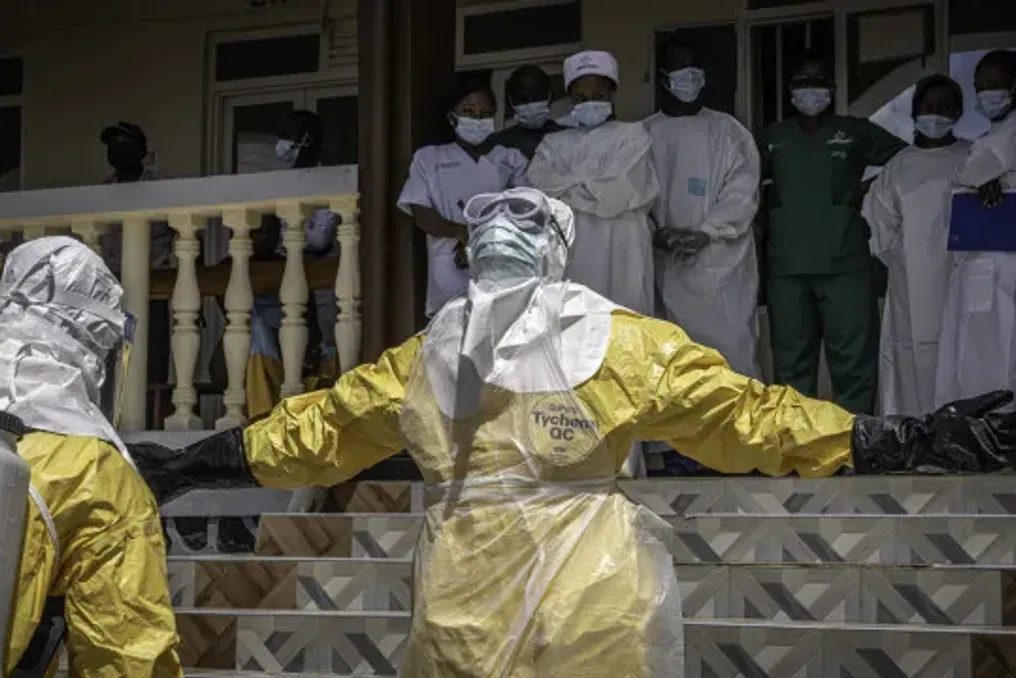
The Ebola epidemic in the Democratic Republic of Congo (DRCongo) remains a massive and fatal outbreak, as highlighted by the OCHA special coordinator for Ebola, Julien Harneis. Although advances have been observed in certain regions, the number of cases continues to rise in other areas.
Harneis, who will address Bunia, the capital of the northeastern province of Ituri, the epicenter of the outbreak, emphasized that it is premature to declare that the peak of the epidemic has passed, contradicting what Congolese authorities stated last week, placing this peak in the third week of August last year.
Despite the existence of an integrated response, the coordinator stressed the urgency of intensifying measures in locations where new transmission is occurring and reinforced the need for greater international solidarity.
To illustrate the scale of the outbreak, Harneis mentioned the occurrence of cases in both Ituri and South Ubangi province, located at the opposite end of the country, a distance comparable to that separating Geneva and Dublin.
He pointed out that the area affected by the epidemic spans two time zones, requiring a two-and-a-half-hour flight between the extremes of the affected zone. Harneis described the scenario as extremely diverse and heterogeneous, making the operation very complex due to poor road conditions and difficulties accessing many places by small aircraft.
DRCongo announced its 17th Ebola epidemic in mid-May, with some delay. According to the latest data provided by the Congolese Government, the epidemic has resulted in 3,510 deaths and 7,258 confirmed cases to date.
Of the sick, 1,726 have recovered from the disease, while 905 remain in isolation or hospitalized. The virus is affecting 62 health centers distributed across seven provinces: Ituri, Tshopo, Bas-Uélé, Haut-Uélé, North Kivu, South Kivu, and South Ubangi.
This outbreak, classified as the second deadliest and most contagious in global history, surpassed the event that occurred in the same Congolese region between 2018 and 2020, but it is still below the most severe outbreak recorded, which caused about 11,000 deaths and 28,000 cases in West Africa between 2014 and 2016.
The Bundibugyo strain responsible for the current crisis has no specific treatment, although the World Health Organization (WHO) is developing two vaccines that have already undergone phase 1 trials in humans and demonstrated safety, even though the development process may take several months.
Additionally, the epidemic spread to neighboring Uganda, where the WHO declared the end of the outbreak on August 26, after recording 20 confirmed cases, including 15 imported from DRCongo, of which two people died.