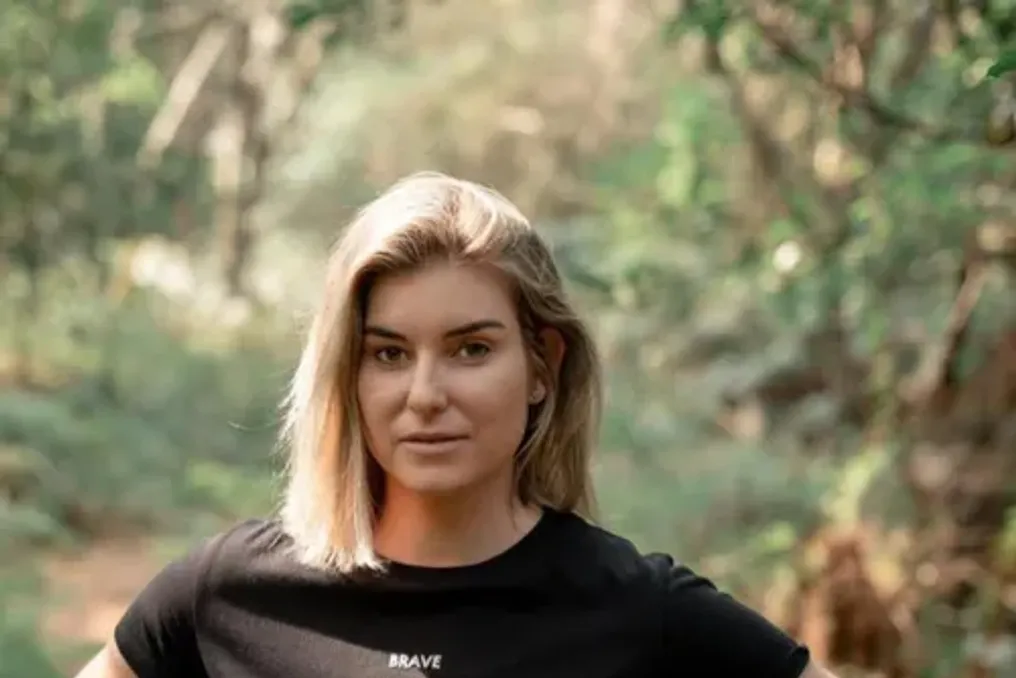
Rachel Kolisi is one of many women who have used social media to speak out about the crisis of gender-based violence (GBV) in South Africa. There is currently an increase in the number of women's murders in Gauteng, which is causing anger, fear, and demands for action among them.
Eight female bodies have been found in Ekurhuleni over the past two months. The police are investigating these deaths, trying to establish any links between the cases. Only two of the eight victims have been identified so far.
The recent findings have once again drawn attention to the issue of gender-based violence and femicide, but for many women, this is not a new conversation, but a topic they have been discussing for many years, and they are tired of it.
Rachel Kolisi shared a strong message on social media: 'Let's be honest. This is femicide,' adding, 'I feel bad. I am exhausted.' Her words resonated, and comments under her post were filled with expressions of anger, fear, and disappointment that have become commonplace after every woman's death.
One woman expressed indignation that women are still advised to take precautions, watch their surroundings, and constantly be vigilant. Another noted that women have warned about this problem for generations, and individual murders cannot be viewed as isolated tragedies. As one commenter wrote: 'We cannot continue to view every murder as an isolated tragedy. This is femicide.'
A broader discussion has unfolded on social media, where women express their anger, fear, and exhaustion from constantly having to fight for safety.
Women should not have to live in such conditions
For many years, women have been taught societal rules: to watch their surroundings, not walk alone, share their location, report their plans, and avoid traveling with strangers. There is an endless list of such warnings.
However, it is fundamentally wrong for society to force women to spend most of their lives worrying about how to avoid an attack. The fact that a woman who went for a run could not return home should make us consider uncomfortable questions. Women should not have to forgo normal activities due to fear.
They should be able to run, walk home, use public transport, meet partners, and go out without calculating risks. They should be able to return home. Women have been found dead in this area since July of this year.
Violence has no single face
There is also the misconception that women can protect themselves simply by learning to recognize a 'dangerous' man. However, no such single portrait exists. The perpetrator could be an acquaintance, a trusted person, a family member, or someone who appears respectable or completely ordinary.
This is what makes gender-based violence so frightening. Women cannot spend their whole lives trying to identify the 'bad guy.' The responsibility for preventing violence cannot constantly be placed on women and their precautions.
We have discussed this before
Perhaps this is why the latest murders are so difficult to process. South Africa has already had this conversation. Women have taken to the streets, protested, shared their stories, changed their avatars, and demanded action through hashtags.
Nevertheless, we find ourselves in this situation again. In November 2025, President Cyril Ramaphosa declared gender-based violence and femicide a national problem, stating the need for extraordinary and coordinated measures. Following this, GBVF was classified as a national catastrophe.
This was an important moment, but now, less than a year later, women are asking the same questions: what is being done, where is the protection, and why are women continuing to die?
Eight women. Another national conversation
The police have formed a high-level multidisciplinary team to investigate the deaths of eight women. A reward of 400,000 rand has also been announced for information that helps identify and arrest the perpetrators.
As part of Operation Chanel, the police have increased patrols and visibility in Kempton Park and surrounding areas while investigators determine the circumstances and check for links between the cases. At this stage, the police have not confirmed that the deaths are connected, and this distinction is significant.
But this does not erase the feelings of the women. Elizabeth 'Tshontso' Mokolo Moselakgomo is one of the women found dead in Gauteng. Because behind every statistic is a woman who had a life, a family, friends, and plans that should have returned home, the word 'femicide' is used because women are tired of viewing every death as an isolated tragedy in a country where violence against women remains a devastating reality.
South Africa declared GBV and femicide a national problem last year. Women have been demanding action for decades. And now, with eight more women joining this conversation, the question remains: how many more women must die before women can live without fear?