In many factories, blueprints, part data, and supplier information have accumulated over decades, stored in PDF, CAD file, and Excel table formats, but remain inaccessible. Due to the inability to find existing data, most enterprises are forced to repurchase the same parts from new suppliers at new prices.
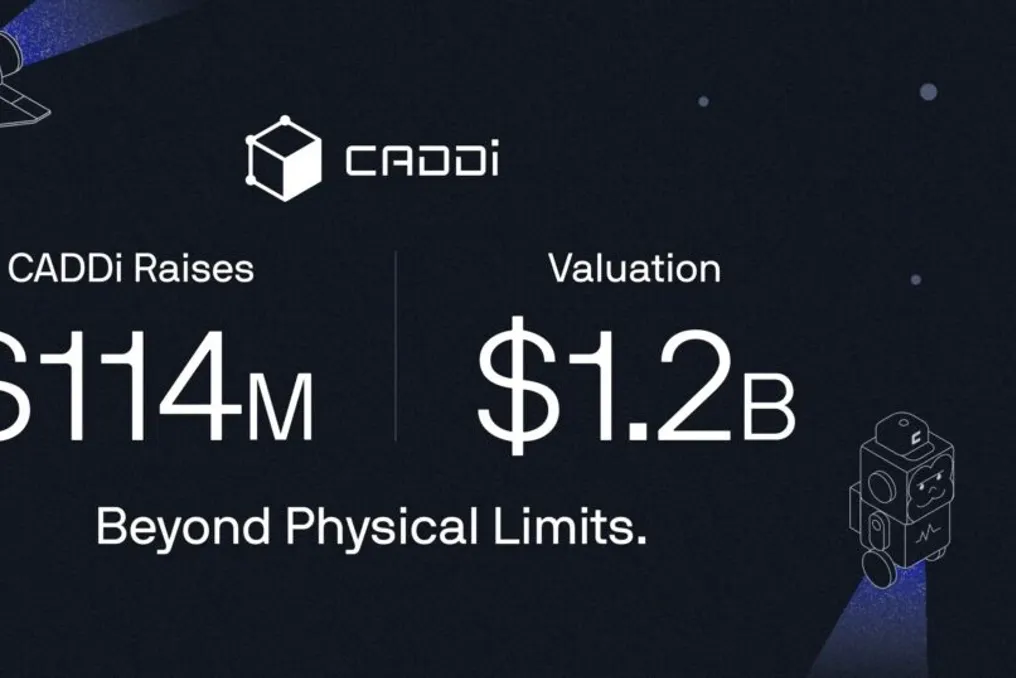
To solve this problem and become an artificial intelligence for the manufacturing sector, CADDi has raised $114 million in funding.
CADDi, headquartered in Tokyo and Chicago, recently secured $114 million in a Series D round. This amount values the company at $1.2 billion, which is higher than the $470 million valuation in March 2025. The total amount raised now stands at $234 million.
The company was founded in 2017 by Yusiro Kato and Aki Kobayashi. Eight investors participated in the round. New participants include Moore Strategic Ventures, Coreline Ventures, Woven Capital, which is Toyota's growth fund, and HR Tech Fund from Recruit Holdings. Existing investors Atomico, Globis Capital Partners, and JPS Growth Funds also reinvested. Additionally, according to the WSJ, Salesforce Ventures joined. The startup currently has 900 employees, up from 600 employees at the beginning of this year.
CADDi initially launched a product called CADDi Drawer. Users upload CAD files, 2D drawings, PDF documents, and specifications. The company's patented AI scans these files, reading shapes, dimensions, materials, notes, and even handwritten text. It then links this drawing to actual purchasing data: how much was previously paid, what the defect rate was, who the supplier was, and whether the part is in stock.
Thus, when a part is needed, the user can search for it like a Google search, for example: 'Show all brackets similar to this, costing less than $5 and with a defect rate below 2%.' The system finds duplicates that exist across different years. CADDi also captures the knowledge of experienced engineers regarding which suppliers are suitable for which tasks, helping new specialists make decisions without constantly consulting veterans.
CADDi's clients include Yanmar, Subaru, Kawasaki, Mitsubishi, Amerequip, and YKK. More than half of Japan's top 100 manufacturers use the company's services. Sales growth is observed annually. Although Kato has not disclosed exact revenue figures, the growth is evident. Coreline Ventures stated that it invested in CADDi because it is one of the few Japanese startups capable of entering the US market. DCM first supported the company 8 years ago.
The $114 million raised will be directed towards developing a production-focused application. CADDi's next steps involve AI models capable of natively reading 3D CAD, 2D drawings, and quality data, not just performing searches but also offering recommendations based on processed information. The funding will also be used to expand CADDi's operations in the US. The US manufacturing sector is receiving federal funds to bring supply chains back home. The company opened its US headquarters in Chicago to help new factories get up and running quickly.
Furthermore, CADDi will allocate capital to hire engineers and sales specialists in North America and Japan. Bloomberg is used in finance, and Salesforce in sales. Manufacturing has never had a comprehensive system for recording engineering knowledge. CADDi's premise is that by organizing all engineering data, everything else can be automated: procurement, quality checks, and supplier negotiations. With the new $114 million and a $1.2 billion valuation, the company has gained the resources to become such a platform.