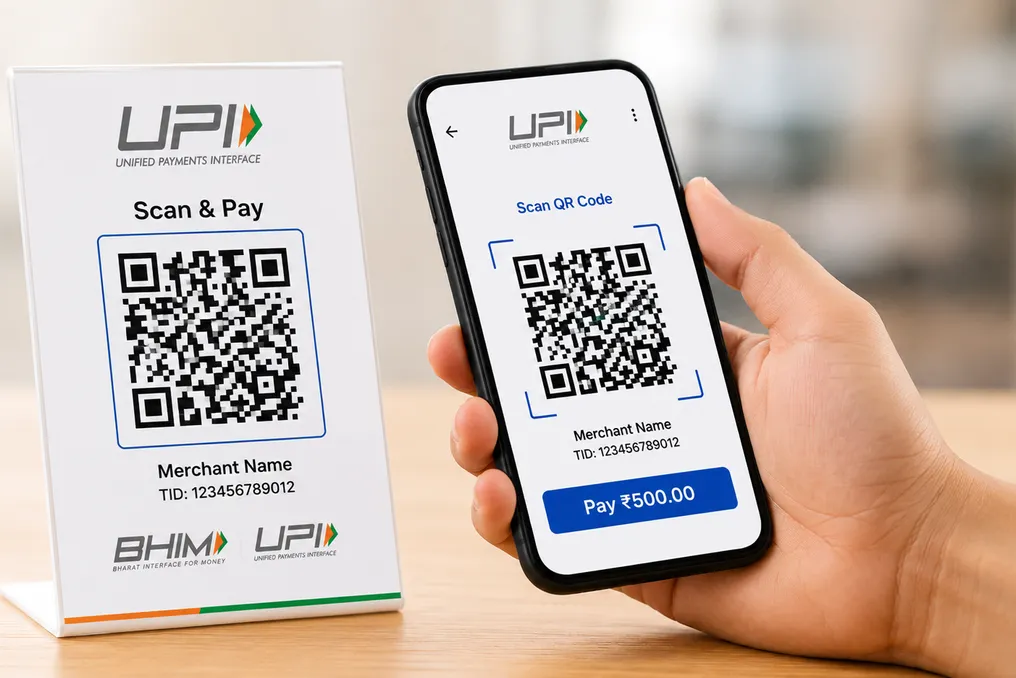
New Phase of UPI Pricing: Defining Payers and Beneficiaries
Read more
YourStory [india, en]
yourstory.com

New Phase of UPI Pricing: Defining Payers and Beneficiaries

The UPI system is entering a new pricing phase. Starting from October 15, 2026, certain transactions from individuals to merchants exceeding 2000 rupees will be subject to a Merchant Discount Rate (MDR) service fee. This fee is charged within the payment ecosystem when a merchant accepts a digital payment. This change has sparked discussions on how to maintain UPI's accessibility for merchants while creating a revenue stream for the banks and payment companies supporting the network.

The Ministry of Finance clarified that customers will not directly pay the MDR. Furthermore, this rule does not apply to peer-to-peer transfers or to small merchants who fall under the zero MDR system. Government estimates suggest that about 96% of individual-to-merchant transactions will remain unchanged.

Changes Under New UPI Charges

The standard MDR will be 0.4% for relevant merchant transactions exceeding 2000 rupees, capped at 300 rupees per transaction. The full limit of 300 rupees is reached at a transaction value of 75,000 rupees, after which the charge remains at this level for larger payments. Some sectors will pay a fixed fee. Railways, telecommunications, insurance, fuel, and agricultural resources will pay 5 rupees for relevant transactions over 2000 rupees. Payments in the stock market, including those related to mutual funds, securities, and brokers, will be subject to an MDR of 0.02%, capped at 300 rupees. Small merchants receiving up to 1 lakh rupees per month via UPI QR codes in the individual-to-merchant category will continue to benefit from the zero MDR regime. The government will also establish a special fund equivalent to 5% of the total collected MDR to incentivize UPI adoption among small merchants.

Reasons for Introducing UPI Commission

UPI has become one of India's most vital digital payment networks, but maintaining this network requires costs. In August alone, UPI processed approximately 24.5 billion transactions worth nearly 29.8 lakh crore rupees, highlighting the scale of the infrastructure that banks and payment companies must support. Banks, payment applications, and other service providers are forced to invest in cybersecurity, fraud prevention, technology, and network infrastructure as transaction volumes grow. The new MDR is intended to create a revenue stream without imposing direct charges on consumers or disrupting small payments. For selected sectors, the structure replaces the percentage MDR with a fixed fee of 5 rupees. The government stated that this fixed fee aims to provide greater cost predictability for vital and low-margin sectors. The potential revenue pool is significant. Citi estimates that the new system could bring between 16,000 to 17,000 crore rupees annually to the payment ecosystem, although the actual amount will depend on exceptions, transaction structure, and commission distribution methods. However, reactions from fintech leaders show that the economy is not that simple.

What Fintech Leaders Are Saying

Nitin Kamath, founder and CEO of Zerodha, questioned how the new MDR might work for the brokerage industry. In an X post, Kamath noted that a client can transfer money to a brokerage account without executing an actual trade. Consequently, the broker may incur payment costs without receiving anything from that transaction. He suggested that a 0.02% fee with a cap of 5 or 10 rupees would be more suitable for brokers. Kamath also warned that brokers may not be able to absorb additional costs indefinitely, potentially putting pressure on commission-free stock delivery models. Ashishkumar Chauhan, Managing Director and CEO of NSE, also pointed to a possible short-term impact. Speaking to reporters in the context of the upcoming NSE IPO, Chauhan stated that introducing MDR might initially reduce transaction volumes, though he expects activity to normalize over time. Samir Nigam, Co-founder and CEO of PhonePe, supported this structure. Speaking to ANI, Nigam stated that the payment industry suffered significant losses over six years while UPI operated without MDR. He argued that the new revenue could help the industry recover some operational costs and continue investing in the network, emphasizing that about 96% of merchant transactions will remain free.

In a separate interview with Moneycontrol, Nigam noted that the introduction of MDR could also bring PhonePe closer to filing for an IPO, as UPI monetization has been repeatedly raised in conversations with investors. Meanwhile, Ashnir Grover, former co-founder of BharatPe, questioned the necessity of charging merchants for UPI. In an X post, Grover doubted the need for MDR, arguing that UPI has already brought significant economic benefits to banks and the broader economy. He later reiterated his opposition in a Times Now interview, stating that merchants might ultimately pass these costs on to consumers.

There is another discussion happening behind the scenes: who will receive these funds. Business Standard reported in August, citing sources familiar with the discussions, that payment aggregators were seeking a fixed and direct share of any UPI MDR, rather than relying on acquiring banks to pass on part of the commission. Aggregators argue that they also bear costs for acquiring and servicing merchants, even if they are not direct members of the UPI network. Citi analysts suggest that banks could ultimately receive about 60% of the MDR revenue pool, payment applications about 25%, and aggregators 15%. These are analyst estimates, not an announced revenue distribution formula, and the final economics will depend on the evolution of the mechanism. The reactions highlight two underlying questions of the new system: how UPI should fund its growing infrastructure without making digital payments less attractive to merchants, and how this new revenue should be shared among the companies supporting the network?

What Happens Next

The Ministry of Finance stated that MDR is a merchant charge, and banks were advised to ensure that merchants do not pass it on to customers. UPI apps are also prohibited from imposing platform fees or hidden charges on users. Nevertheless, the real impact will only be clear after October 15, when the new structure comes into force. For consumers, everyday small UPI payments are expected to remain free. However, for merchants and payment companies, the economics of UPI are about to change. Thus, the next phase of UPI may be less about the speed of transaction growth and more about who pays for this growth, who receives the payment, and whether the economic conditions can work for everyone in the ecosystem.

Similar stories

Introduction of MDR commission on UPI transactions may become a new source of income for fintech companies
Read more
yourstory.com

Introduction of MDR commission on UPI transactions may become a new source of income for fintech companies

The investment market shows optimism regarding the valuation of fintech companies after the government introduced a Merchant Discount Rate (MDR) on UPI transactions exceeding 2000 rupees. Positive changes began with a 7% rise in Paytm's share price on Wednesday.

Investors and industry specialists believe that valuations may grow in the coming quarters, although the exact impact will only become clear later. Dipak Gupta, General Partner at WEH Ventures, noted that the recent introduction of UPI MDR could make existing payment businesses more profitable. He added that investors can now view payments as an independent business, rather than waiting for future profits from selling other financial products to customers.

The government has set a commission of 0.4% on UPI payments over 2000 rupees for merchants, limiting this fee to 300 rupees for transactions of 75,000 rupees and above, as part of implementing a system for large digital payments to merchants.

According to trader and investor Meshach Manohar, who closely monitors the fintech market, the impact of MDR on valuations may be limited. He explained that previously, fintech companies offered free UPI transactions mainly to collect customer purchase data and understand their buying patterns, which were then used for cross-selling loans and other financial services.

Manohar believes that while the new MDR might slightly increase the revenue and profit of companies, it is unlikely to have a significant impact on their net profit. He forecasts only a small profit improvement, possibly within 0.5%–1%, especially in the first two quarters.

Although fintech and payment companies welcome this development, experts warn against drawing conclusions about its future direction too soon. Manohar stated that if users have to pay, like for a credit card, they will stop using UPI. He emphasized that consumer behavior will become evident during the festive season, but this requires waiting two to three quarters.

He also mentioned that due to a 13% UPI failure rate, public sector banks are incurring losses, necessitating new approaches to the UPI ecosystem.

Experts also consider it premature to discuss how specific fintech companies like Paytm or Razorpay will be affected, as consumer behavior remains uncertain. Nevertheless, brokerage firms, including Jefferies and Goldman Sachs, indicated that Paytm and Pine Labs could benefit significantly from this move.

According to Jefferies, the sector could potentially generate between 150 and 180 billion rupees in revenue, which will be distributed among issuers, payment applications, acquirers, and banks. Jefferies raised its profit forecasts for Paytm for fiscal years 28–29 by 10–12%, citing potential growth from UPI MDR. The brokerage firm assumes an effective revenue pool of 40 basis points after accounting for discounts and pricing pressure, and increased its FY27 profit forecast by 18% to reflect the initial benefit from MDR.

Meanwhile, Goldman Sachs sees potential EBITDA growth for Paytm in FY28 of 40–70%. Goldman Sachs notes that some online retailers already use fixed or pay-plus fees for payment instruments, which may reduce the additional revenue pool for the industry, although they assess Paytm's share among online retailers as relatively low. The Goldman Sachs report also indicates that the calculation implies a potential revenue pool of around 206 billion rupees for the industry from the announced UPI MDR.

Goldman Sachs maintained a 'Buy' rating on Paytm with a 12-month target price of 1500 rupees, justifying it with strong fundamental profit growth and continued market share momentum, which they believe will support higher valuation multiples.

Emkay Global, in turn, estimates that Paytm could receive 11.2 billion rupees in revenue from UPI MDR in FY28, based on a conservative realized rate of 10 basis points. The company raised its target price for Paytm to 2400 rupees while maintaining a 'Buy' rating, valuing the current worth of these additional revenues at 434 billion rupees.

The impact will not only affect payment companies. PhonePe, which is reportedly resuming IPO plans, may benefit from greater revenue transparency, while brokers like Zerodha might face increased costs as UPI becomes paid for certain operations.

Jefferies estimates that out of the 40 basis points of MDR, approximately 16 basis points will go to issuing banks, 12 basis points to acquiring banks, 8 basis points to third-party application providers (TPAP) or payment applications, and 4 basis points to the payment service provider bank (PSP). This distribution will determine what portion of the new revenue pool ultimately reaches individual participants.

NPCI changed UPI rules: new tariffs for some merchants will take effect from October 15
Read more
www.aajtak.in

NPCI changed UPI rules: new tariffs for some merchants will take effect from October 15

NPCI has introduced changes to the UPI rules. A new Merchant Discount Rate (MDR) structure will be implemented starting October 15 for transactions with selected merchants using UPI.

Under the new rules, a commission of 0.4% will be charged for payments exceeding 2000 rupees. Furthermore, the maximum fee for any transaction will be around 300 rupees.

For transactions amounting to 75000 rupees or more, the maximum MDR per transaction is also set at 300 rupees. However, customers will not pay any fees when making payments up to 2000 rupees.

MDR commission introduced at 0.40% for UPI transactions over 2000 rupees, but free for regular users
Read more
www.aajtak.in

MDR commission introduced at 0.40% for UPI transactions over 2000 rupees, but free for regular users

The government has announced the introduction of a Merchant Discount Rate (MDR) for payments made via UPI. At the UPI Steering Committee meeting held on September 15, it was decided that the UPI MDR for transactions exceeding 2000 rupees will be 40 basis points, or 0.4 percent. This means that merchants will have to pay 0.4% on payments exceeding 2000 rupees.

The new UPI MDR regulation will take effect for certain merchants (P2M) starting October 15, 2026. Meanwhile, customers will incur no costs. The commission will also not apply if the transfer is between UPI users.

Under the new rules, small merchants earning up to 100,000 rupees monthly through QR codes are exempt from paying MDR. For special categories such as railways and fuel, a fixed fee of 5 rupees will be charged for transactions over 2000 rupees, while for other higher-value P2M transactions, a 0.4% commission will apply, capped at a maximum of 300 rupees.

This implies that when making a personal payment to a merchant (P2M) exceeding 2000 rupees, the recipient will receive no more than 300 rupees in MDR. Furthermore, for fuel and diesel fuel, the MDR commission for the merchant via UPI will be a maximum of 5 rupees.

The new provisions stipulate that merchants receiving payments of less than 2000 rupees will not pay any commission, which accounts for 95% of all cases. Thus, this commission will only affect 5% of merchants. As part of this initiative, the government will establish a special fund to modernize digital payment infrastructure for small traders and Tier 3 markets.

The government explains the introduction of these norms by stating that UPI has become a very large system requiring funding for safe operation. Investments are necessary to prevent fraud, ensure cybersecurity, and facilitate continuous innovation. The government aims to create this fund by introducing MDR on UPI payments, as relying solely on government subsidies is impossible and unsustainable.

Popular