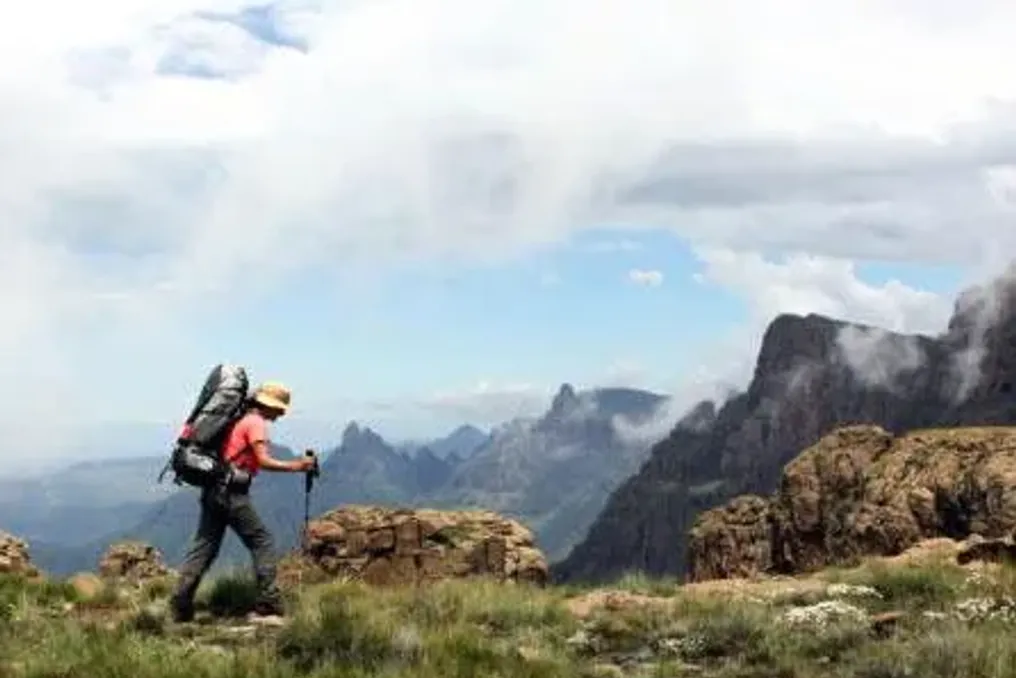
Walking through forests is often perceived as something natural, but this is far from the truth. The author shares experiences hiking in the Colorado mountains, noting that the ability to engage in this form of recreation resulted from industrialization.
Despite the picturesque views, ideal weather, and the chance to see animals such as deer, the author emphasizes that the act of hiking itself is not a natural phenomenon, as few people engaged in it before the Industrial Revolution.
The word 'hike' first appeared in English with the meaning 'a long walk, especially for pleasure or exercise' in 1865, according to Merriam-Webster. Analysis of Google Books Ngram Viewer shows that the words 'hike' and 'hiking' began appearing in written sources with some frequency only around 1900.
Before the Industrial Revolution, nature was a workplace for most people who worked outdoors from dawn till dusk in any weather conditions, risking starvation. Only the wealthiest could afford the luxury of varied nutrition or literacy, remaining indoors.
Today, we can enjoy nature on our own terms, although wandering outside the home used to be dangerous. For example, the medieval Scandinavian word skóggangr meant 'a trip into the forest' and was used as a harsh punishment for serious crimes, after which the person was exiled from society.
The fear of forests is also reflected in old fairy tales, where the forest was depicted as a frightening place governed by different rules than those in society. Now, thanks to professional park management and mass production of gear, people can relax from society, even traveling with small children.
For most of human history, walking was not leisure but the primary means of transportation. The idea of walks purely for pleasure arose as a reaction of the Romantic era to the beginning of industrialization, with its smokestacks and poorly ventilated buildings.
However, even modern hiking differs from what came before. Forest walks only became popular when marked trails, snack backpacks, comfortable clothing, and synthetic hiking boots manufactured in factories in Asia became available.
Nowadays, many Americans drive their personal cars to the airport to fly across the country, rent another car, and drive part of the way into the mountains for a hike. This opportunity is only available in a wealthy, industrialized society.
Even when people stroll near home, they benefit from one of the best inventions of the Industrial Revolution—leisure time. Although people rested before the 1800s, it was only after industrialization that leisure became a separate industry.
A favorite route with a beautiful view was likely carved out by humans within the last hundred years. The principle of 'Leave No Trace' is not ancient wisdom; it emerged in 1970s educational programs to address new environmental problems caused by millions of tourists.
The advent of modern economic growth allowed ordinary citizens to earn significant disposable income. They could spend money in stores like REI, whose history also illustrates how recent a development the hobby of hiking has been. The store was founded in 1938 as a cooperative to serve a small group of serious mountaineers and only became a retail giant in recent decades.
When the weather gets cooler and the leaves change color, it is worth enjoying the beauty of the Earth while exercising, if possible. However, one must not assume that you are rebelling against modernity; hiking brings pleasure only because of the Industrial Revolution.