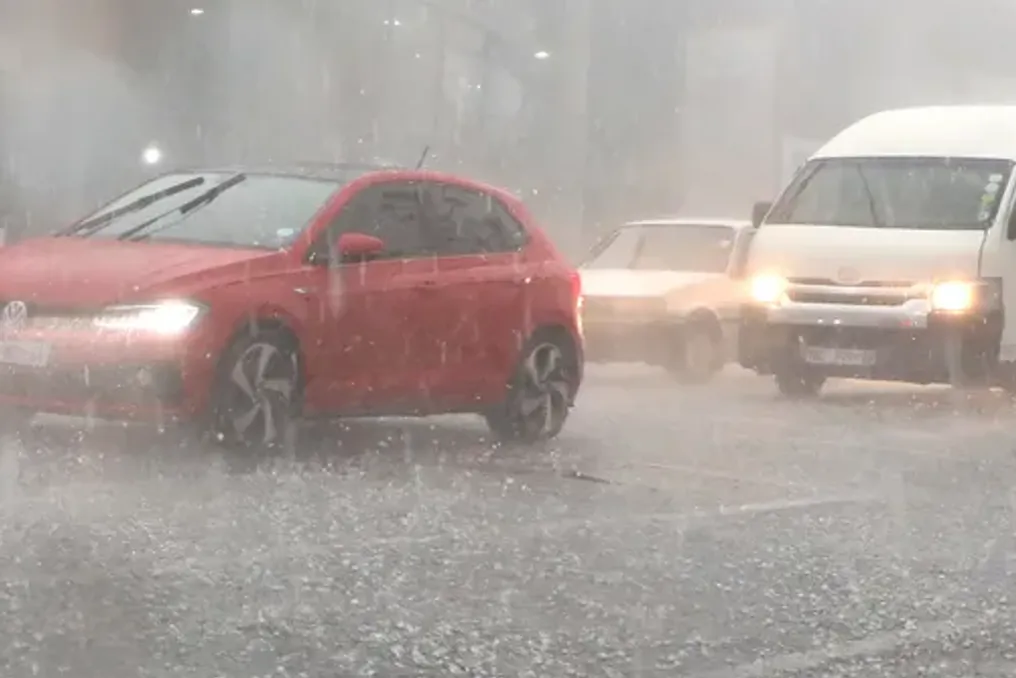
The South African Weather Service (SAWS) has intensified its weather advisory for several regions within KwaZulu-Natal (KZN), elevating an initial Level 4 disruptive rain warning to an orange Level 6 warning due to worsening weather conditions along the southern coast and nearby inland areas.
This revised Level 6 warning, which was released at 11 am on Wednesday, cautions residents about potential rainfall ranging from 50mm to 150mm. These heavy rains carry a significant risk of causing serious issues between Thursday afternoon and Friday night.
Какие районы затронуты?
SAWS attributes this severe weather to a combination of factors: a strong ridging high-pressure system, a low-pressure system situated along the KZN coast, alongside a steep upper-air trough and a cut-off low over the western interior.
Forecasters anticipate that this atmospheric setup will result in showers, which could be scattered or widespread throughout the province, with intense downpours expected specifically along the south coast and the adjacent interior regions. The Level 6 alert becomes effective on Thursday at 12 pm and remains in force until September 18 at 23:59.
Nine specific metropolitan and municipal areas are directly impacted by this upgraded Level 6 warning: Ethekwini, KwaDukuza, Mandeni, Maphumulo, Mkhambathini, Ndwedwe, Ray Nkonyeni, Umdoni, and Umzumbe.
Potential severe consequences under the Level 6 alert include flooding affecting roads, bridges, and both formal and informal settlements; dangers to human life from deep waters and rapidly flowing streams; major traffic interruptions caused by inundated roads; disruptions to vital utilities such as water, electricity, and communication networks; and structural damage to homes built from mud.
Эскалация по сравнению с первоначальным предупреждением Уровня 4
The current alert signifies a worrying increase from the Level 4 disruptive rain warning previously issued by SAWS. The initial Level 4 forecast predicted a moderate chance of impacts beginning earlier, from midnight on Thursday through Friday, September 18.
That earlier warning covered a much larger area spanning 24 municipalities, encompassing inland and southern districts like Dr N. Dlamini-Zuma - Underberg, Greater Kokstad, Impendle, Ingwe, Mpofana (Giants Castle and Mooi River), Richmond, The Msunduzi, Ubuhlebezwe, uMlalazi, uMngeni, uMshwathi, UMuziwabantu, Umvoti, and Umzimkhulu.
While the Level 4 notice mentioned general risks such as property damage, loss of livestock, community displacement, and sinkhole hazards across southern KZN, the updated predictions showing concentrated rainfall of 50–150 mm led weather experts to raise the severity to Level 6 for the primary coastal and neighboring interior districts, while also adjusting the start time to 12:00 on Thursday.
Предупреждение
SAWS cautioned that the heavy downpours could cause flooding in roads, low-lying bridges, and residential zones (including informal housing), creating hazards from swift currents and deep water that threaten lives. There is also a risk of localized property damage, harm to municipal infrastructure, livestock losses, and temporary interruptions to essential services and access for isolated communities.
The eThekwini Municipality has assured residents that its operational teams, which include departments for Fire, Disaster Management, and Metro Police, are fully mobilized. Municipal staff will maintain constant surveillance over high-risk areas, waterways, and infrastructure known to be susceptible to flooding.
Советы по безопасности для жителей
Both SAWS and the eThekwini Municipality have advised residents in the affected zones to take several protective measures. Residents should avoid crossing any rivers or swollen streams if the water level exceeds ankle height.
If someone becomes trapped in a vehicle during a flood event, they must immediately leave the car and seek higher ground. Inside buildings, it is recommended to move valuable items to secure locations above the anticipated flood levels and to shut off electricity at the main supply point.
For those in rural settings, relocating livestock and animals to safe, elevated terrain is necessary. Regarding travel, people are advised to steer clear of low-lying roads and bridges that are prone to flooding or sinkholes.