The growing popularity of Chinese cars in South Africa was traditionally attributed to pricing policies, but this approach is becoming insufficient. Greg Cress, Chief Director of Accenture South Africa for the automotive industry and electric mobility, noted that the market has entered a second phase where the appearance of vehicles plays a more significant commercial role.
Cress explained that while the first wave of success for Chinese manufacturers was driven by affordability and achieving price parity, the second wave is increasingly linked to product desirability. Although buyers remain highly sensitive to cost and value, decisions to purchase Chinese cars are now made considering style and design.
According to Naamsa data, five Chinese brands entered the top 15 sales in August: Chery ranked sixth with 2,709 units, GWM seventh with 2,504, Jetour ninth with 2,034, Omoda & Jaecoo eleventh with 1,502, and BYD fifteenth with 860. These models accounted for 9,609 out of 57,898 cars sold that month. Furthermore, Chinese brands captured 16.8% of the passenger car market in 2025, up from 11.2% in 2024, and one of the five new cars sold in the first quarter of 2026 was Chinese.
Cress links this change to one reason: the involvement of renowned global designers, which allowed unique stylistic solutions to be incorporated into these brands. He cites examples such as BYD, Geely, and Xiaomi.
Evidence for this includes experience: Wolfgang Egger, formerly head of design at Audi Group, joined BYD in 2016 as Design Director, developing the Dragon Face design language present on all BYD models sold in the country. Geely's design was long overseen by veterans from Volvo and Ford, and in 2021, management was handed over to Stefan Zielaff, former Bentley director. In Xiaomi, Kai Langer joined in August 2025 after two decades of experience at BMW, and Chris Bangles has been consulting on EV design since January 2024.
Two hires, which Cress did not name, also played an important role: in August 2018, Great Wall Motor's brand Haval appointed Phil Simmons as Global Design Director and Vice President after nearly 28 years with Jaguar Land Rover. The Australian resource Drive soon reported that the industry would look back in ten years on why they doubted China's success.
Chery made a similar move that same year, appointing Kevin Rice from Mazda Europe and BMW as Vice President of Design in October 2018. Rice left the company in early 2020, replaced by Steve Hume, a General Motors veteran in China.
According to Naamsa and Cars.co.za, the Chery Tiggo 4 led the list of Chinese models in 2025 with 18,178 units, including the Tiggo Cross. It was followed by the Haval Jolion with 13,607 and the Omoda C5 with 8,475. Also noted were the Chery Tiggo 7 with 4,886, Haval H6 with 4,713, and Jaecoo J7 with 2,122.
Cress cautions against overstating the importance of improved design. He emphasizes that in South Africa, it is still a game of value, and more so a game of trust, where design becomes a layer shaping the premium perception of these vehicles.
He notes that competitive pricing and value for money have helped Chinese brands expand in South Africa, but design aspects are increasingly helping them move beyond being merely 'cheap alternatives' to established OEM brands, approaching the brands consumers genuinely want to own. This is particularly important as Chinese brands compete amongst themselves in South Africa, not just with traditional manufacturers.
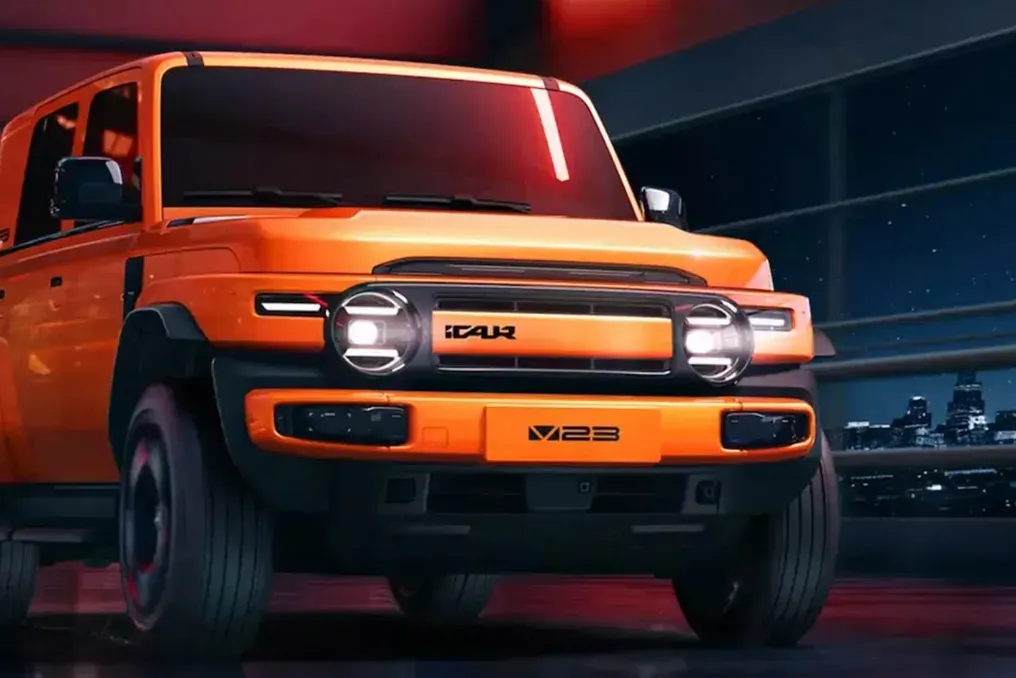
Since price parity has been achieved between them, style is one of the few ways to win the contest between two similarly priced Chinese SUVs. Cress pointed to the BYD Surf and the recently launched iCaur, both possessing a 'distinctive design identity.' Both models were presented at the Motoring Festival this month, where, according to TechCentral, the Surf was among four battery electric vehicles priced under 400,000 Rand—a price range representing about 61% of local new car sales.