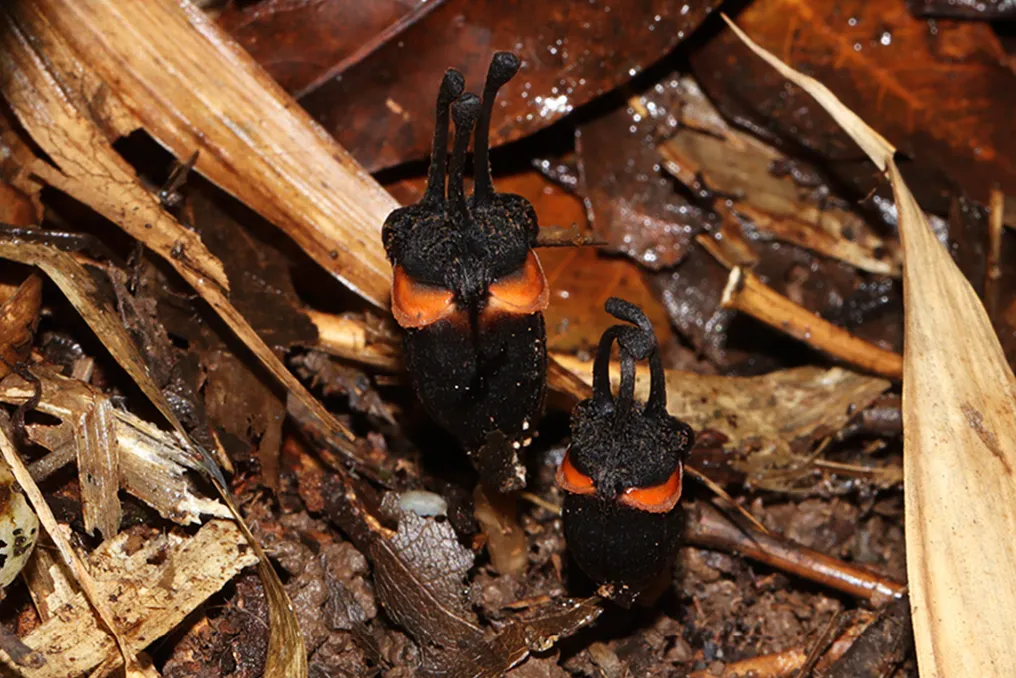
In 2025, during studies conducted in Thong Pha Phum National Park in Thailand, a team of scientists found plants with unusual characteristics, resembling creatures from horror movies. These plants possessed a dark body, red eyes, and horns, presenting a demonic appearance distinct from known species.
The researchers identified and named this new variety *Thismia daemona*, receiving the popular nickname 'devil's flower' due to its appearance. This plant can reach up to 12 centimeters in height.
The most surprising aspect of this discovery is that the plant survives underground, without exposure to sunlight, which contradicts fundamental biological principles. It does not contain chlorophyll and consequently does not perform photosynthesis.
A new study, published in August in the scientific journal PhytoKeys, detailed that instead of depending on sunlight, the plant obtains its nutrients and carbon through fungi present in the soil. It emerges only to the surface to flower and produce fruit, remaining under the layer of dead leaves of the soil for the rest of its life.
Genetic and physical analyses allowed the plant to be categorized as belonging to the genus *Thismia*, which is found in tropical forests and at low altitudes. Although there are about 120 individuals of the genus *Thismia* globally, this new species was located in a dry and high-altitude area, near one thousand meters above sea level, suggesting that the genus may be more resilient and more widespread than previously imagined.
However, the research also raised a serious alert: *Thismia daemona* is at risk of extinction. Scientists detected fewer than 50 specimens scattered over a very small area within the park, smaller than a football field. Additionally, constant tourist visits to the region pose a threat of trampling to the plants.
The study authors state that the new species is classified as 'Critically Endangered' according to the criteria and categories of the IUCN Red List, although it has not yet been formally included in this list.