The question among women has changed: instead of asking 'Am I next?', they are now asking: 'When is my turn?' This shift reflects a growing sense of anxiety in society following a series of murders.
The recent discovery of the eighth woman's body in Ekurhuleni, despite the significant distance from Cape Town, has caused a strong resonance. It is reminiscent of the situation in Cape Town, where women are tired of living in constant fear.
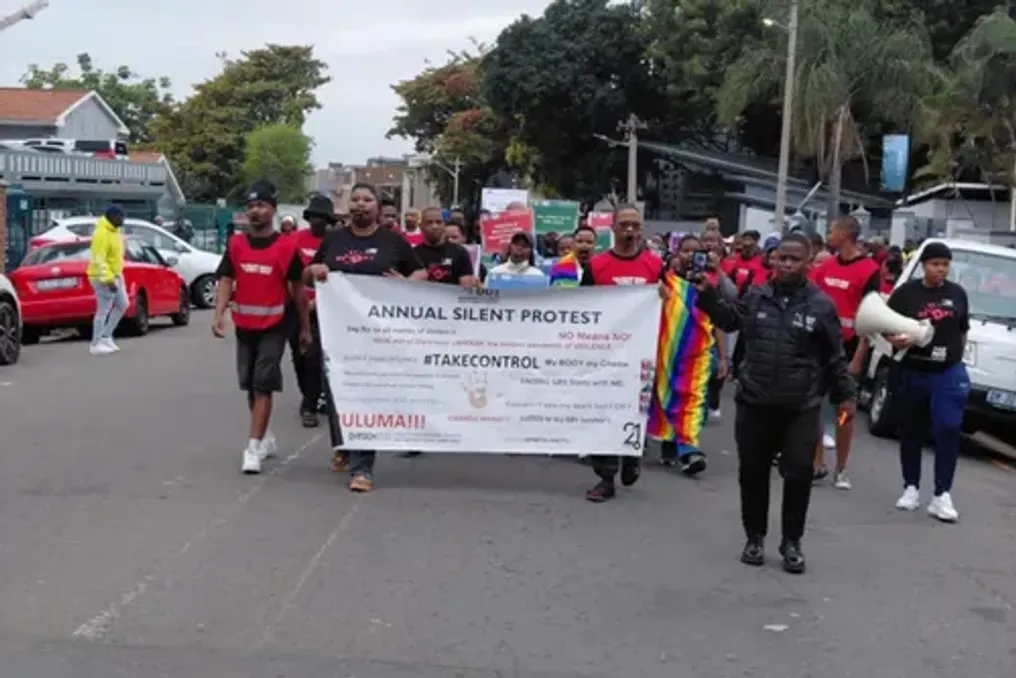
Seven years ago, in September 2019, thousands took to the streets of Cape Town to protest the murders of UCT and UWC students, leading to the hashtag #AmINext. At that time, the question of whether a woman would become a victim of murder because of her gender became widespread.
Recently, the seventh anniversary of the murder of Jessie and her grandfather Chris Latgen at their home in Parow was marked. Just three weeks later, a new investigation unfolded, in which the police are trying to establish a link between the murders of eight women.
This week, violence came close to residents when a dead 10-year-old Octavia Swartes was found near a farm dam after going missing in Joostenburg Vlakte on Sunday. Although her death is not connected to the Ekurhuleni investigation, the family from Cape Town mourns again as the country questions what is needed to ensure the safety of women and girls.
After seven years of posters for missing persons, murders of women, promises to combat gender-based violence, and calls for opinion, the question has transformed: it feels less like 'am I next?' and more like 'when is my turn?'
This is not dramatization, but a reflection of how women talk about their lives. They constantly monitor their surroundings, report their location during solo trips, and consider where to park. Mothers entering a store with children continue to watch the people around them while trying to look after their children.
The police have not yet announced that there is a new serial killer in South Africa; they continue to investigate whether the eight deaths are connected and caution against premature conclusions until evidence is obtained. The man arrested in connection with the first murder in July remains in custody, and since his arrest, more bodies have been found, and another suspect is being sought.
Although the police have reason to be cautious in their wording, women watching the developments doubt that the final classification will change the core problem. If one person killed eight women, there is a serious reason to fear that someone is hunting women. But if the investigation establishes that these murders happened independently, what comfort will remain for women?
One of the identified women is 38-year-old Elizabeth 'Tshontso' Moselakgomo, who disappeared after going for a run. This detail resonated because a normal walk is not unusual, similar to how Winnie's trip for a parcel in 2019 or Jessie staying home were not unusual.
We can call on women to be vigilant to exhaustion, but where exactly should a woman feel safe? This was part of the anger that brought women to the streets of Cape Town seven years ago. They were tired of receiving survival instructions while women continued to suffer violence and murder.
After those protests, promises were made, laws were passed, strategies adopted, summits held, campaigns launched, and plans made. Nevertheless, women still share warnings with each other and, more worryingly, pass them on to the next generation of girls, as if it is just part of growing up in South Africa.
These warnings are spoken out of love for daughters, sisters, and friends, wishing for them to return home unharmed. However, something is desperately wrong when this becomes an ordinary part of female existence that we barely challenge.
Six of the eight women whose bodies were found in Ekurhuleni have not yet been officially identified. Behind this number may be families searching, waiting for a call, or sharing photos because they still hope someone saw the missing woman.
Therefore, this cannot turn into a dark national guessing game about whether there is another serial killer in South Africa. The police must answer this question, but others must ask why it takes the possibility of one person killing several women for the country to once again confront how unsafe women feel.
Cape Town is 1400 km away, but seven years ago women stood at Parliament asking if they would be next. By now, we should have moved past this question. Instead, watching eight more women become subjects of a murder investigation, the question arises: has it become even more frightening? It is no longer just 'Am I next?', it is 'When is my turn?'