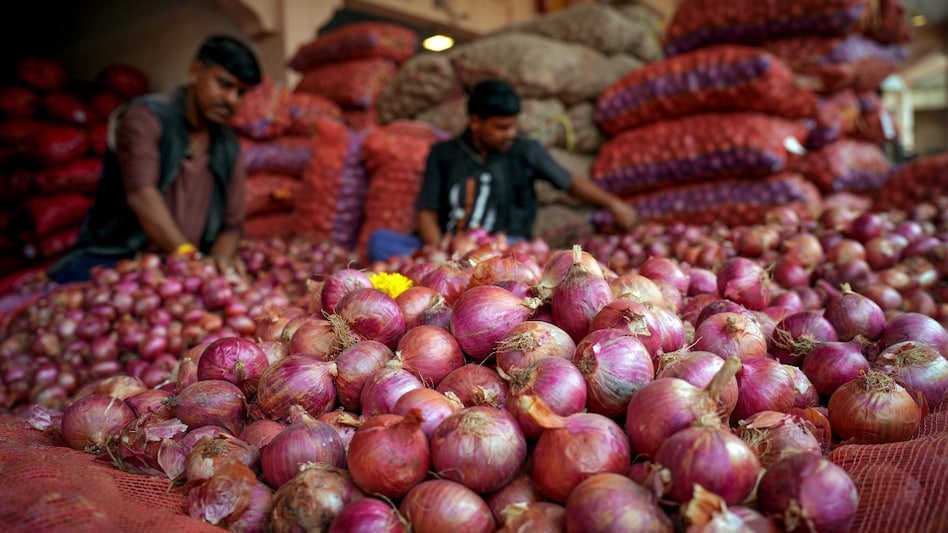
Signs of stabilization in onion prices have appeared, as the cost of onions on the country's wholesale markets has decreased by approximately 9% over the past nine days. This may bring relief to consumers who have faced high prices for this product in recent weeks.
On Tuesday, the average retail price for onions across the country was 53.92 rubles per kilogram. This price is significantly higher compared to a month ago (by 48%) and a year ago (by 94%).
Nidi Khre, Secretary of the Ministry of Consumer Affairs, noted that the decrease in wholesale prices should soon be reflected at the retail level. She emphasized that there is no shortage of onions in the country. Since the start of government-organized retail sales to ensure the affordability of onions at 35 rubles per kilogram, this product has been delivered to about 48 cities.
Khre reported that not only trucks but also other types of transport are used to deliver onions. This information was shared by her during a meeting with journalists as part of an event organized by the industry association PHDCCI. She also specified that the government is continuously monitoring onion prices in the markets and expects a further decrease in retail prices due to the fall in wholesale prices.
A significant increase in onion prices was also observed in August. According to the latest government data, the rate of price growth for onions in August reached 48.27%, compared to 22.54% in July.
The central government began selling onions at a fixed price of 35 rubles per kilogram last month, which is lower than current market prices. Onions are sold through retail points of NKCF, NAFED, and the Central Warehouse. Mobile vans are also being used to distribute onions to help the population.
Furthermore, the government has started drawing a certain volume of onions from reserves onto the market. Both rail and road transport are involved in this. Special trains carrying onions have been named 'Kanda Express'. The goal of this initiative is to increase the availability of onions in the market and prevent sharp price increases caused by seasonal factors.
The release of onions from reserves stored in the Price Stabilization Fund through NAFED and NKCF began on August 24. This has contributed to increasing supply in the market and helping to control prices. Currently, the country has a buffer stock of 1.21 million tons of onions.
Typically, prices for onions rise in August and September. Reasons for this include increased demand during holidays, changes in weather conditions, supply issues, and shifts in consumer preferences. Despite the recent price increase, the volume of onion production in the country in 2025-26 was 307.37 million tons, which is only slightly less than the production in the previous year—307.67 million tons.