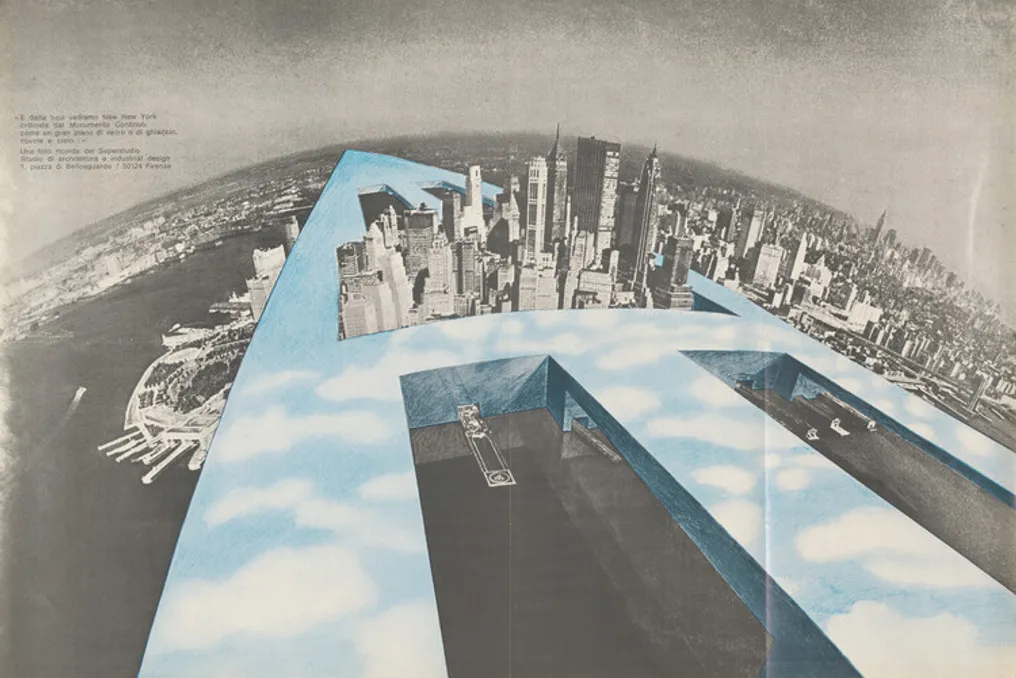
The question arises as to what exactly architects are avoiding. When asked by an architect about the most difficult problem in the discipline, the focus is often not on abandoned residential blocks two blocks from the office, but on concepts such as gravitational differences on Mars or loads on a floating platform.
The reason is that undeveloped territory lacks people for negotiations, history to answer, or tenants who remember the last renovation, which makes the design process itself significantly simpler.
Architects tend to believe they are solving a more complex problem than the one nearby. A project like The Line—a city 170 kilometers long designed to house nine million residents on unused land—is not architecturally more complex than a plot of land with hundreds of years of tenancy relations, disputed ownership, and a city planning department that remembers the last three developers who used the word 'community' in a different sense. On the contrary, it is much simpler because there is no one to convince, no history to answer, and no discussion to lose.
This raises the question: if the most difficult problem is two blocks from the office, without a solution, and the easiest receives renders and funding rounds, then the word 'ambition' is not entirely appropriate to describe what is happening. Instead, something is being avoided, and this needs consideration.
What is the discipline actually seeking? And why does this search continue from generation to generation in almost the same set of places—the open ocean, the desert, the ice cap, orbit—anywhere where the political climate remains calm simply because there is no political community yet to disrupt it?
The Uniqueness of Authorship
What the discipline seeks in the open ocean or the depths of the desert is not the absence of a licensing process, but the opportunity to realize unique authorship. A city possesses the authorship of hundreds of years of human life, and a new architect inherits all these decisions as constraints. An unclaimed piece of land delegates none of its decisions to those who are already dead or living there. Infrastructure, governance, street design, the very conditions of citizenship in the most ambitious cases—all of this is available for design from scratch, like a blank slate (*tabula rasa*), with which architecture rarely has the opportunity to work.
Telosa, a futuristic planned city in the American West idealized by billionaire Mark Lore and designed by Bjarke Ingels Group, is the clearest example of how far this 'zero' state can extend. Its founder describes the project's land model, which he calls Equitism, as a way to ensure collective ownership of the city's residents—it is a rethinking not of the horizon, but of ownership itself. Five years after the announcement, the project still has no defined location. This happens when the 'zero' from which the design starts includes the legal category of ownership, meaning the desired place must be free not only from buildings but also from any previous answer to the question of who owns the land, and such territories on Earth are very few.
Consider Battery Park City, where a two-billion dollar seawall protecting the southern part of Manhattan from storms like Hurricane Sandy is paralyzed for over a year due to two residential buildings. To function, the seawall must cross private lots; the construction authority needed easements to pass through five residential buildings along the water, and after twelve months of negotiations, two of them refused to sign the documents. The agency is now redesigning the trajectory to completely avoid their property, which will entail higher costs, further delays, and the fact that part of the waterfront will be closed longer than planned; and all this just to bypass the public flood defense seawall around two buildings instead of going through them.
On Mars, conversely, there are no easements for approval; there is no one there yet who could say 'no.' The desire to skip this stage itself is not an indication of anything. Any discipline built around authorship will sometimes want to take advantage of it, and there is nothing shameful in an architect's desire to gain recognition and risk from designing everything from the beginning.
It is harder to defend that version of this desire that is currently being financed on a large scale, where starting from scratch has become a silent standard, not because the new place presents the most interesting problematic case, but because it presents no problem at all. The mixing of these two conditions—complexity and simplicity of scale—leads to the 170-kilometer city being perceived as ambition rather than a simpler option. And behind both these trends is the pressure to be first in something, to link one's name to origin, not to improvement. Neither of these impulses is new; the novelty lies in the rarity with which they are being tested against an alternative located two blocks away, still unresolved, while the new territory receives a funding round.
And none of this makes the generation of Superstudio dishonest. Monumento Continuo was never conceived as a dwelling, and judging it as a failed housing project means overlooking its purpose: to criticize Florence from a structure that will never touch Florentine land. The desire for unique authorship, in other words, is not new, nor is it an automatic symptom. What has changed is the direction this desire is pointed. A project that borrows distance to discuss a place it never leaves is still directed toward that place, albeit indirectly. And a project that uses distance simply to stop needing that place—with a funding round and included citizenship categories—is instead heading toward a path of escape.
Its proponents are often candid, more candid than the renders, about the commitments (common courtyard, tax base, resident with voting rights) they expect the new place not to inherit.
Dressing Up Criticism
Telosa was designed by Bjarke Ingels Group, as were Oceanix Busan and Oxagon, an industrial floating port anchored in one corner of NEOM. The renders of all three rely on a set of words: sustainable, regenerative, adaptive—a vocabulary that gained value in climate justice and disaster response. The same Venetian exhibition that presented Oxagon in 2023 highlighted Adjaye Associates, Coop Himmelbau, and Studio Fuksas for other parts of NEOM under the same slogan of 'Zero Gravity Urbanism.'
Any criticism ever built around these words has, in the process, become a product line name. This shift is important because, firstly, these words were not decorative. 'Sustainable' meant the ability to recover from Hurricane Sandy: the capacity to absorb a storm without catastrophic collapse for communities that had no other place to go. Applying this term to a floating platform in the Red Sea does not make the platform less interesting, but it diminishes the power carried by that word. And every time it loses power in one place, it loses credibility in another. Communities that truly need what that word promised cannot commission projects that now use it; they are left only to watch their own vocabulary fade.
The desire for unique authorship has never been the whole story. What allows this desire to be viewed as ambition rather than escape is the borrowed language (critical, humanitarian, urgent) that accompanies it in contexts where none of these conditions apply.
A Discipline Speaking to Itself
Most of what is being built today does not offer the type of authorship that this article dedicated thousands of words to describing as deficient. Most architects choosing restoration over escape do not take a principled stand against, for example, The Line. Instead, they do the work in front of them, which might accidentally be a request for urban zoning. However, it would be unfair to conclude without acknowledging that this is also partly a difference between professional trajectories, and that many good architects have built entire practices on this less glamorous half of the division, never aiming for Mars.
None of this forms a position that the discipline could simply adopt and pretend otherwise, and pretense would cheapen the argument. Architecture will continue to design Mars, floating platforms, and pollinator towers because the impulse behind them—the desire for unique authorship—is not a flaw that can be eradicated from a profession built on the same idea.
The fairest question facing everything that follows this cycle of renders is not whether we should stop wanting it, but whether this desire can be redirected back, sometimes, without the discipline losing interest at the moment consent becomes part of the project.
Searching for other horizons is also a way the discipline tests its own limits. It is important whether this search includes a path back; whether looking at Mars, the ocean, or a city without history is ultimately a way to see the already occupied place more clearly, or merely a way to avoid looking at it.
The boundary between ambition and escape has never been the destination; it has always been the presence or absence of return plans.