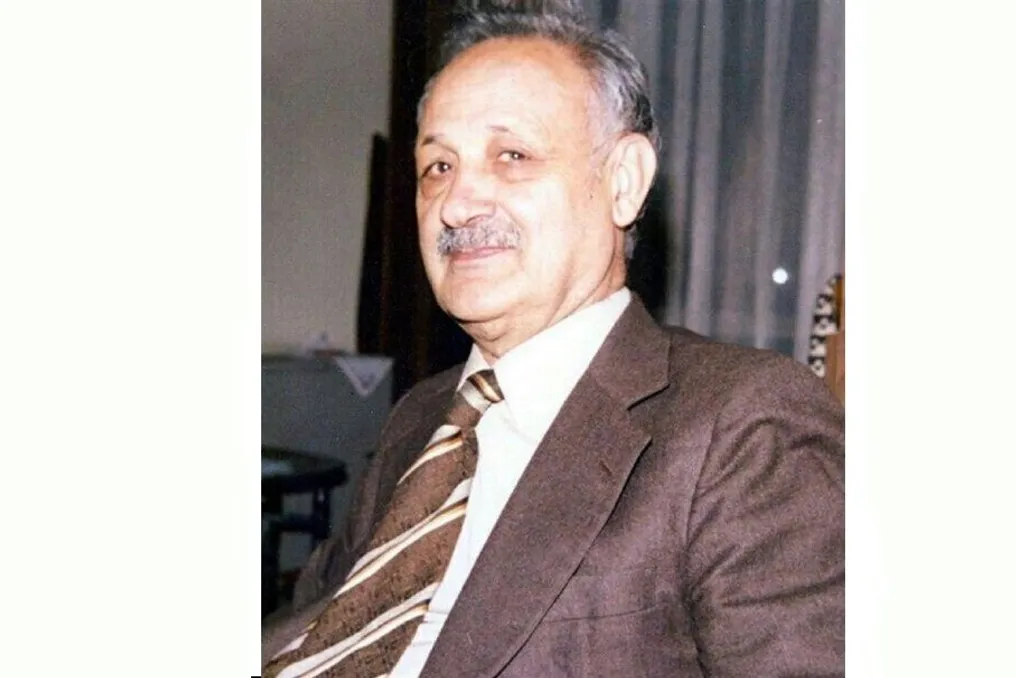
For readers, students, and researchers worldwide seeking a deep understanding of Eastern culture, Middle Eastern history, and Persian literature, few scholars can serve as a guide as illuminating as Dr. Abdolhossein Zarinkoub (1923–1999). He was an eminent Iranian historian, literary critic, Islamic scholar, and polymath who dedicated over five decades of his life to merging the wisdom of classical Eastern heritage with modern comparative humanities scholarship.
The author of over fifty books and hundreds of scientific articles, Zarinkoub revolutionized the study of Persian poetics, Islamic historiography, and mystical philosophy. His pioneering works offer an authentic, rigorous, and deeply humanistic invitation to the international audience and students studying Eastern languages to discover the rich cultural, literary, and historical heritage of Iran and the entire Islamic world.
From Traditional Learning to Western Thought
Abdolhossein Zarinkoub was born on March 19, 1923 (the end of Esfand 1301 in the solar calendar) in the historic city of Borujerd, located in Lorestan province in western Iran. Growing up in a pious family, his father, Abd al-Karim, initially worked as a jeweler (zargar), later transitioning to gardening and farming due to religious concerns (makruh). His father regularly hosted preachers, religious scholars, and reciters of Shia elegiac literature (ravzahs-khani) at home, introducing young Zarinkoub to classical Arabic, theology, and Islamic history from an early age.
At his father's encouragement, Zarinkoub pursued traditional Islamic clerical education (talabaghi) at the Bahr al-Ulum seminary (Madrasa-ye Noorbakhsh) in Borujerd under the guidance of Sheikh Ali Javaheri. When the seminary closed in 1940, he moved to Tehran to complete his secondary education at Dabirestan-e Marvi. In Tehran, he deepened his study of dialectical theology ('elm-e kalam) and Islamic philosophy in the traditional seminaries of Khan Marvi and Mohammadidava, studying under the comprehensive scholar Allamah Abu'l-Hasan Shirani. Shirani demonstrated how traditional Islamic education could harmoniously combine with an interest in foreign languages and world knowledge.
Parallel to his seminary studies, Zarinkoub independently mastered basic French and English. He also studied Middle Persian (Pahlavi) and Avestan. His early independent reading introduced him to the evolutionary social theories of British philosopher Herbert Spencer and the comparative anthropological concepts of James George Frazer's 'Golden Bough.' This unique synthesis of traditional Eastern poetics and Western social theory inspired Zarinkoub's first monograph, 'Falsafeh-ye Sher ya Tarikh-e Tatavvor-e Sher va Shairi' ('Philosophy of Poetry or History of the Evolution of Poetry'), published in Borujerd in 1944 (1323 in the solar calendar) when he was only twenty-two years old. The book applied evolutionary frameworks to the development of Persian poetic forms. Following a glowing review in the prestigious journal 'Sokhan' by the prominent scholar Parviz Natel Khanari, the young author received praise for his creative adaptation of Western critical sources. Khanari then introduced Zarinkoub to the renowned modernist writer Sadegh Hedayat.
A Distinguished Career and Lifelong Partnership
In 1945, after achieving the highest scores in national entrance exams for both the Faculty of Islamic Studies (Ma'kul o Mankul) and the Faculty of Literature and Humanities at the University of Tehran, Zarinkoub chose the Faculty of Literature to pursue his degree. He earned a Bachelor of Arts in Persian Language and Literature in 1948, teaching in middle schools in Borujerd, Khorramabad, and Tehran, and editing the weekly magazine 'Mehregan.' In 1955 (1334 in the solar calendar), Zarinkoub completed his doctoral dissertation, 'Naqad al-Sher: Tarikh va Usul-e An' ('Literary Criticism: Its History and Principles'), under the supervision of the legendary scholar Badiuzzaman Forouzandfar.
A significant moment in Zarinkoub's life was his marriage to Dr. Kamar Arian (1922–2012) in August 1953 (Mordad 1332 in the solar calendar). They first met as graduate students in the doctoral program at the University of Tehran. Kamar Arian was a pioneering female scholar, ranking second nationally in the doctoral entrance exams. She defended her doctoral dissertation on the topic 'Chehreh-e Masih dar Adab-e Farsi' ('The Image of Christ in Persian Literature') under the guidance of Ali-Asghar Hemmat, investigating Christian motifs, iconography, and terminology in classical Persian poetry.
Without children, Zarinkoub and Arian turned their home into a specialized research sanctuary. Their marriage evolved into a famous fifty-year intellectual partnership, marked by mutual editorial consultation, joint writing, and extensive international academic travels across Europe, North America, India, Pakistan, and the Middle East. In recognition of their shared commitment to preserving culture for future generations, the couple bequeathed their personal library, consisting of over 6,500 rare books, manuscripts, and scholarly journals, to the Center for the Great Islamic Encyclopedia (CGIE) in Tehran.
From National History to Universal Vision
Zarinkoub's historiographical and literary career is marked by several seminal monographs that reflect a mature methodological vision:
- 'Do Quran Sokut' ('Two Centuries of Silence'): Originally published in 'Mehregan' and later released as a book in 1951 (1330 in the solar calendar), this well-known work analyzed two centuries in Iran following the Arab-Muslim conquest of the 7th century until the rise of the Tahirid dynasty. Written during the mid-century period of intense nationalism, the first edition presented the post-conquest era as a time of national decline and cultural upheaval. However, in the famous self-critical preface to the second edition in 1957 (1336 in the solar calendar), Zarinkoub frankly acknowledged his early emotional bias and youthful fervor. He clarified that by 'silence,' he meant specifically the eclipse of written Persian prose by the Arabic language in official administrative contexts, rather than social or intellectual stagnation. The book was later translated into English by Paul Spratzman ('Two Centuries of Silence', Mazda Publishers, 2017).
- 'Karnameh-e Islam' ('Record of Islam'): Published in 1969 (1348 in the solar calendar), this masterpiece marked a major evolution in Zarinkoub's historical perspective. Moving away from narrow nationalist viewpoints, Zarinkoub celebrated Islamic civilization as a cosmopolitan, universal culture. He emphasized its spirit of scientific tolerance (tasamuh), open inquiry, and capacity to integrate Persian, Greek, Syrian, and Indian heritage into a flourishing global renaissance.
- 'Naqad-e Adabi' ('Literary Criticism'): Published in two volumes in 1959 (1338 in the solar calendar) based on his doctoral dissertation, this work revolutionized Persian literary studies. Zarinkoub criticized traditional formalist rhetoric and anecdotal biographies (tadhikrahs), introducing systematic analytical methodologies based on history, aesthetics, psychology, and sociology.
- 'Farar az Madrasa' ('Escape from the Seminary'): Published in 1974 (1353 in the solar calendar), this intellectual biography explored the life and existential crisis of the medieval theologian Abu Hamid al-Ghazali, tracing his path from institutional dogma to experiential Sufi mysticism. The book was later translated into Turkish as 'Medreseden Kaçış' (2007).
- Monographs on Mysticism and Classical Poets: Zarinkoub wrote authoritative biographical and analytical studies of key pillars of Persian literature, including Hafez ('Az Kucheh-e Rendan', 1970), Nizami Ganjavi ('Pir-e Ganjave dar Jostojoo-ye Naqshabad'), and Mansur al-Hallaj ('Sholeh-ye Tur'). His collection 'Ba Karavan-e Holleh' presented twenty-eight great classical Persian poets to students and a wide readership.
- Studies of Rumi (Mowlana-pajhuhi): Zarinkoub created an influential trilogy on Jalal ad-Din Rumi: 'Serr-e Ney' ('Secret of the Reed', 2 volumes, 1986), a detailed commentary on the Masnavi that won the Iranian 'Book of the Year' Award; 'Bahr dar Kuzeh' ('Sea in a Pitcher', 1987), an aesthetic study of Rumi's allegories; and 'Pelleh Pelleh ta Molakat-e Khoda' ('Step by Step to Union with God', 1991), a spiritual biography of Rumi. The biography was translated into English by Majdoddin Keyvani (Mazda Publishers, 2009).
Zarinkoub on the International Academic Stage
His fluent command of classical Eastern languages combined with English, French, German, and Italian positioned him as a vital bridge between Eastern academic traditions and Western science. Early in his career, he translated key European works into Persian, including Aristotle's 'Poetics' ('Fan-e Sher', 1958), treatises by Verdun-Leon Solaigne on medieval and Renaissance French literature, Felixian Shalai's 'Metaphysics,' and Vladimir Minor's commentary on Hakani's Christian Qasida.
Zarinkoub was appointed assistant professor at the University of Tehran in 1956 (1335 in the solar calendar) and professor in 1960 (1339 in the solar calendar), where he taught Islamic history, religious studies, theology, and Sufism. Between 1968 and 1971 (1347–1349 in the solar calendar), he served as a visiting professor of Iranian Studies and Islamic History at Princeton University and the University of California, Los Angeles (UCLA). He also lectured at Oxford University, the Sorbonne, and international conferences in Geneva, Vienna, New Delhi, Baghdad, Munich, and Paris.
His international publications include: — Author of Chapter 1, 'The Arab Conquest of Iran and Its Consequences,' in 'Cambridge History of Iran,' Vol. 4 (Period from the Arab Invasion to the Seljuks, Cambridge University Press, 1975). — Reference encyclopedias: author of foundational articles for the Brill Encyclopedia of Islam, Encyclopædia Iranica, and 'Dāyarat al-Ma'arif-e Farsi' by Holam-Hossein Mosheba. — International monographs: author of 'Nizami: A Lifelong Quest for Utopia,' published in Rome in 1977.
'Neither East Nor West, But Human': A Legacy for a New Generation
Zarinkoub summarized his core scientific principle in the motto 'Neither Eastern nor Western—Human' (Nah Sharqi, Nah Gharbi — Ensani). He rejected both insular traditionalism and uncritical Westernization (Gharbzadegi), advocating instead for open, self-critical, and empathetic engagement with universal human heritage.
For students studying Persian, Arabic, and Middle Eastern languages, reading Zarinkoub is an invaluable educational experience. His works combine rigorous academic evidence with an elegant style of presentation, making complex historical, theological, and poetic concepts accessible without sacrificing scholarly accuracy.
Dr. Zarinkoub passed away in Tehran on September 15, 1999 (24 Shahrivar 1378 in the solar calendar) at the age of seventy-seven due to heart and eye problems. He was buried in the artists' section of Behesht-e Zahra Cemetery in Tehran, where his wife, Dr. Kamar Arian, was interred thirteen years later.
Today, his vast body of work stands as a testament to a life fully devoted to scholarship, teaching, and humanistic understanding—an eternal invitation for the global audience to explore the poetry, history, and spirit of Iran.
}, 3.